 UAE & GCC
Throughout history, humans have turned to animals to express ideas that words couldn’t fully capture. Strength, protection, loyalty, dominance, and beauty all found their earliest symbols in the natural world. Ancient civilizations carved animals into stone, painted them onto walls, and wove them into visual stories that reflected power, belief, and identity. Over time, these symbols evolved, from Egyptian reliefs and medieval bestiaries to Renaissance art, yet their meaning remained deeply rooted in the natural world.
That same symbolic language reached its most permanent form through mosaic art. When animals were translated into stone and glass, they became more than imagery; they became architecture. Roman animal mosaics turned floors, baths, and courtyards into statements of authority and legacy, using animals to communicate wealth, control, and lineage in a language that endured for centuries.
Today, this tradition continues through refined animal mosaic art designed for modern spaces. In luxury villas across Dubai, Abu Dhabi, and the wider Gulf, mosaic art animals still shape how a space feels and what it represents. At MEC Artworks, these ancient symbols are reinterpreted through contemporary design; crafted not as decoration, but as lasting architectural expressions of identity and legacy.
Table of Contents
The Origin of Power: Why Animals Became Enduring Symbols in Mosaic Art
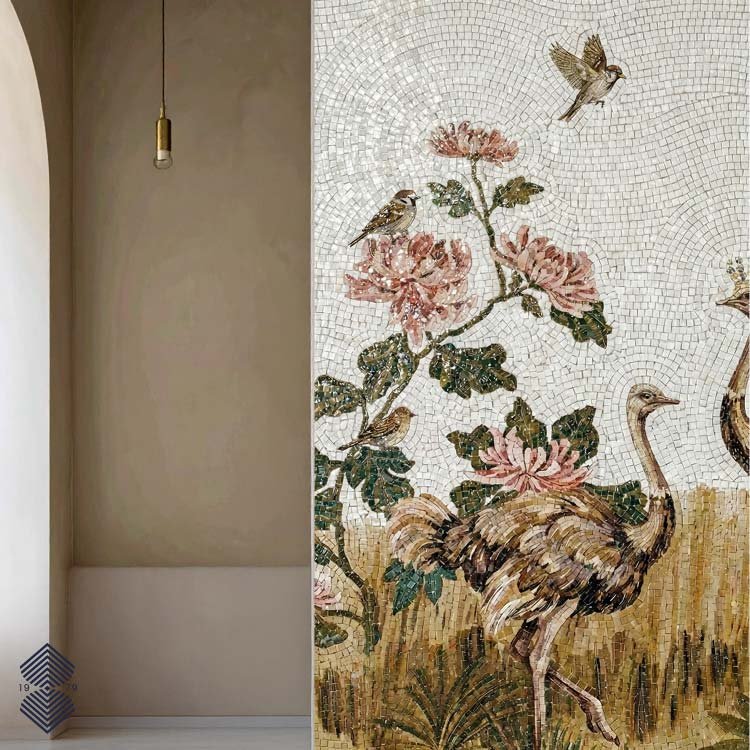
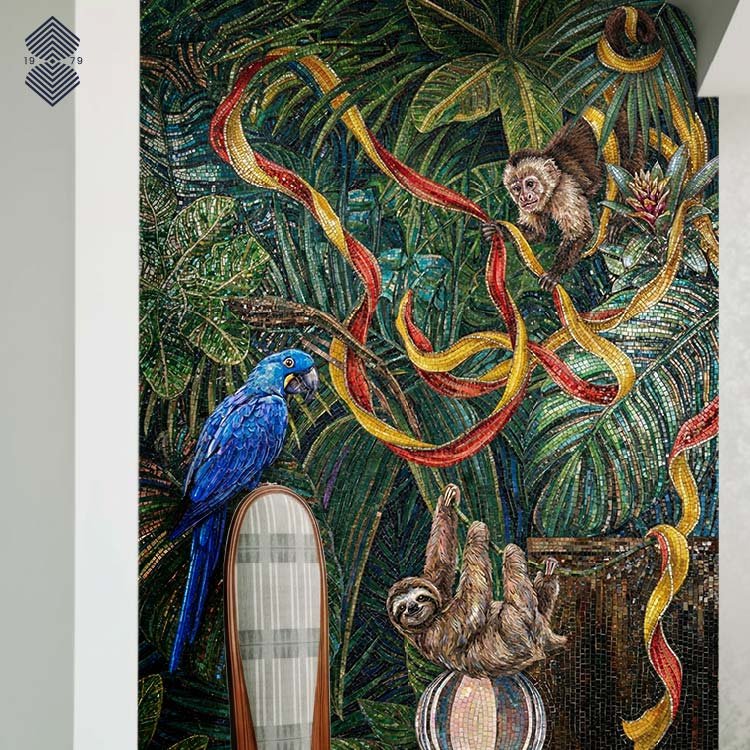
The oldest symbols weren’t abstract. They were alive.
Before people trusted flags, emblems, or written crests, they trusted animals. Animals represented things humans couldn’t control: strength, speed, survival, instinct. They also represented things people wanted to own: authority, protection, dominance, and prestige.
That’s why mythologies across the ancient world leaned on animal figures:
- Guardians at gates
- Predators as kingship
- Birds as vision and divine favor
- Sea creatures as mastery over nature
Symbols like these didn’t decorate life. They shaped it.
Mosaic Art Made Those Symbols Permanent
Paint fades. Fabric tears. Even carved reliefs can weather fast. But mosaic tile art projects? It stays.
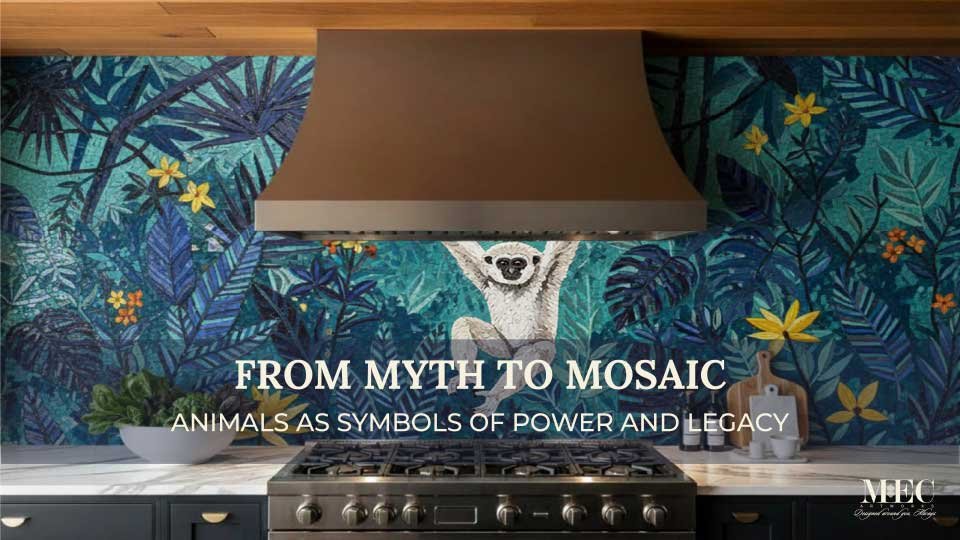
That durability and longevity made mosaic surfaces the perfect vehicle for powerful imagery. When patrons chose animal mosaic art, they weren’t picking a design trend. They were carving their identity into the architecture, floors, kitchen, backsplash wall, courtyard, bathroom, and spas.
No surprise, then, that so many Roman animal mosaics survived centuries and still read clearly today. Sites like Villa Romana del Casale preserve vast mosaic pavements among the richest surviving collections, proving just how seriously Roman patrons treated mosaic storytelling.
From Myth to Lineage: Animals Became Social Signals
Over time, animal imagery evolved into something sharper:
- Authority (who leads)
- Protection (who guards)
- Lineage (who you come from)
- Control (what you dominate: land, water, wealth)
That’s the core of the story: animals didn’t appear in mosaics “because they look nice.” They appeared because animal mosaic means something.
Animal Mosaic Designs: A Visual Language of Status, Power, and Control
Roman patrons didn’t treat mosaics as background. They treated them as public messaging inside private space, a language of power laid beneath your feet.
Lion Mosaic Art: Strength, Guardianship, and Dominance
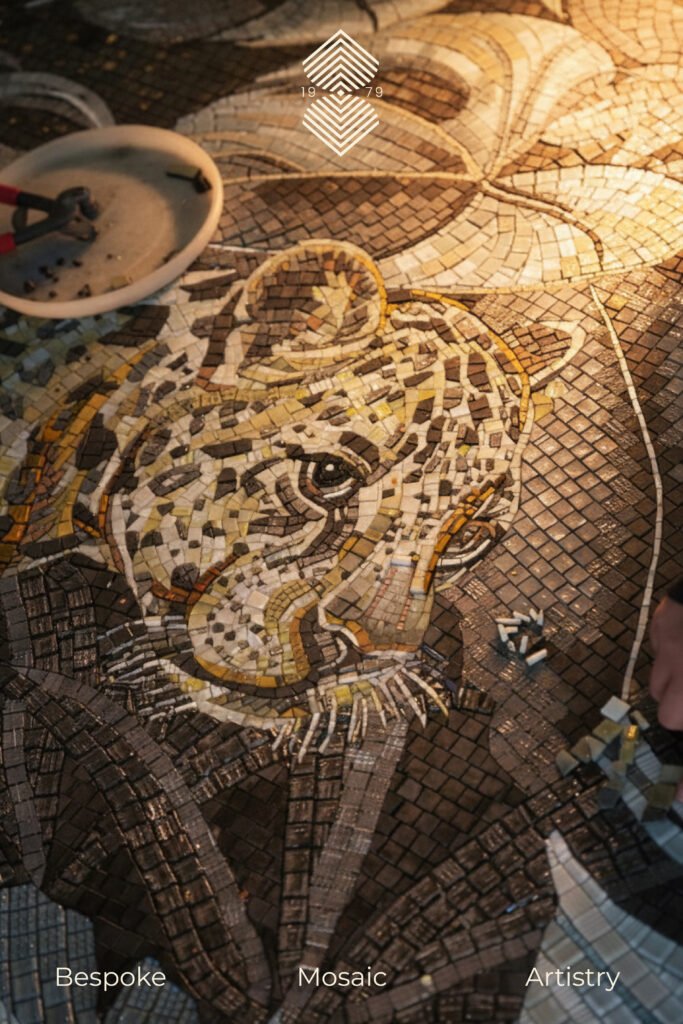
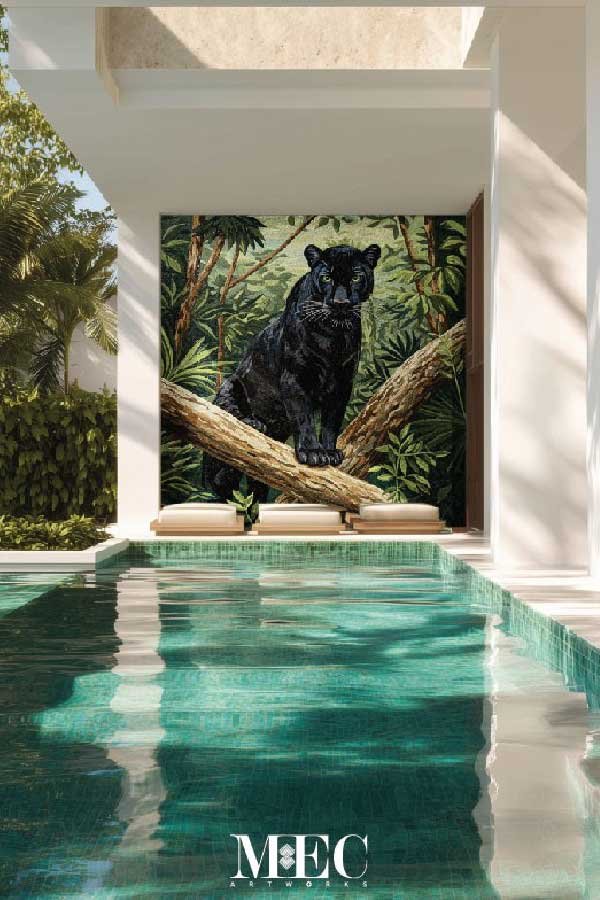
Lions communicated the command. They also communicated protection. In Roman visual culture, lion face mosaic art often acted like symbolic gatekeepers, ideal for entrance zones, reception spaces, and places where the owner wanted to project authority.
Today, that translation feels natural in Gulf villas. A lion, panther mosaic, or even leopard mosaic in a double-height foyer doesn’t feel “themed” if you design it with restraint. It feels like a quiet statement: this home has presence.
Eagles & Birds Mosaic Art: Supremacy, Vision, and Empire
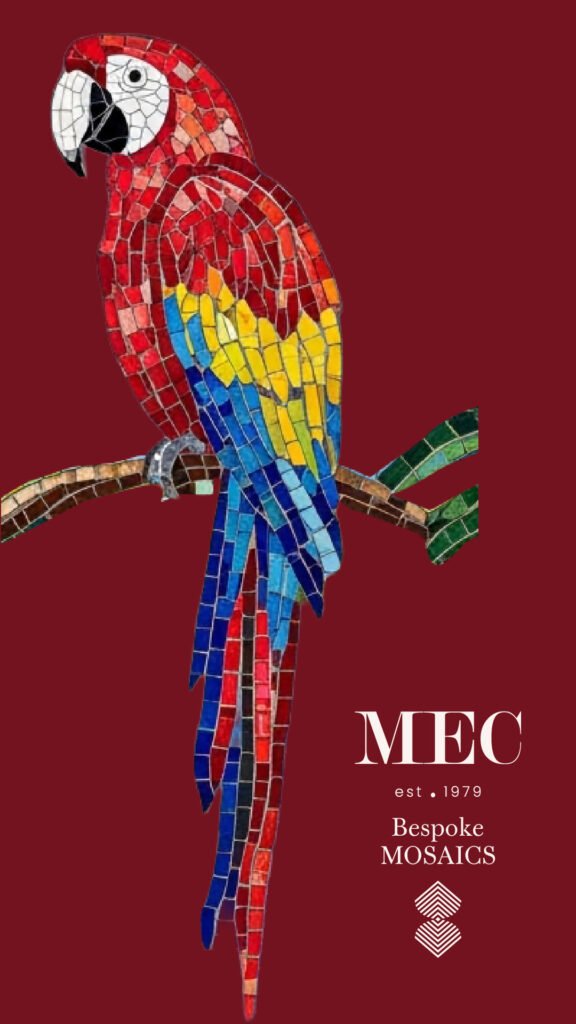
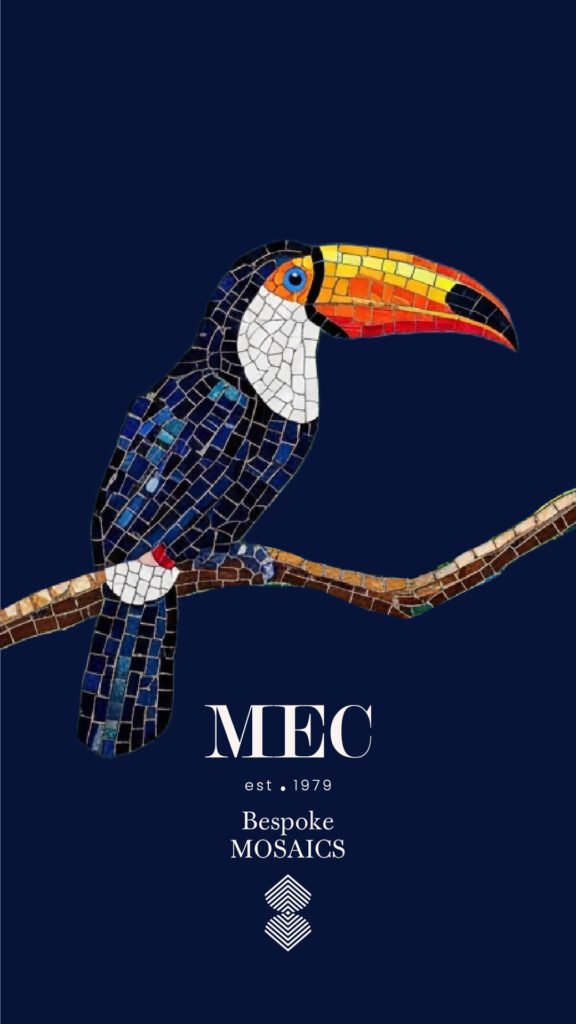
Eagles represented domination from above, vision, speed, and imperial power. Birds of prey carried that same message with a different tone: calculated precision, total control.
That symbolism also resonates culturally in the Gulf. Falcons, hawks, and mosaic bird art carry prestige across the region, so a refined avian composition can bridge classical heritage and local identity without forcing the connection.
Elephant Mosaic Art: Power, Memory, and Imperial Reach
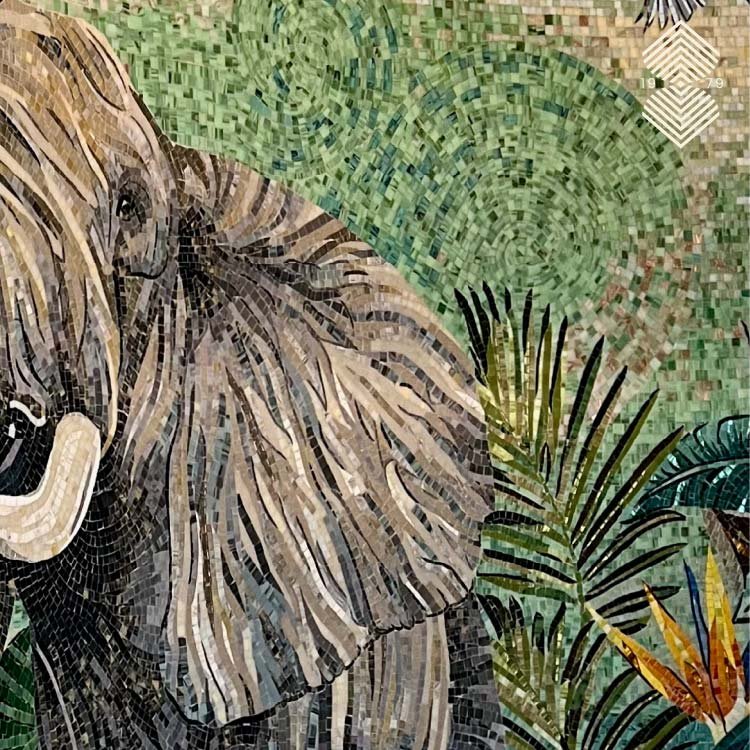
Elephants were rare but deeply symbolic in Roman animal mosaics. Their presence signaled unmatched strength, intelligence, and imperial ambition. Because elephants were not native to most Roman territories, depicting them also implied global reach, conquest, and access to the exotic.
In Roman visual language, elephant mosaic art communicated power that was calm rather than aggressive, authority rooted in scale, endurance, and memory. When used in mosaics, they often suggested a ruler or patron whose influence extended far beyond local borders, making elephant imagery a subtle yet commanding statement of legacy.
Owl Mosaic Art: Wisdom, Strategy, and Quiet Authority
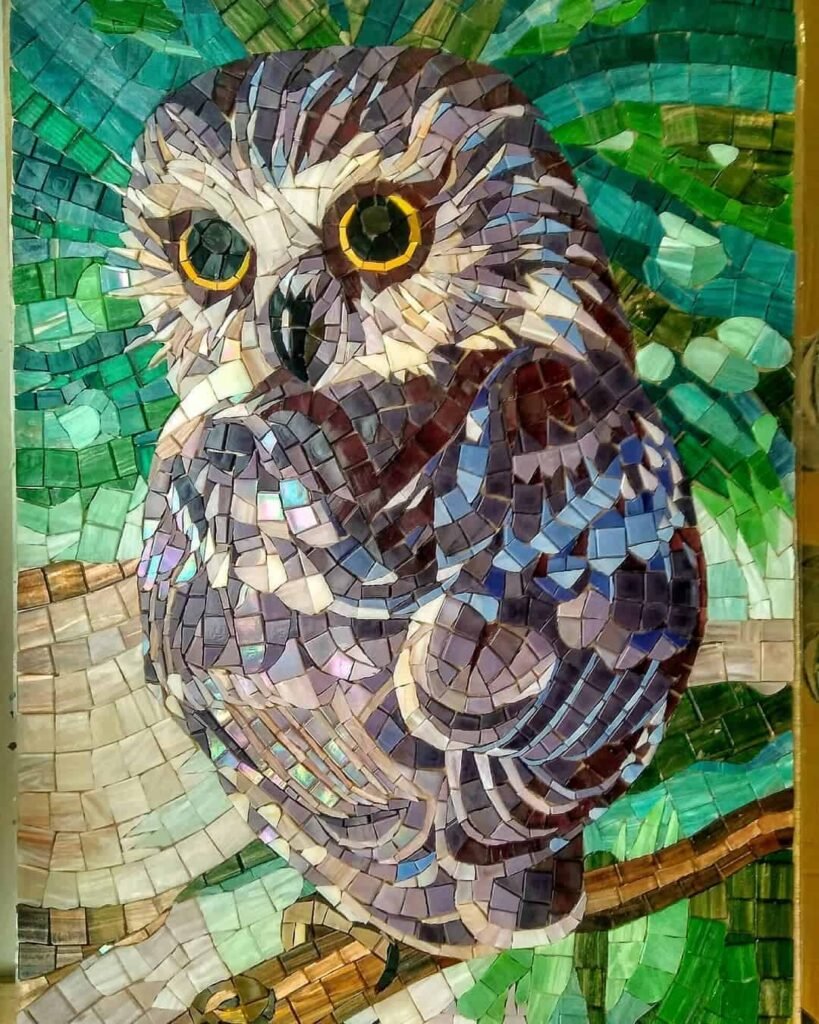
Owls carried a very different kind of power. Associated with wisdom, foresight, and strategic intelligence, owls were often linked to knowledge rather than dominance. In Roman symbolism, the owl mosaic art suggested a mind that governs through insight rather than force.
In mosaic art, owl imagery was typically reserved for patrons who valued intellect, planning, and cultural refinement. Even today, owl mosaic art conveys quiet authority, making it ideal for spaces where restraint, thoughtfulness, and depth are meant to define the atmosphere rather than overt grandeur.
Horse Mosaic Art: Movement, Victory, and Aristocratic Status
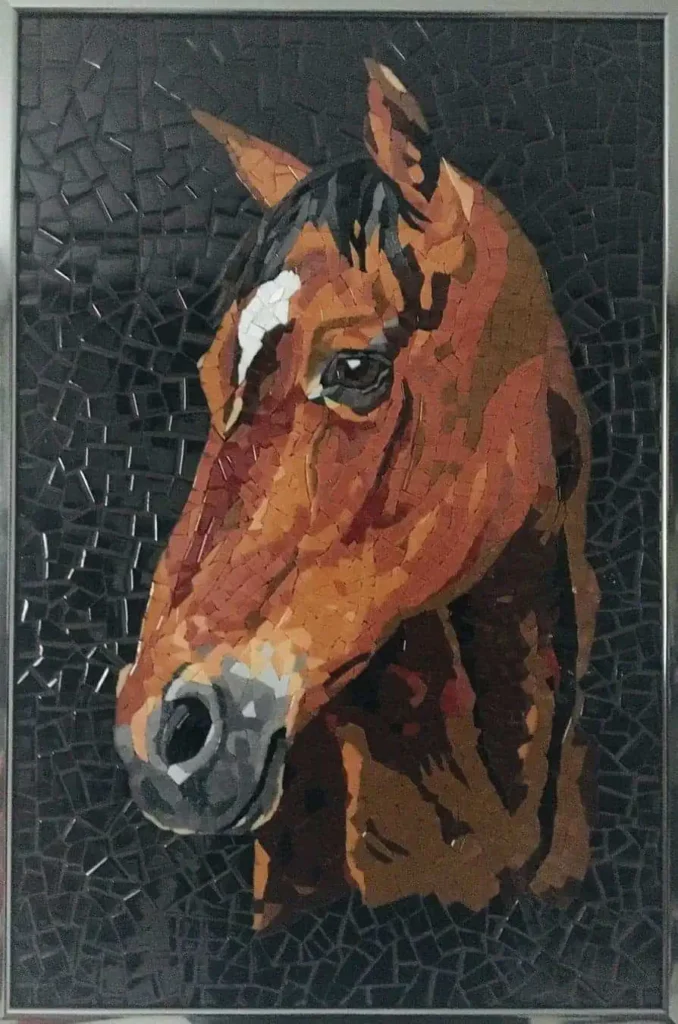
Horses don’t communicate brute force. They communicate controlled power.
In Roman culture, horses were linked to triumph, status, and elite performance. They suggested that the patron didn’t just have wealth; they had momentum, victory, and social rank.
Designers can leverage horse face mosaic art by using:
- Flowing tesserae direction to suggest motion
- Simplified musculature to avoid illustration
- Strong negative space for elegance
Fox Mosaic Art: Intelligence, Adaptability, and Strategic Power
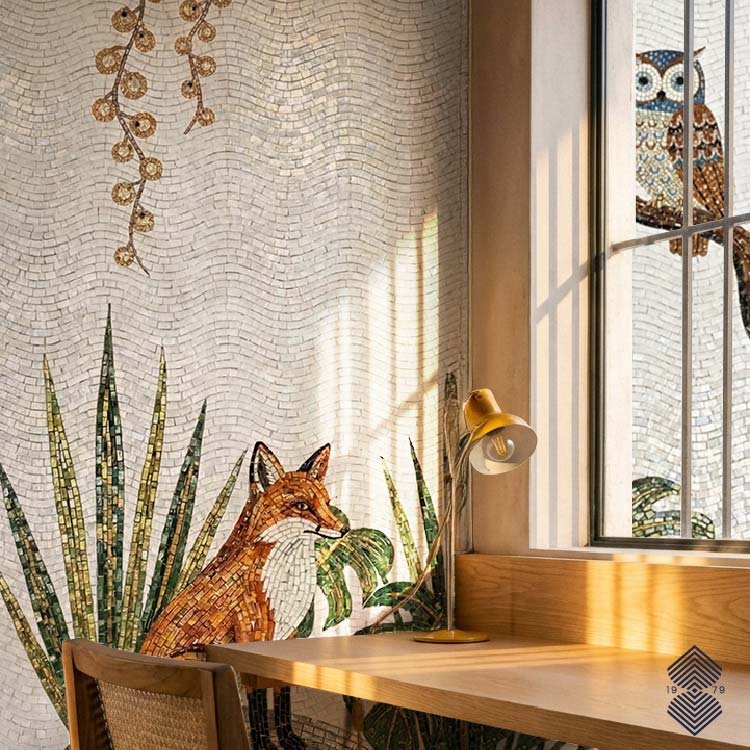
Foxes carried a subtler form of symbolism in ancient visual culture. Rather than brute strength, they represented intelligence, adaptability, and strategic thinking. In Roman storytelling and broader classical symbolism, the fox mosaic art was often associated with cleverness, survival through wit, and the ability to navigate complex environments without force.
When translated into mosaic art, fox imagery suggested a different kind of authority—one rooted in awareness, agility, and quiet control. It implied a patron who valued strategy over spectacle and intelligence over dominance. In modern interiors, fox mosaic art works best in spaces where refinement, discretion, and intellectual presence are meant to define the atmosphere rather than overt power.
Marine Animals Mosaic Art: Wealth, Water, and Mastery of Nature
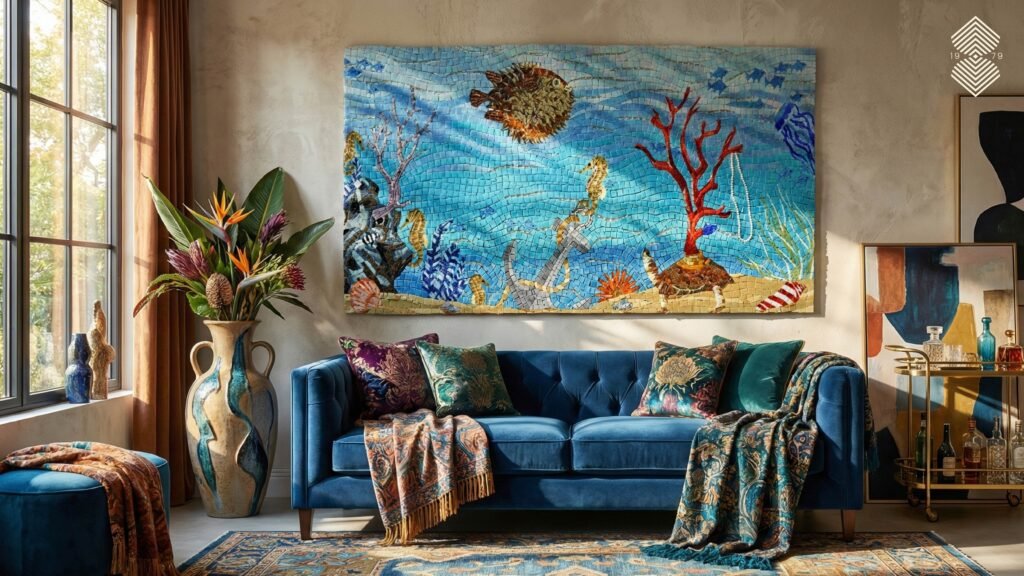
Marine mosaics weren’t random. They connected to the Roman obsession with baths, leisure, and water engineering. Dolphins, underwater fish, turtles, and sea creatures symbolized abundance and control over nature’s most powerful element.
Even today, that link feels direct. A pool or spa mosaic with marine life doesn’t just look beautiful; it echoes the ancient idea of water as status. The Baths of Neptune at Ostia are famous for black-and-white mosaics with Neptune and dolphins at the center; another proof that animals weren’t decoration; they were narrative.
Exotic Animals Mosaic Art: Rarity as a Status Weapon
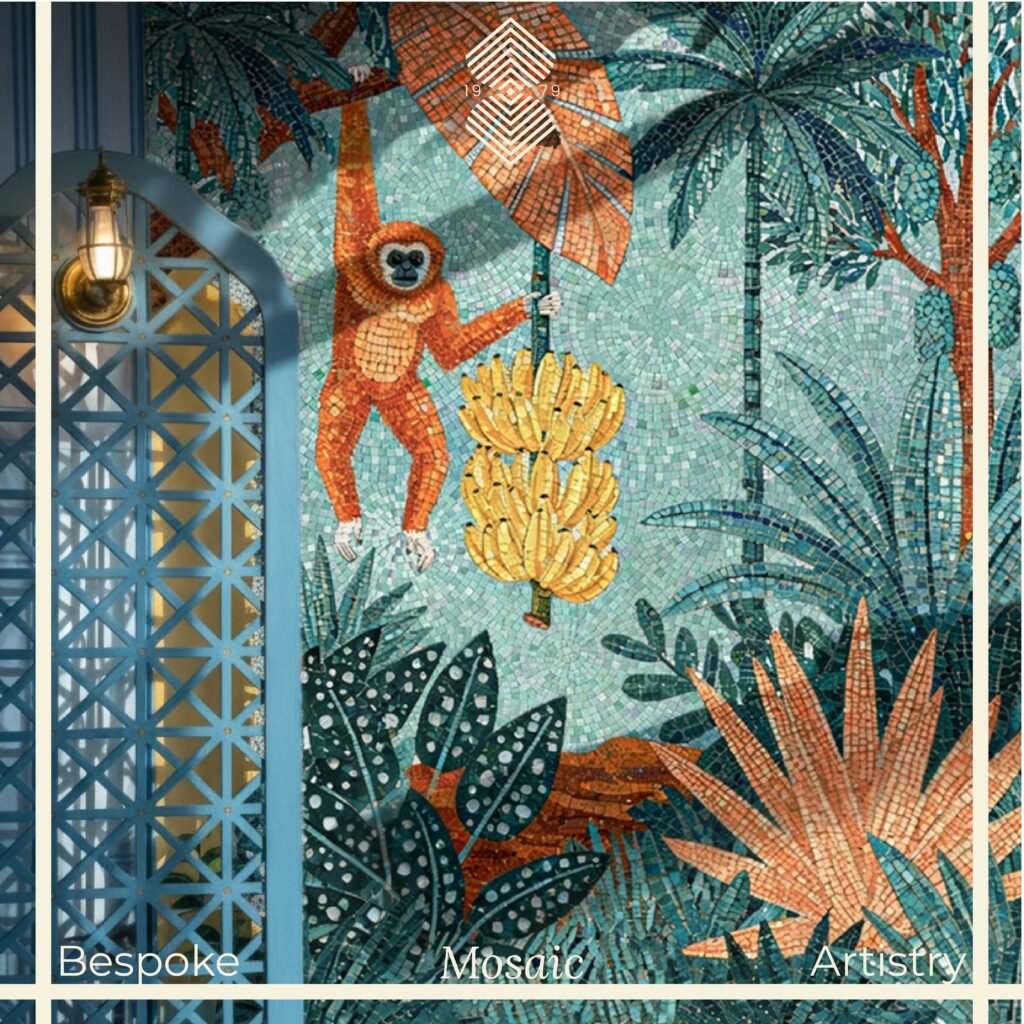
Romans also used exotic animals to signal reach and dominance. If your mosaic showed creatures tied to far-off lands, you implied power beyond your city’s access, influence, and global status.
Villa Romana del Casale’s “Great Hunt” mosaic depicts the capture and transport of wild animals, an elite message of control and reach, rendered in extraordinary detail.
Personal Symbolism vs Imperial Messaging
Sometimes patrons chose animals for the empire. Sometimes they chose them for themselves. That flexibility matters today. It means animal mosaic art can carry:
- Cultural narrative
- Personal identity
- Pure architectural presence
You’re not locked into a single meaning. You shape it.
Mosaic Art Animals in the Gulf: Translating Ancient Power into Modern Luxury
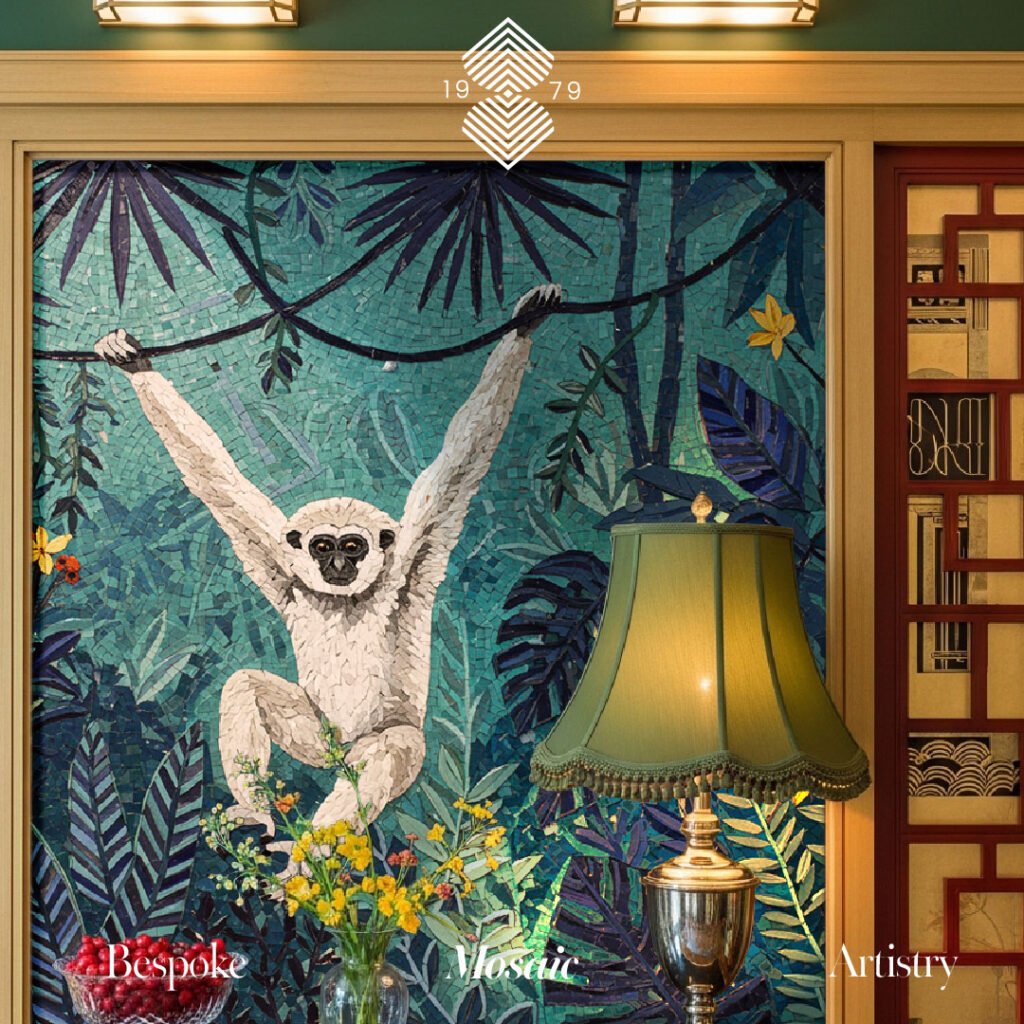
Dubai and Abu Dhabi have a design language that rewards bold architecture, but it punishes clutter. That’s why Roman mosaic animal artwork is best when they feel architectural, not illustrative.
Why Animal Mosaic Art fits Gulf Luxury Homes and Commercial Spaces
Modern Gulf villas often feature:
- Large entrance volumes
- Long sightlines
- Dramatic materials
- Statement surfaces that need meaning
A well-designed mosaic art featuring animals doesn’t compete with this architecture. It completes it.
How Animal Mosaic Art Changes the Emotional Tone of a Space
Animal-themed mosaic art shifts mood instantly. Choose the right one, and you control the feeling:
- Lion: command and protection
- Birds: vision and dominance
- Horse: prestige and motion
- Marine life: wealth, calm, and flow
- Wolf: identity and legacy
That’s why mosaic art animals work so well in transitions. They carry emotion through the building.
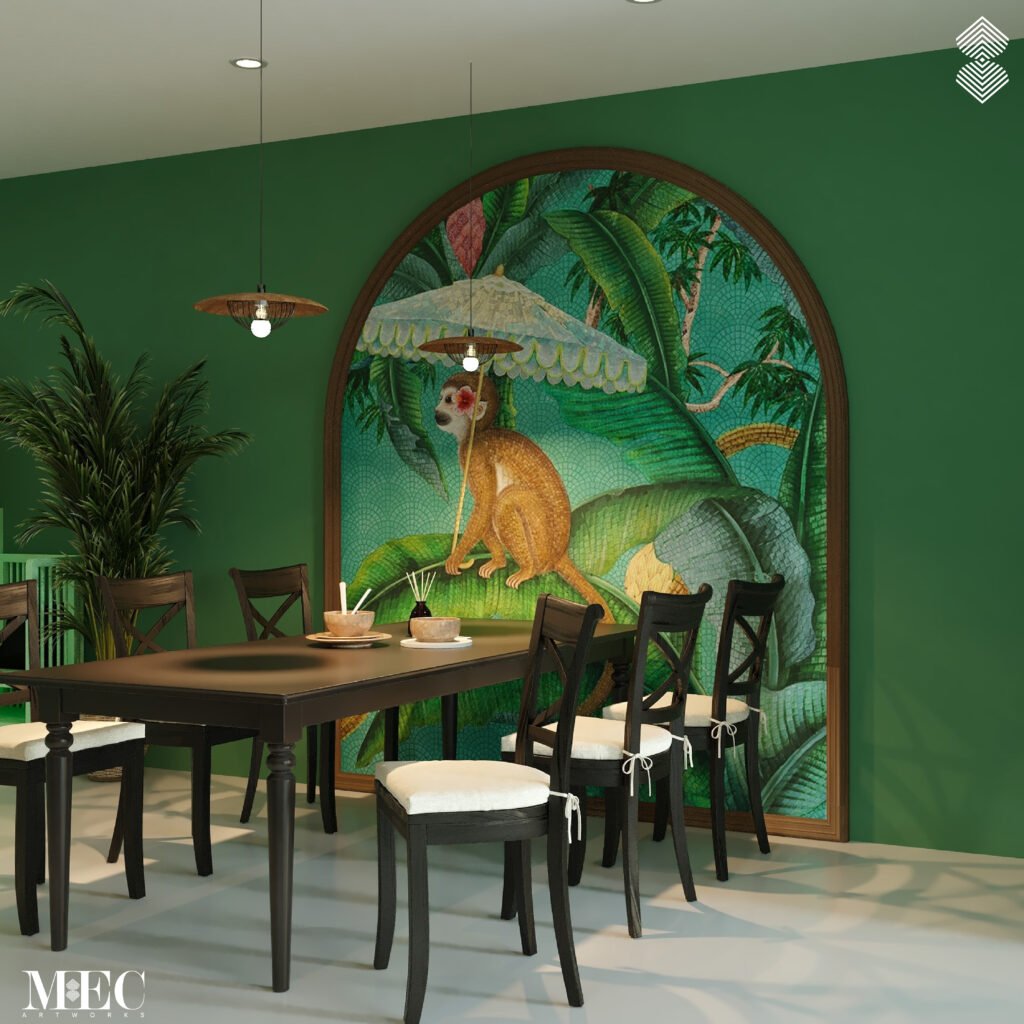
Where Animal Mosaic Ideas Work Best in Modern Spaces
Some placements naturally support long-term relevance:
- Entrance foyers: the most powerful symbolic zone
- Courtyards: heritage feel, natural light, strong framing
- Stair landings: pause points, controlled drama
- Swimming pools: marine themes, shimmer, movement
- Spa and hammam areas: quiet storytelling, restrained palettes
Making Animal Mosaics Refined, not Literal
Luxury design doesn’t need “full illustration.” It needs control.
To keep nature-inspired mosaic art timeless:
- Simplify the background
- Use fewer colors with stronger tonal shifts
- Avoid cartoon-like facial features
- Scale the animal so it reads from a distance
- Let negative space do some of the work
You’ll still get impact. You’ll just get it with elegance.
Crafting Animal Mosaic Tile Art: Where Skill Defines Legacy
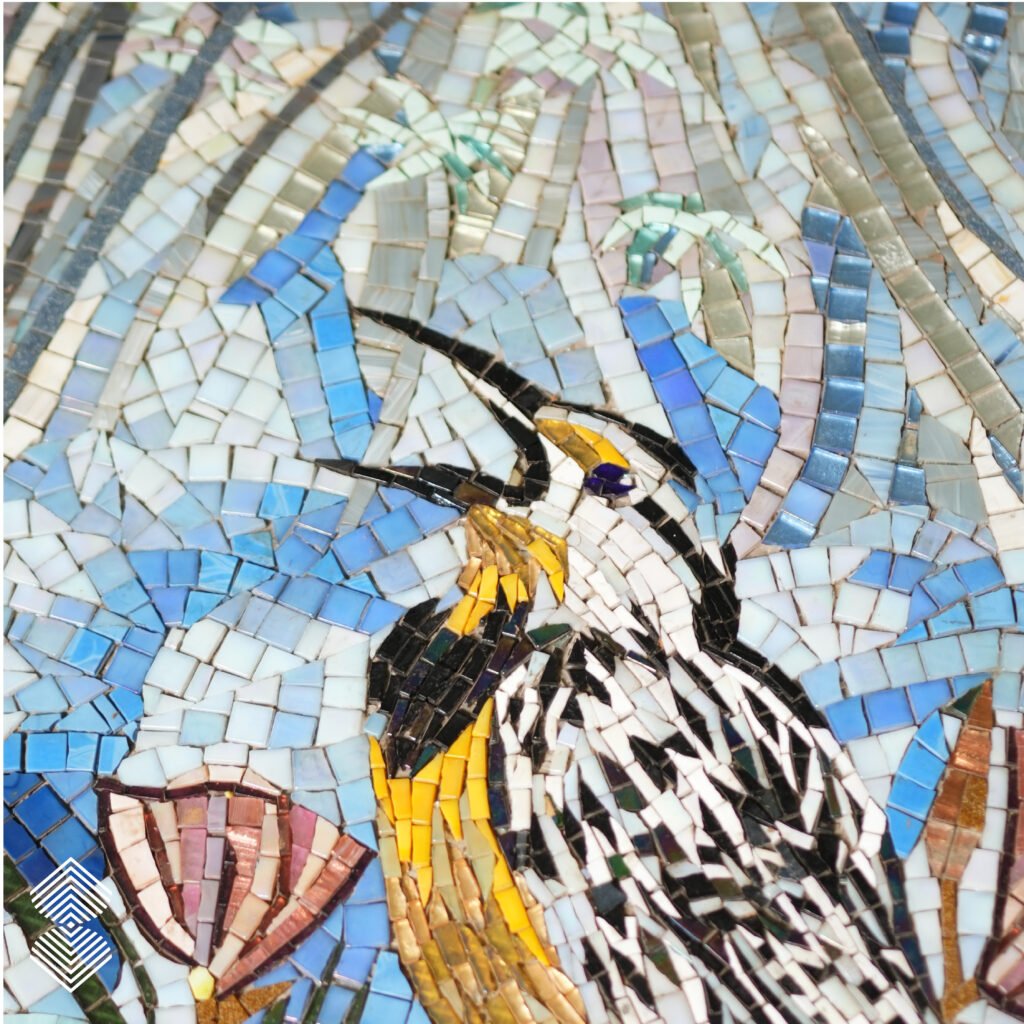
Why Animal Mosaic Art Demands Higher Mastery
Patterns forgive mistakes. Animals don’t.
A small shift in proportion can change the entire expression. A wrong curve can kill movement. A messy transition can flatten the body and ruin depth. That’s why wildlife mosaic art requires:
- Stronger draftsmanship
- A deeper understanding of anatomy
- Precise tesserae direction
- Disciplined shading control
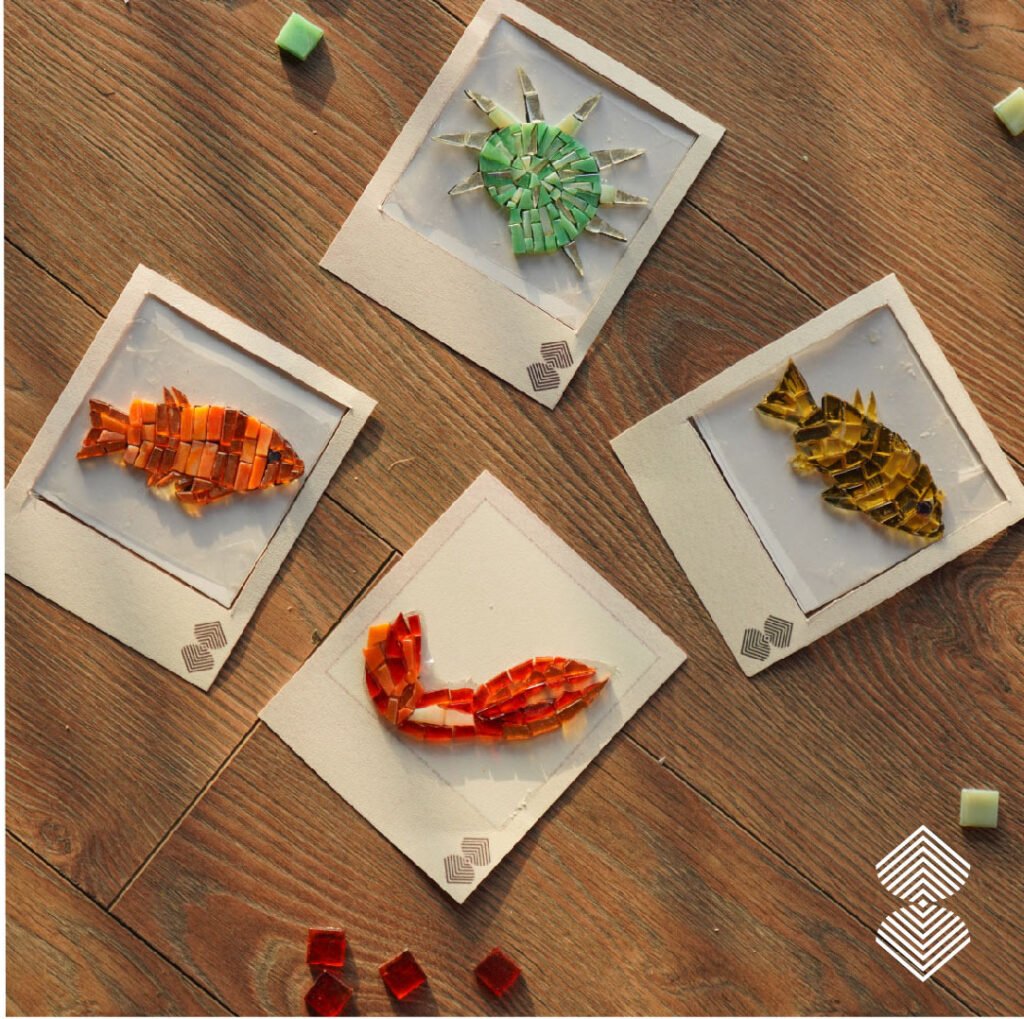
How Artisans Capture Movement and Expression
Artisans create motion through the flow of tesserae rather than literal detail. By carefully guiding each piece, they suggest rhythm, weight, and direction, allowing the animal to feel alive within the surface. Realism comes from restraint and control, not excess.
At MEC Artworks, designers work closely with master artisans to study animal anatomy, movement, and proportion before a single tessera is set. This collaboration ensures animal-centered mosaic art reads clearly from a distance while retaining depth up close. Movement and expression are built through:
- Tight tesserae in facial features to define character
- Broader cuts in body zones to maintain visual calm
- Directional placement to suggest muscle tension and fur or feather flow
The goal isn’t photorealism. The goal is to present an animal that feels grounded, powerful, and naturally integrated into the architecture.
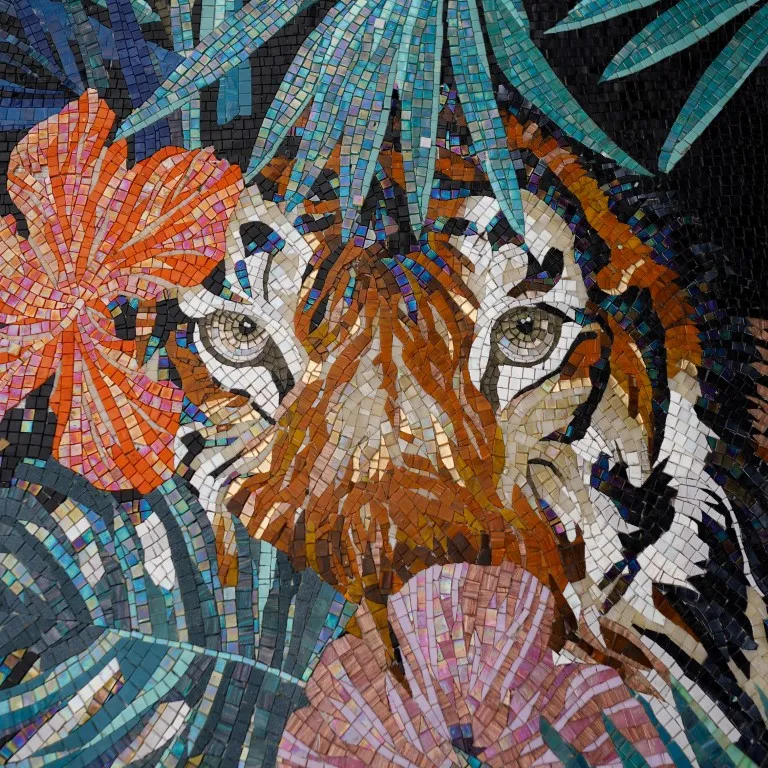
Materials that Best Express Fur, Feathers, and Musculature
Material choice shapes how the animal feels:
- Glass Mosaic Tile: depth, shimmer, water synergy
- Natural stone: grounded, timeless, sculptural tone
- Smalti-style textures: rich color, painterly energy
For Gulf environments, material selection matters even more. Heat, sunlight, moisture, and maintenance all influence what performs best long-term.
Hand-cut Work vs Machine Alignment
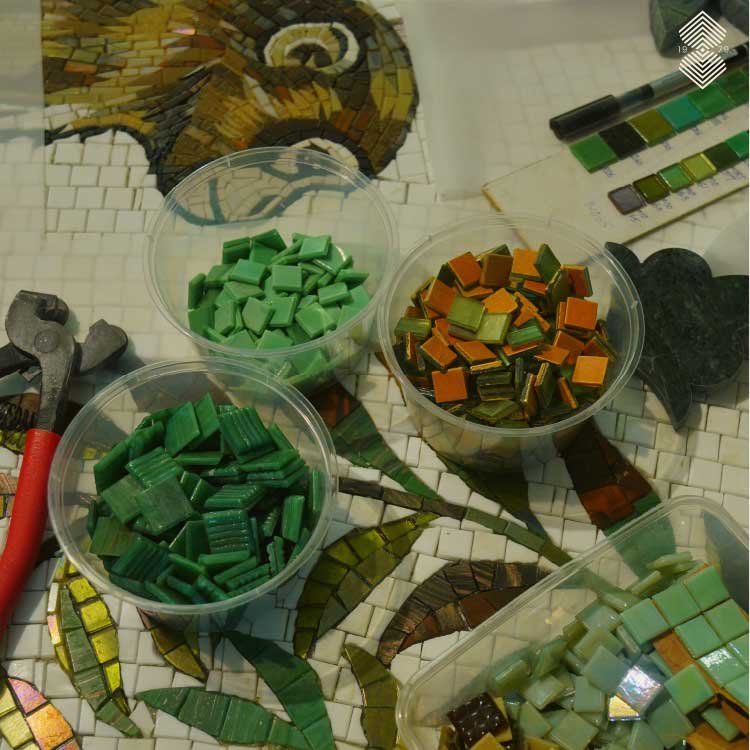
Machine-aligned mosaics can look tidy. Hand-cut mosaics look alive. Hand-cutting mosaic tiles gives you:
- Smoother anatomical curves
- More natural expression
- Better transitions in shading
- A truly bespoke finish
That’s the difference between “a design” and “a legacy piece.”
Choosing the Right Animal: Legacy-Driven Design Decisions
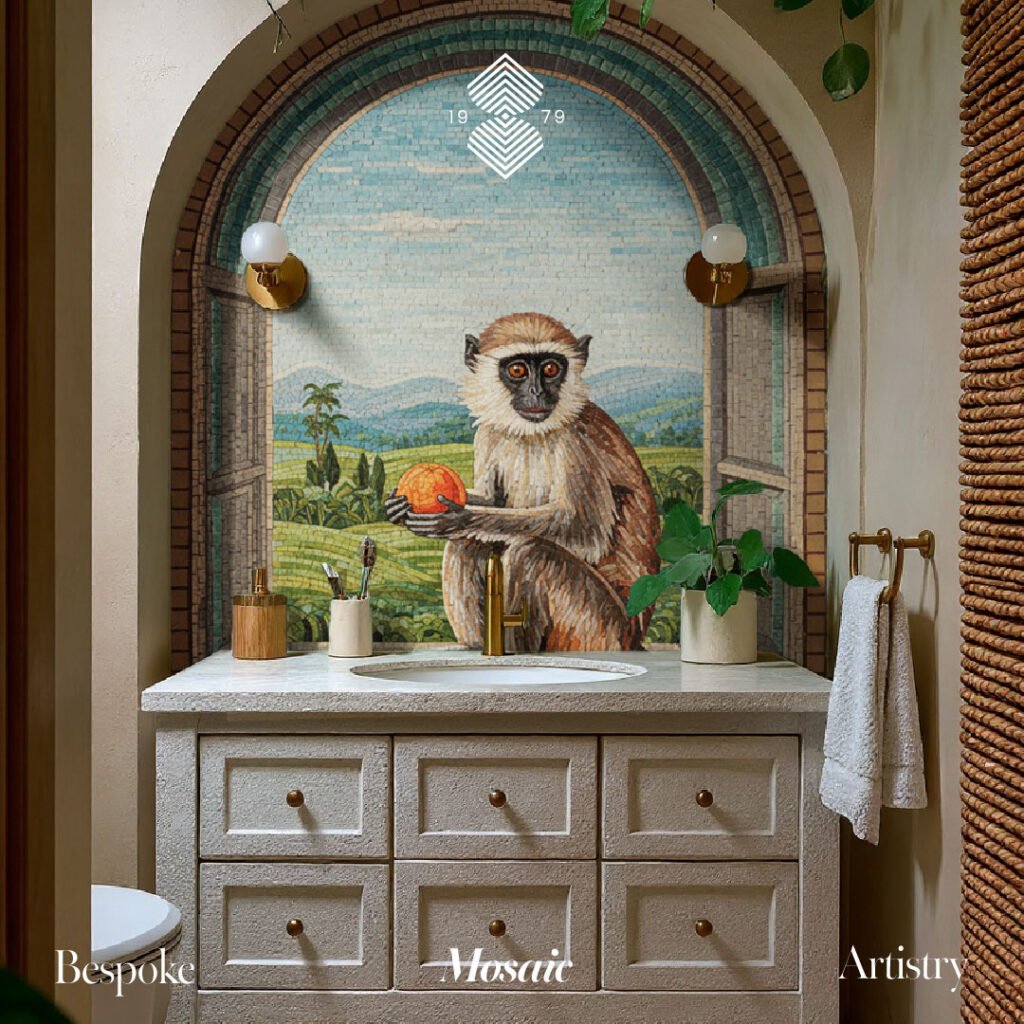
“Is wild harmony mosaic art too bold for luxury interiors?” It can be, if you treat it like a poster.
But when you design it as architecture, it becomes timeless. Keep the palette controlled. Place it where it belongs. Scale it correctly. Let the space breathe.
How do you choose the Right Animal for a Personal Legacy?
Start with what you want the space to communicate:
- Protection
- Authority
- Identity
- Prosperity
- Calm power
Then choose the animal that carries that message naturally. That’s how you turn animal mosaic ideas into something meaningful.
Will Animal Mosaic Art be Symbolic or Dated over time?
It won’t, if you avoid novelty.
Timeless animal wall mosaic art shares three traits:
- Restrained composition
- Disciplined color control
- Architectural placement
Trend-heavy styling fades. Symbolic clarity doesn’t.
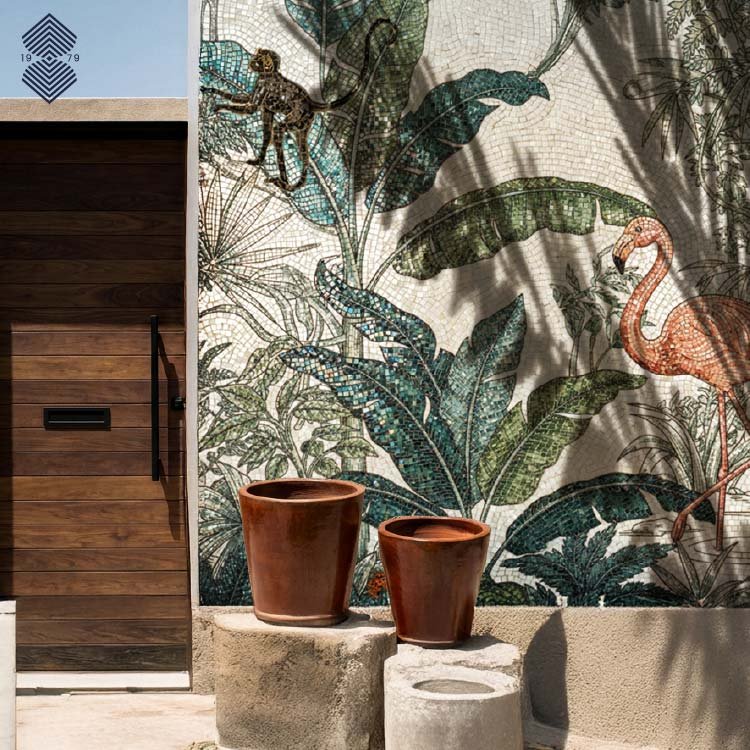
Where should you Place Animal Mosaic Art for Long-Term Relevance?
Put it where the building already has authority:
- Thresholds
- Axial walls
- Major transitions
- Feature zones with purpose
Avoid placing a powerful symbol in a random corner. It weakens the message.
Proof Through Heritage: Why Animal Mosaics Endure
Roman mosaic sites still attract awe because they prove two things:
- Mosaics can survive extraordinary spans of time
- Animal symbolism still reads clearly centuries later
Villa Romana del Casale alone preserves around 3,500 m² of mosaics and includes major hunting and animal scenes, one reason it’s recognized as a UNESCO World Heritage Site. That’s the real proof. Not theory. Not a trend. Endurance.
Interpreting Animal Mosaic Art with MEC Artworks
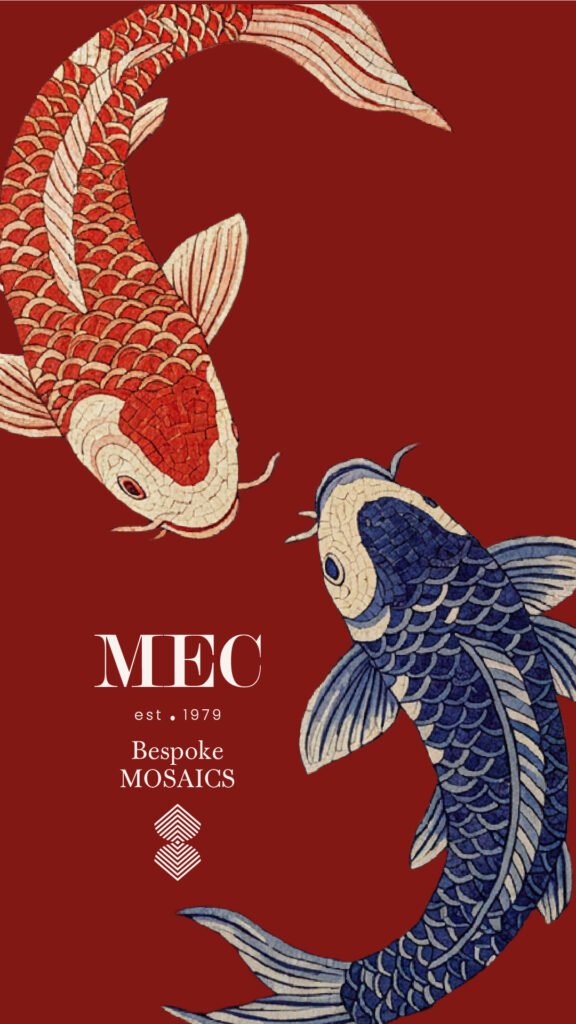
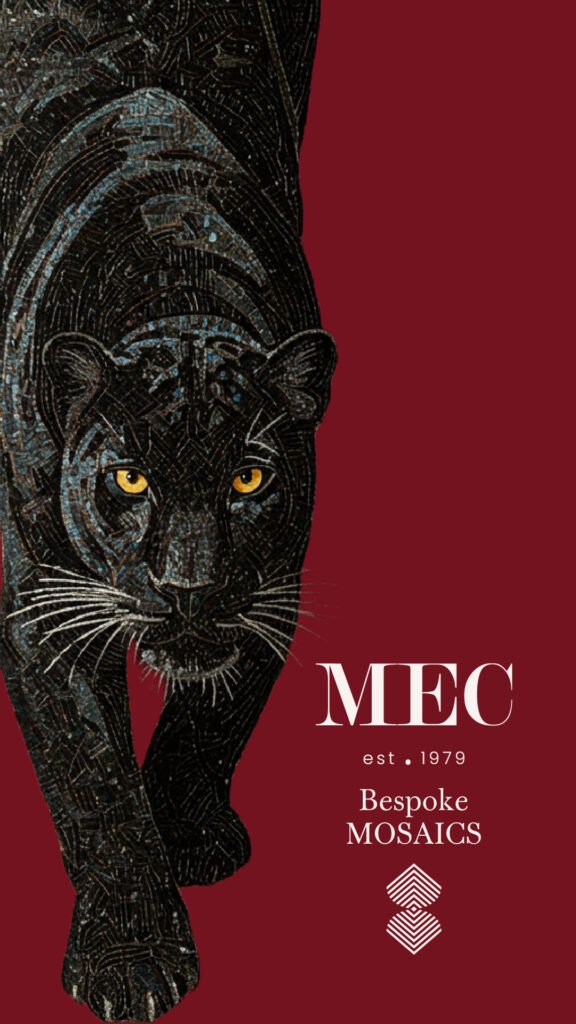
If you want animal mosaics to feel timeless, the process matters as much as the design.
At MEC Artworks, our mosaic tile art services create animal mosaic art as architectural storytelling crafted for villas, pools, and feature spaces across Dubai, Abu Dhabi, and the wider Gulf. We help clients choose symbolism that fits their space, then translate it into a refined mosaic composition built to last. Because the right animal doesn’t just decorate a surface, it leaves a signature.
Final Thoughts
Animals have always served as powerful symbols in art, carrying meanings tied to strength, protection, identity, and the natural world. From Roman animal mosaics to contemporary animal mosaic art, these forms continue to translate human values into a visual language that feels instinctive and timeless.
When integrated thoughtfully, mosaic art animals become more than decoration. They shape atmosphere, anchor architecture, and preserve stories that remain relevant long after trends fade.
FAQ
What animals were most common in Roman animal mosaics?
Roman animal mosaics most commonly featured lions, horses, eagles, dolphins, fish, bulls, and birds of prey. Each animal carried a specific meaning: lions symbolized authority and protection, eagles represented power and vision, while marine animals reflected wealth and control over water. These choices were rarely random and often tied to the status or function of the space.
Are animal mosaic art pieces purely symbolic or personal?
They can be both. In many historical examples, animals represented universal symbols like strength or dominance. However, some mosaics reflected personal identity, profession, or family lineage. Today, animal mosaic art often blends symbolic meaning with personal preference, making each piece unique to the space and its owner.
How long does it take to design a custom animal mosaic?
Design timelines vary based on scale and complexity. Concept development and artwork design usually take several weeks, especially for detailed or architectural compositions. Because animal forms require careful proportion and movement, the design phase is crucial and shouldn’t be rushed.
Can animal mosaic art be adapted for walls, floors, or pools?
Yes. Animal mosaic art is highly adaptable and can be designed for walls, floors, courtyards, pools, and spa areas. Material selection, scale, and layout are adjusted based on the surface and environment to ensure both visual impact and long-term performance.
How durable are animal mosaics in high-traffic environments?
Mosaics are among the most durable art forms when properly installed. Stone and glass mosaics resist wear, moisture, and temperature changes, making them suitable for high-traffic floors and wet areas. This durability is one reason Roman animal mosaics have survived for centuries.
Does animal mosaic art increase cultural and property value?
Yes. Thoughtfully designed mosaics add cultural depth and architectural distinction to a property. Because they are permanent and handcrafted, mosaic art animals often enhance both aesthetic value and long-term property appeal, especially in luxury residences.
How early should animal mosaic ideas be finalized in a project timeline?
Animal mosaic ideas should be finalized early in the design phase, ideally during architectural planning. Early integration allows proper alignment with scale, lighting, materials, and spatial flow, ensuring the mosaic feels intentional rather than added later.