 UAE & GCC

Some Roman mosaics command attention with a single figure. Others create their effect through repetition: a meander turning around a floor, an acanthus leaf unfolding across a border, or waves moving continuously along an architectural edge. This variety is what makes ancient Roman mosaic motifs so useful for contemporary design. You can borrow one element rather than recreate an entire historic composition. A rosette can anchor a foyer, a botanical frieze can frame a wall, while a marine pattern can bring movement to a pool.
For UAE homes, the possibilities extend across marble entrance halls, courtyards, bathrooms, pools, and large feature walls. The challenge is choosing a Roman motif that works with the scale and architecture of the space.
Table of Contents
What Counts as an Ancient Roman Mosaic Motif?
Think of a Roman motif as part of a visual vocabulary. Meanders create order. Vines introduce movement. Floor medallions establish focal points. Figures tell stories. The Romans often combined these elements rather than treating them as separate designs. A geometric frame could surround botanical ornament, while a figurative or floral centerpiece provided the main focus. For a contemporary mosaic project, you can use the same principle without copying a historic floor. Select the elements that suit the architecture and build the composition around them.
The Geometric Patterns Rome Made Famous
Geometric mosaic design is one of the easiest ways to introduce Roman character without making an interior feel heavily themed. Repeated lines, circles, diamonds, waves, and interlocking forms create rhythm across large surfaces. They can also connect different architectural elements, particularly across floors, corridors, courtyards, and pool surrounds.
The Meander Roman Mosaic Motif
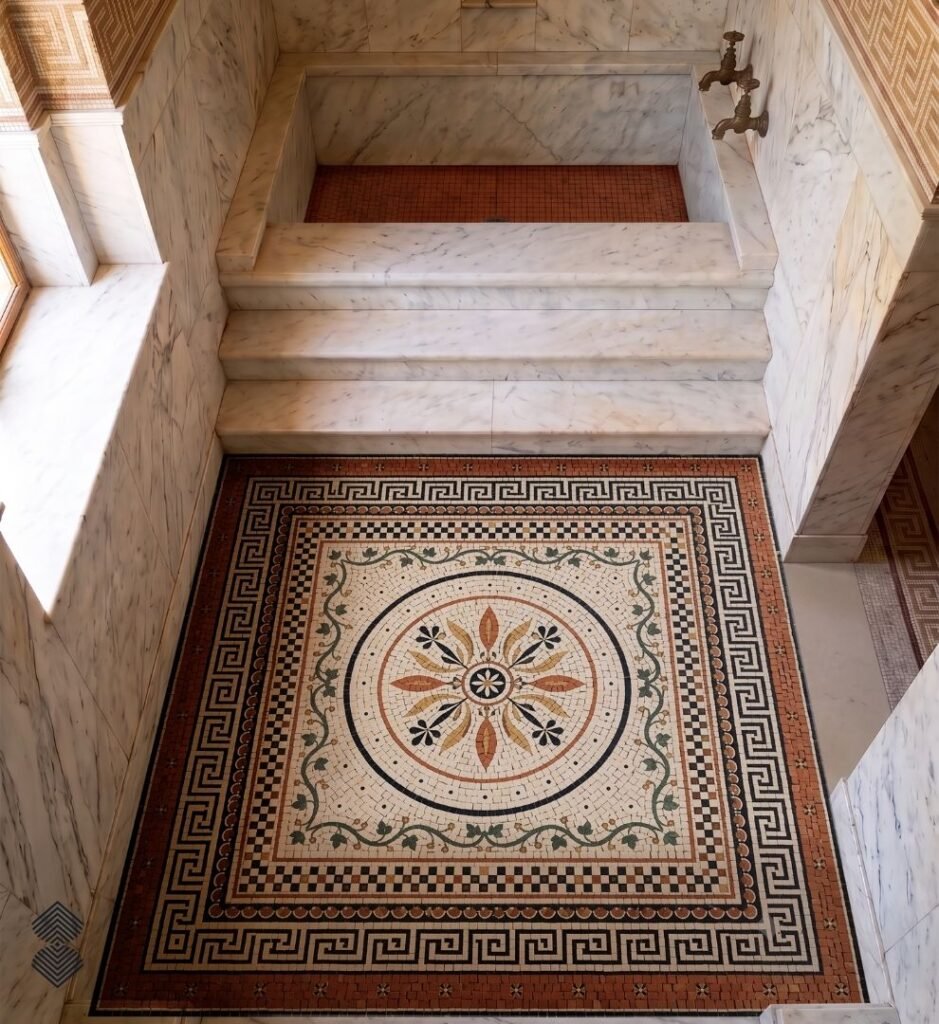
The meander is built from a continuous line that repeatedly turns back on itself. Its geometry makes it particularly effective as an architectural frame. From a design perspective, the meander mosaic pattern works best when its width responds to the surface. A narrow band can quietly edge a hallway. A wider version can establish a strong perimeter around a large marble foyer. For instance, this meander-pattern mosaic border shows how this classical geometry can become a defined design feature rather than simply a decorative edge.
Medallions and Rosettes
Medallions work differently from continuous borders. They create a destination for the eye. A circular rosette can sit at the center of a square floor, creating contrast between two geometries. Leaves, petals, stars, or radiating stone segments can then add detail without filling the entire surface. For a UAE villa entrance, the medallion can also respond to the room itself. Its diameter, border width, surrounding marble, and position should relate to doors, columns, furniture, and the main approach into the space.
Friezes and Dado Borders
Roman pattern doesn’t need to cover an entire wall. A frieze can carry ornament horizontally above a doorway or around a room. Dado borders can create a lower architectural line that connects walls, niches, and columns. These applications work especially well when the surrounding marble or plaster already has a strong character. Instead of competing with it, the mosaic becomes an accent. A geometric treatment such as a marble mosaic border can achieve the same idea through repeated forms.
Botanical Motifs: Acanthus, Vine, and Laurel
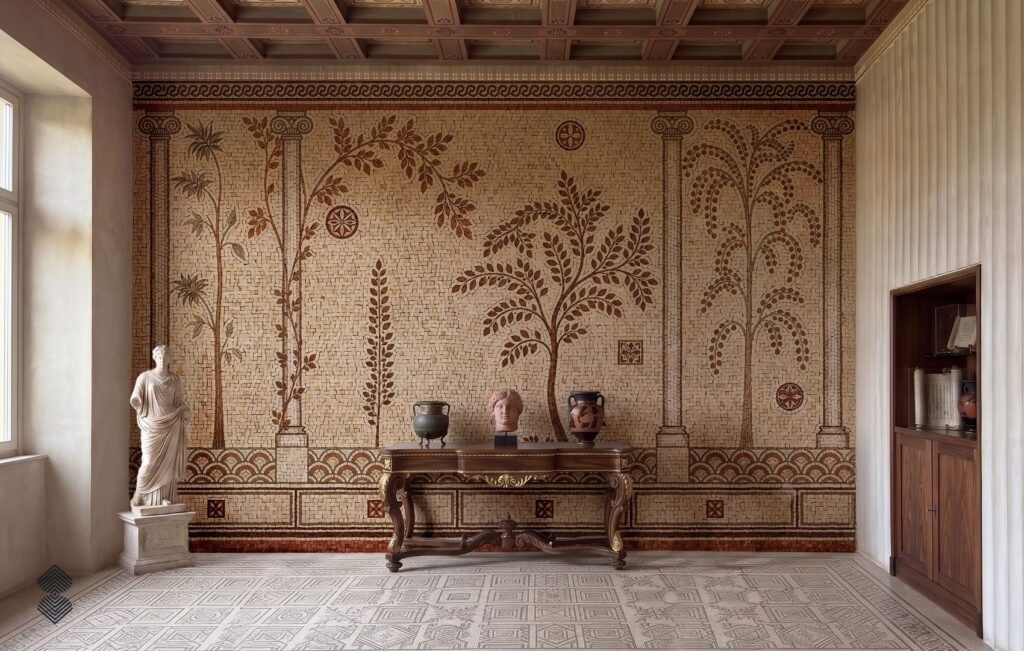
Roman botanical design rarely feels static. Leaves turn outward, vines curl through borders, and branches extend across the composition. That makes botanical ornament useful when an interior needs something softer than strict geometry.
Leaf Motifs
An acanthus leaf mosaic design can be symmetrical and formal or more freely composed depending on the architecture. For a large feature wall, the leaf doesn’t need to remain historically small. Enlarging its curves can make the design more visible from across a room. In a narrow border, the same form can be simplified into a repeating sequence. It demonstrates another way to use classical plant forms through controlled repetition. This is particularly useful in UAE interiors that already combine marble, carved details, arches, and columns. The botanical leaf motif can echo those features without introducing another heavy geometric layer.
Vine, Grape, and Laurel Borders
Vines naturally lead the eye. Their stems can follow a long wall while leaves and grapes break the repetition. Laurel produces a cleaner rhythm and can work particularly well around niches, medallions, or architectural panels. For designers, the important decision is density. A border with tightly packed foliage will appear richer and more ornamental. More open spacing gives the motif a lighter contemporary character.
Mythological and Figural Scenes in Ancient Roman Mosaic Motifs
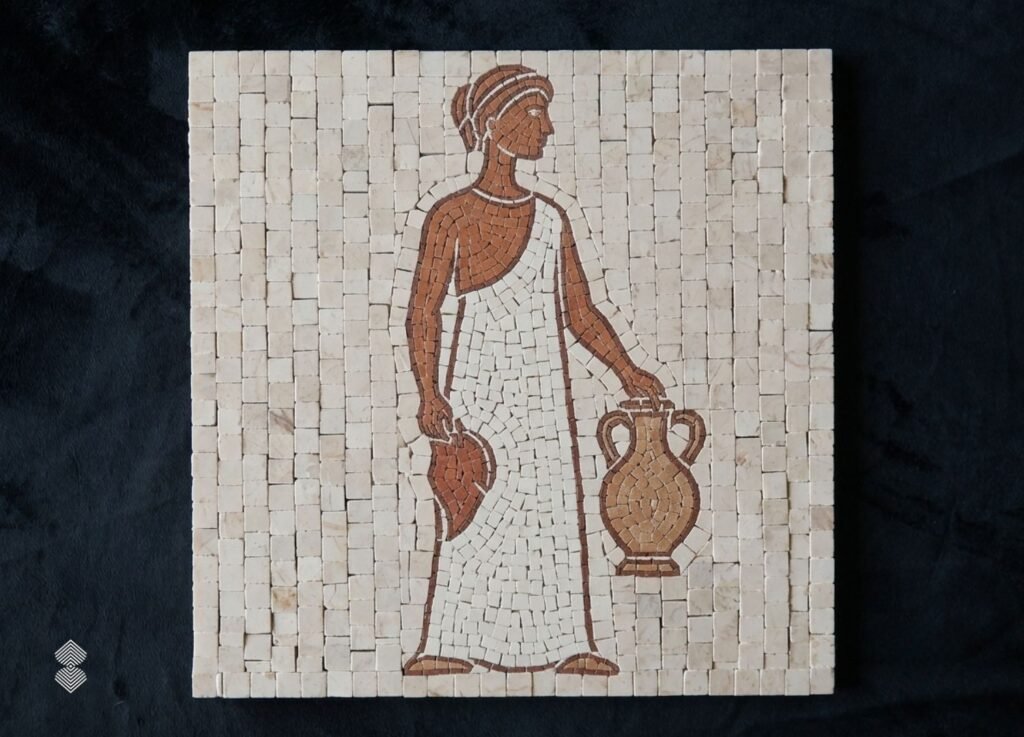
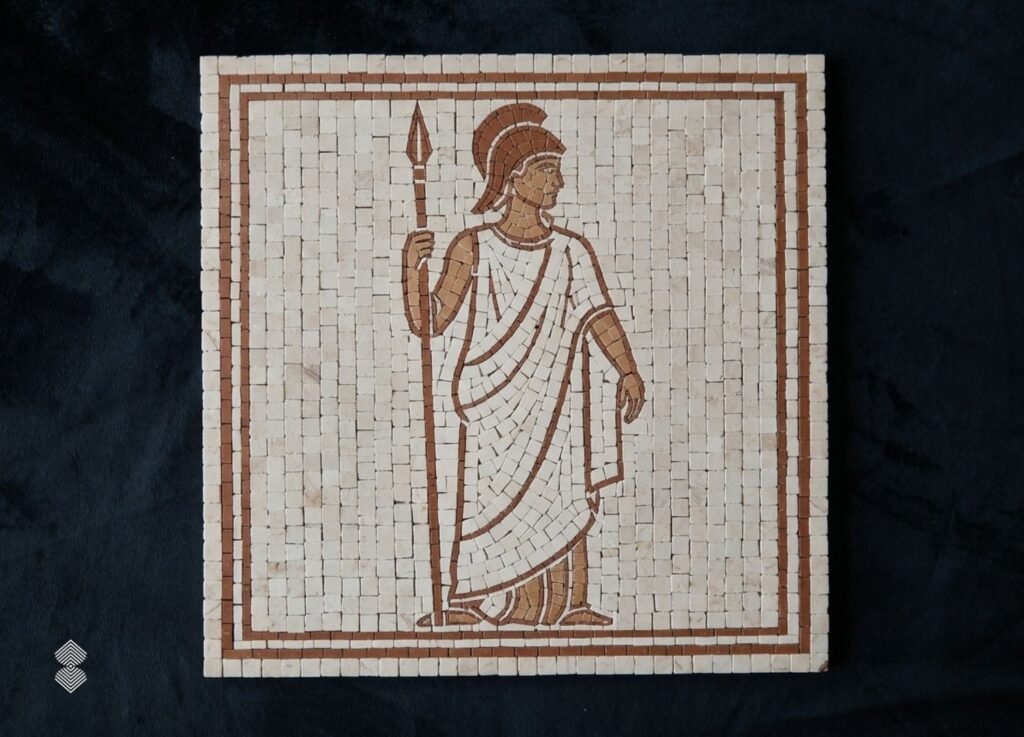
Figurative mosaic changes the role of the surface. Instead of functioning mainly as pattern, the mosaic becomes an artwork that people stop to look at. This makes scale, viewing distance, pose, and surrounding negative space especially important.
Mythological and Human
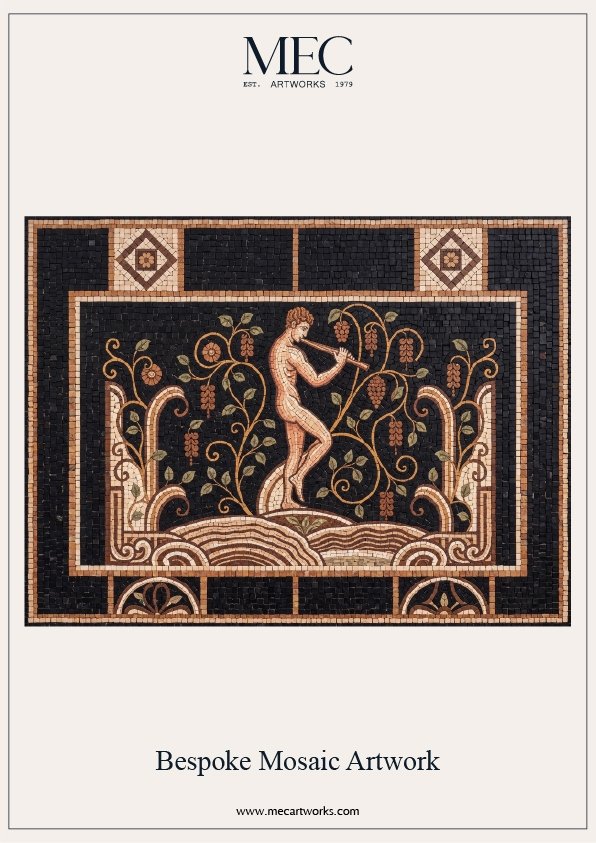
Mythological mosaic motifs can feature gods, heroes, musicians, warriors, or other classical figures. However, adding more detail doesn’t automatically create a stronger composition. For a large wall, start with the silhouette.
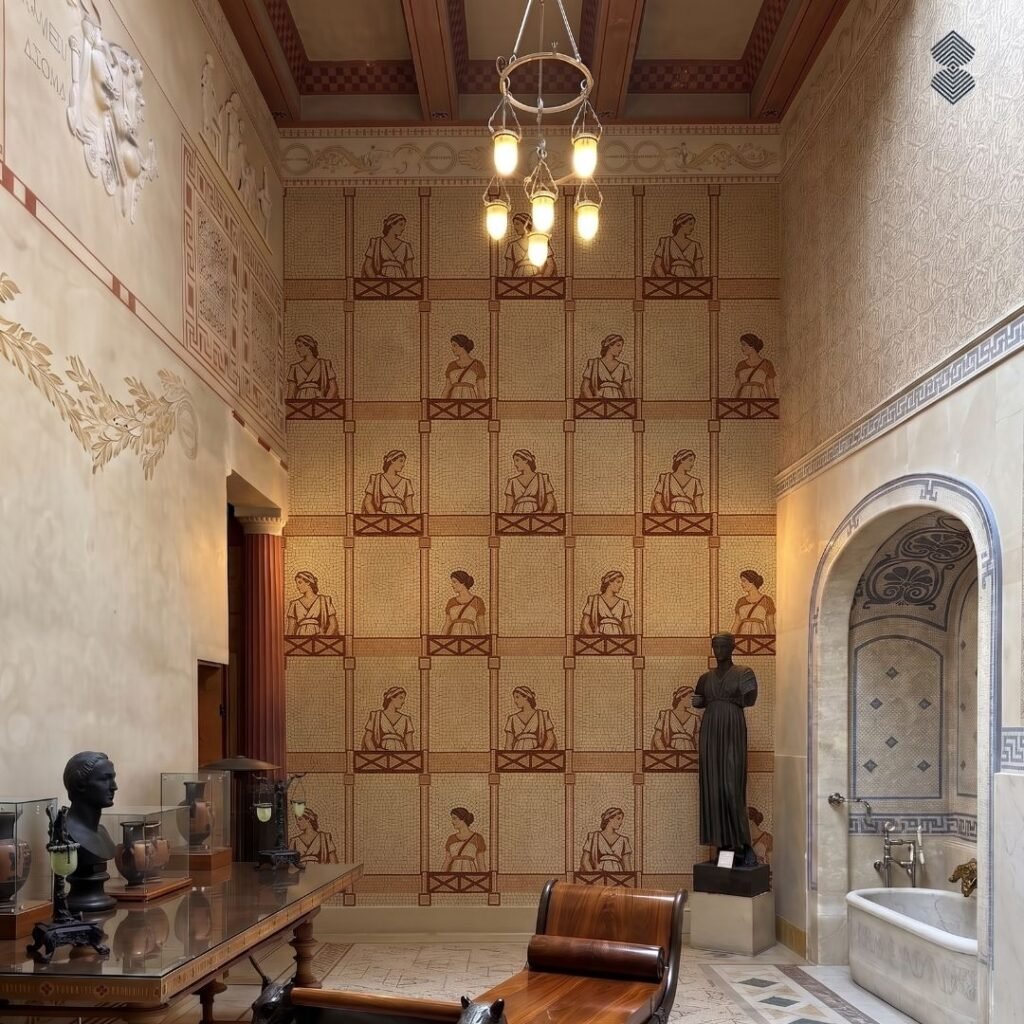
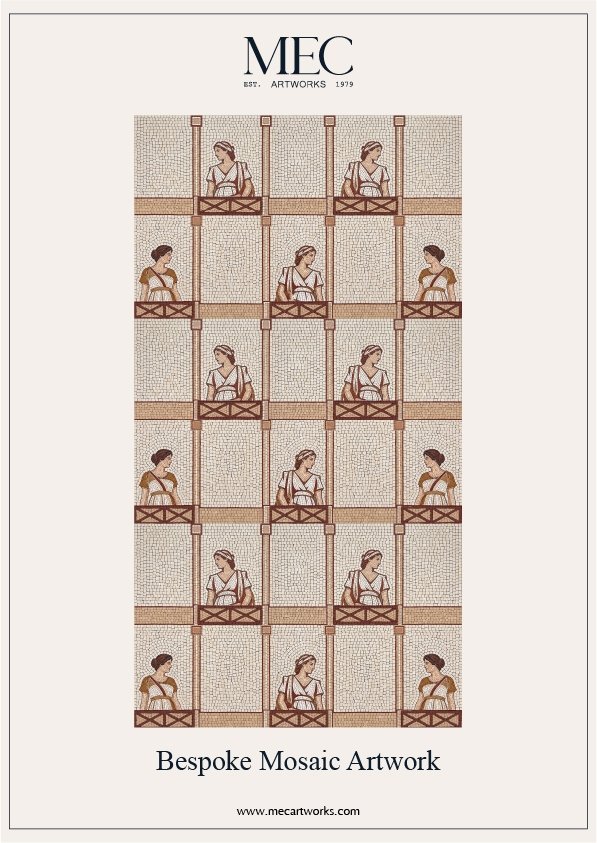
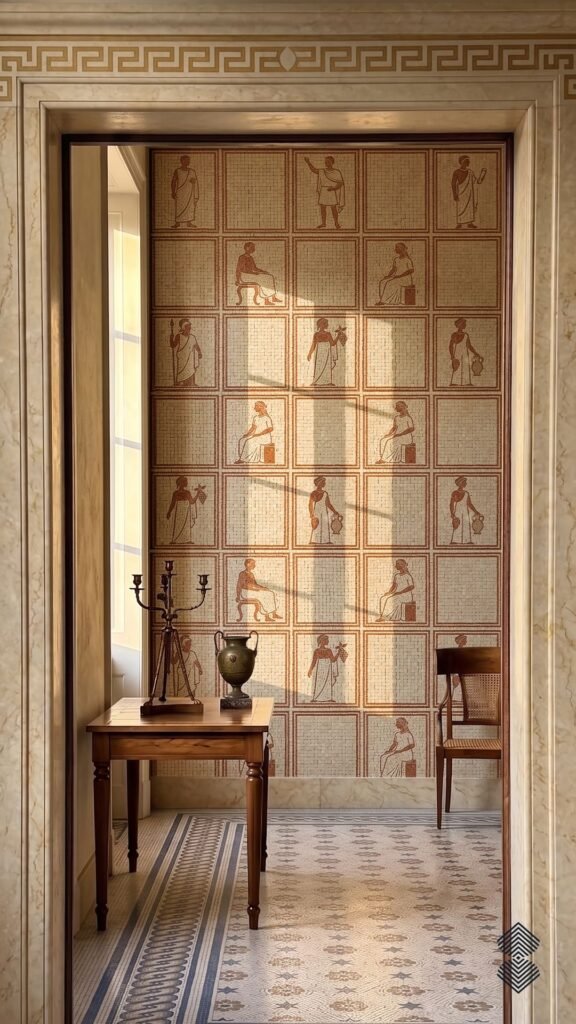
Can you recognize the figure from the opposite side of the room? Does the pose have enough movement? Is there enough space around it? Once those decisions work, smaller tesserae can develop the face, garments, hair, and accessories. A repeated grid of classical figures offers another approach. Rather than creating one enormous scene, individual figures can occupy separate architectural panels. This can work particularly well on tall walls where vertical repetition helps emphasize the room’s height.
Marine Deities and Sea Creatures in Roman Mosaic Art
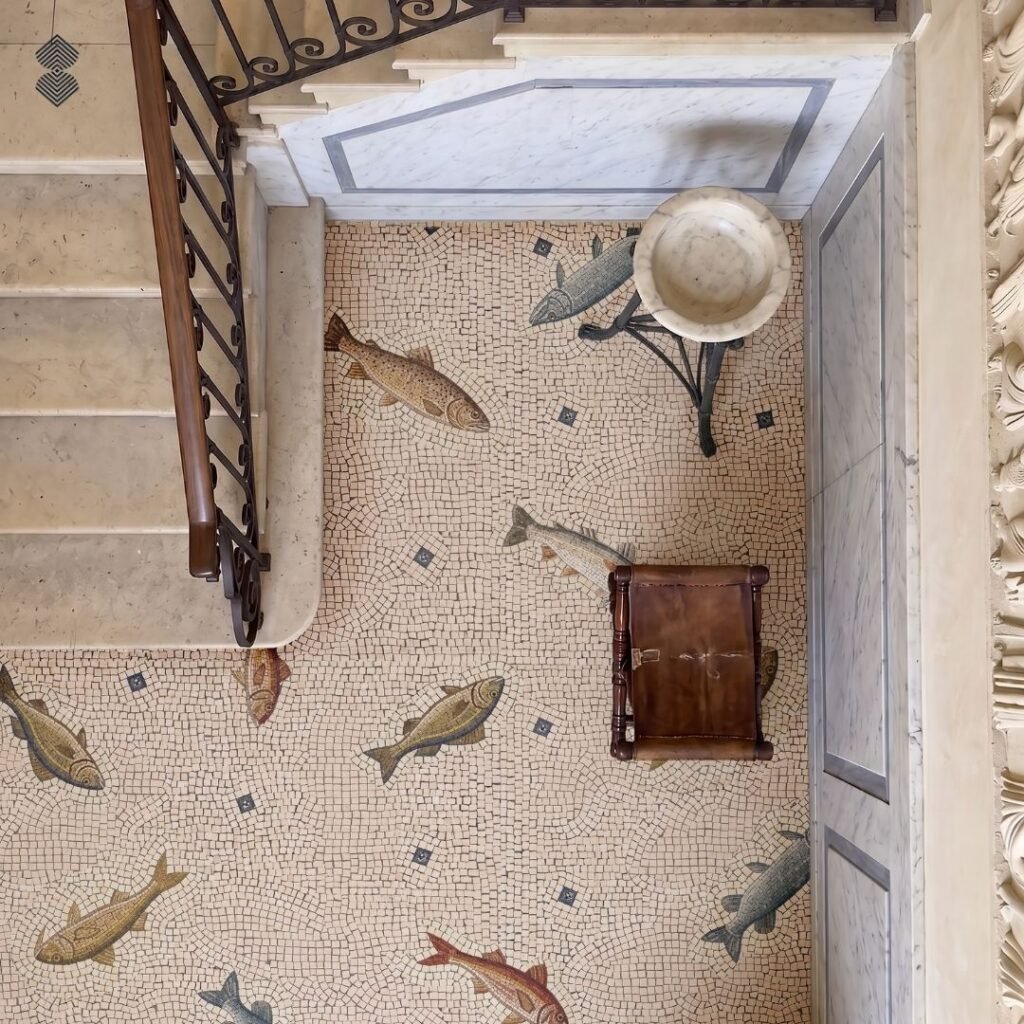
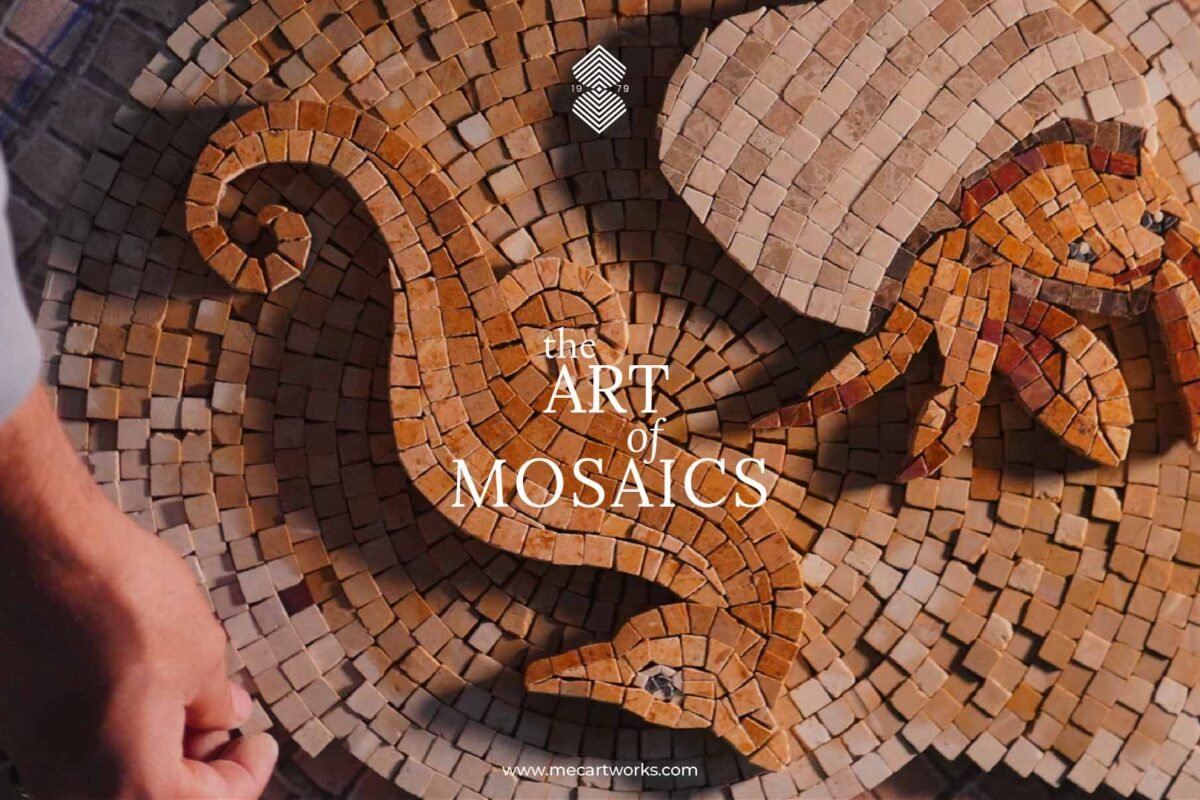
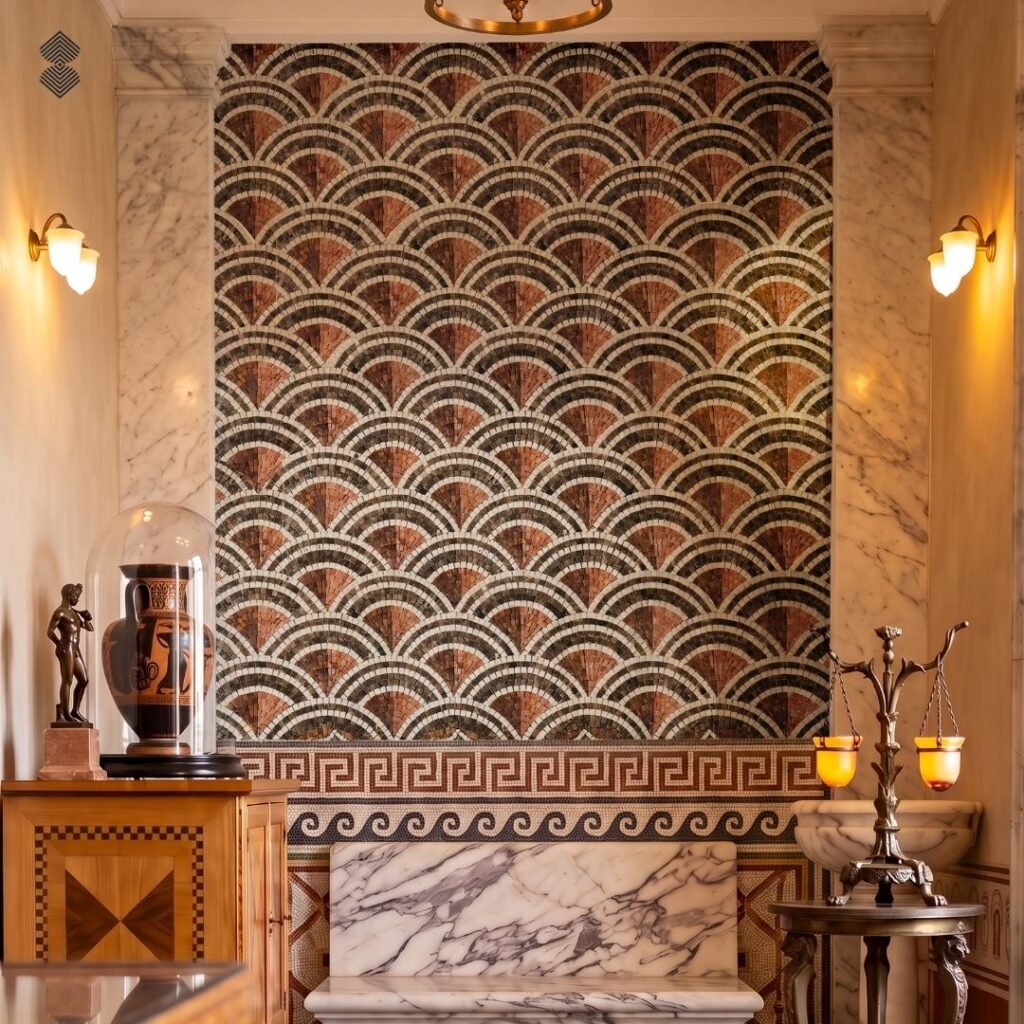
Roman marine imagery offers a natural connection to UAE pool design. Fish, waves, shells, dolphins, and sea creatures bring movement to the composition, while mythological marine figures can create a stronger focal point. Tesserae can follow the curves of waves, fins, and flowing forms to reinforce the sense of movement through water.
These motifs can cover an entire pool floor or appear more subtly along waterlines, steps, borders, and central medallions. Glass can also introduce blue, turquoise, and deeper ocean tones, giving traditional Roman imagery a more contemporary character.
The Colour Palette Behind These Roman Motif Designs
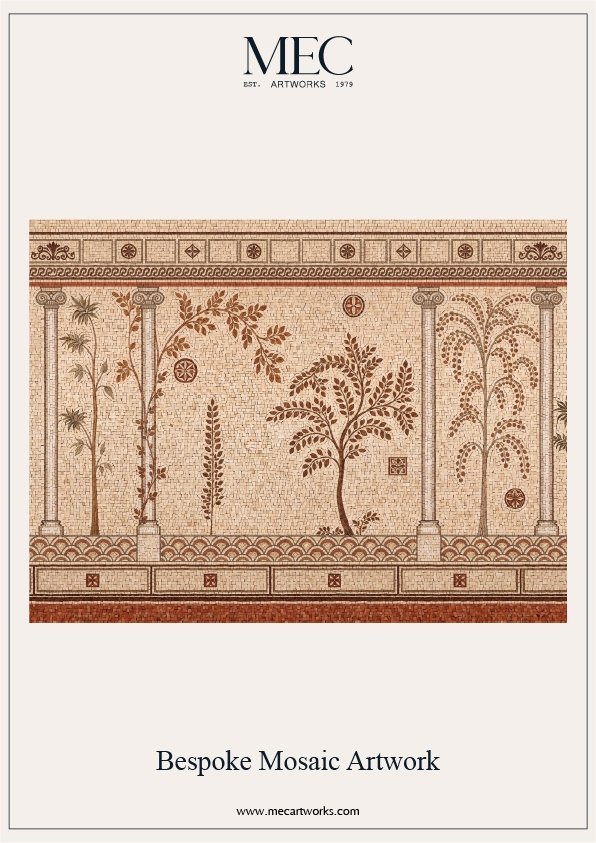
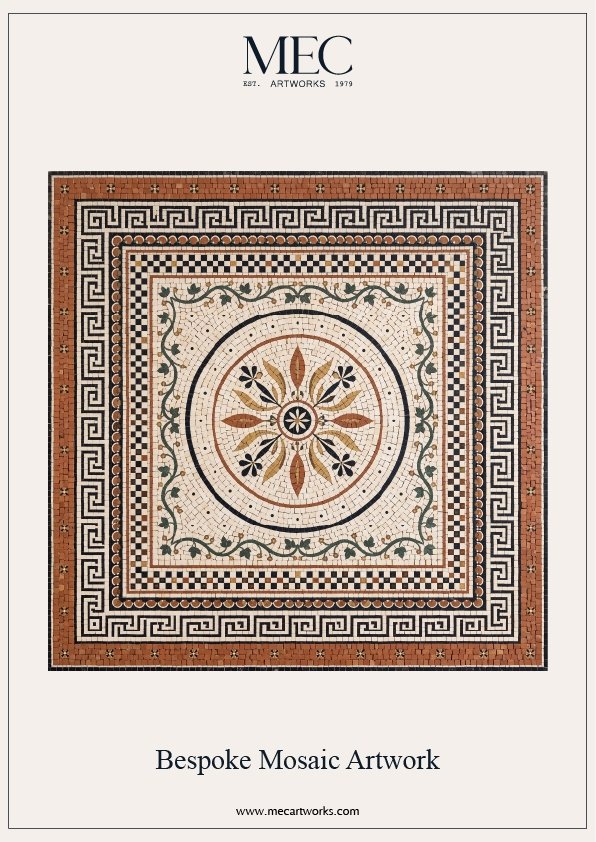
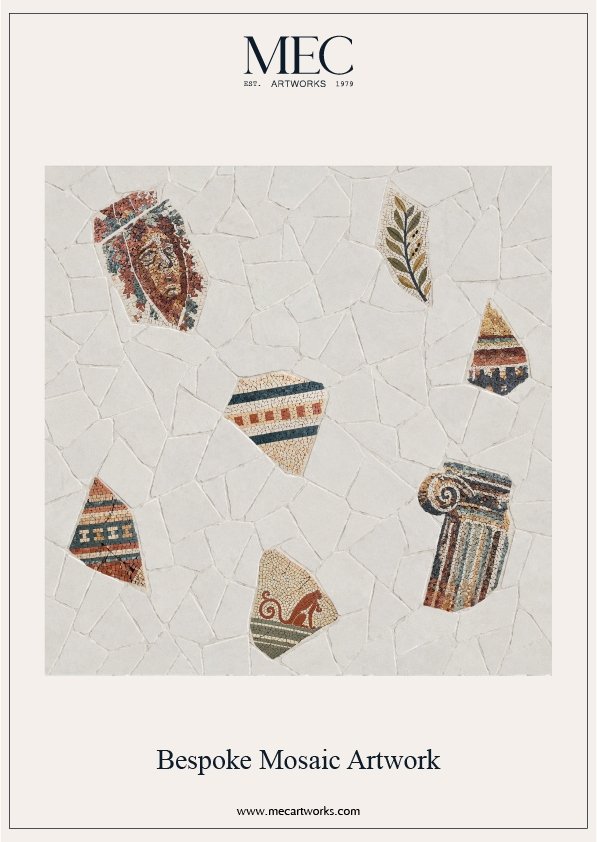
You can often establish a Roman character through color before introducing an obvious Roman symbol. A traditional Roman mosaic colour palette can combine ivory, cream, terracotta, ochre, muted green, warm brown, deep red, and black. Natural stone variation prevents these colors from looking flat.
For UAE interiors, the palette can respond to the surrounding finishes. A cream marble interior might use terracotta and dark brown for subtle contrast. A more dramatic entrance could introduce black outlining. Pool designs can shift toward glass in blue, turquoise, or green while retaining Roman-inspired geometry. The goal isn’t to make new work look artificially old. Material, proportion, and pattern can establish the historical reference without imitation aging.
How Roman Motifs are Recreated in Hand-cut Glass and Stone Today
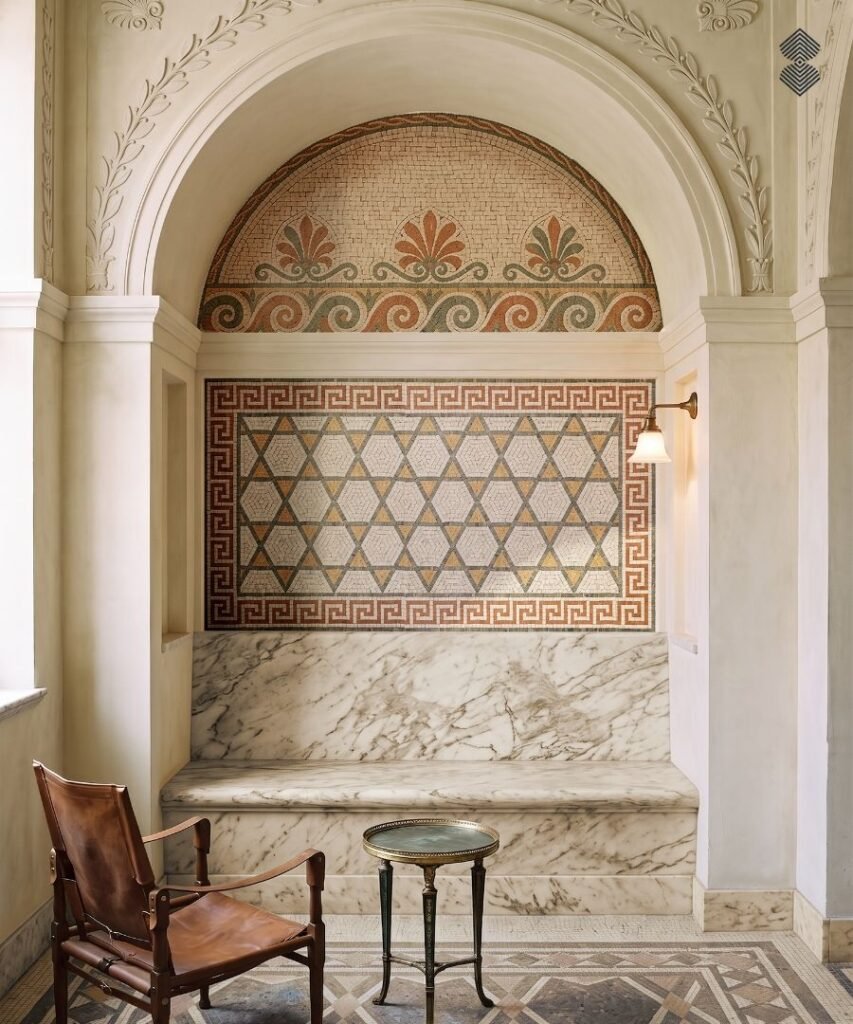
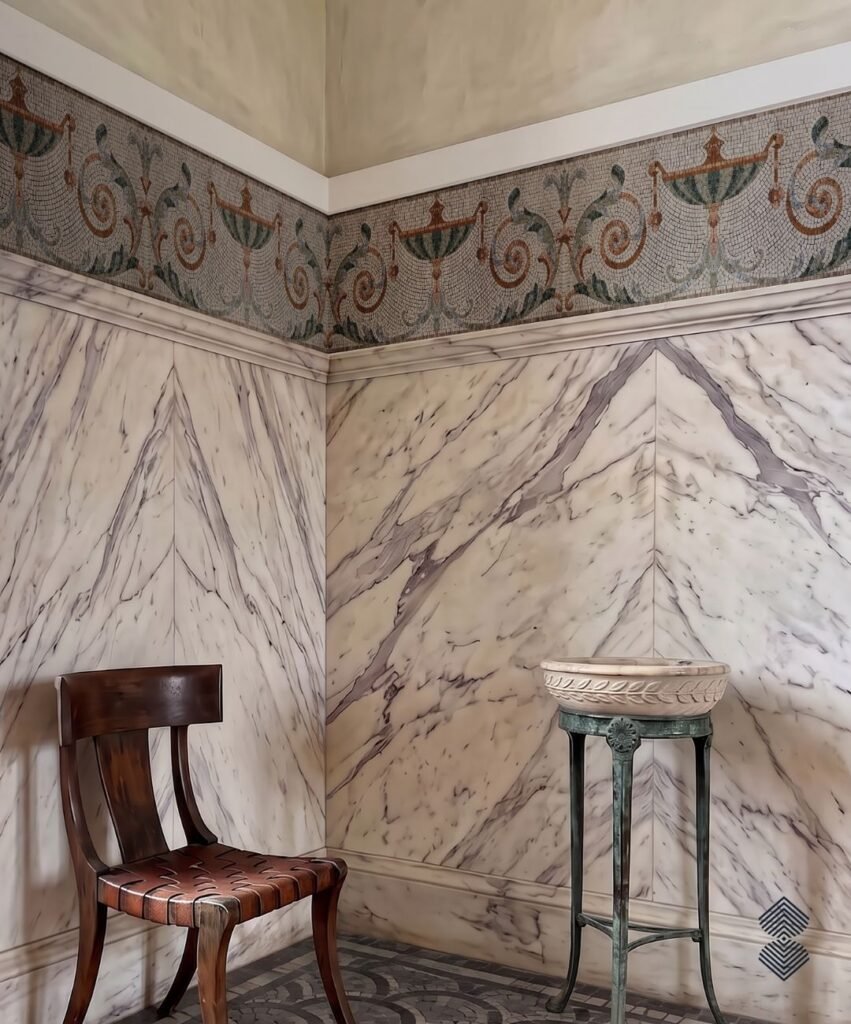
Historic inspiration is only the starting point. To create a Roman motif for a contemporary project, the artwork needs to respond to its actual dimensions. Borders must turn correctly at corners. Medallions need enough surrounding space. Figurative details must remain readable. Repeating patterns need to finish cleanly at architectural edges. Hand cutting also gives the designer control over the direction of individual tesserae. Around a leaf, pieces can follow its curve. Around a figure, they can describe the folds of clothing. Within a wave, the rows themselves can reinforce movement.
Material changes the character further. Marble gives ancient Roman mosaic motifs natural tonal variation and works particularly well with classical palettes. Glass can introduce stronger color and reflection where the application calls for it. Recreating Roman design today is not simply about reproducing an old pattern. The motif needs to be adapted to the scale, material, and surface of the new space.
Where Ancient Roman Mosaic Motifs Work Best in a UAE Home
Roman-inspired mosaic works particularly well where architecture already creates a natural frame. An entrance floor, pool, courtyard, bathroom niche, arched wall, or long hallway gives the motif boundaries to respond to. That usually produces a stronger result than adding decoration to a surface without considering the surrounding architecture.
Pool Floors and Courtyard Paving
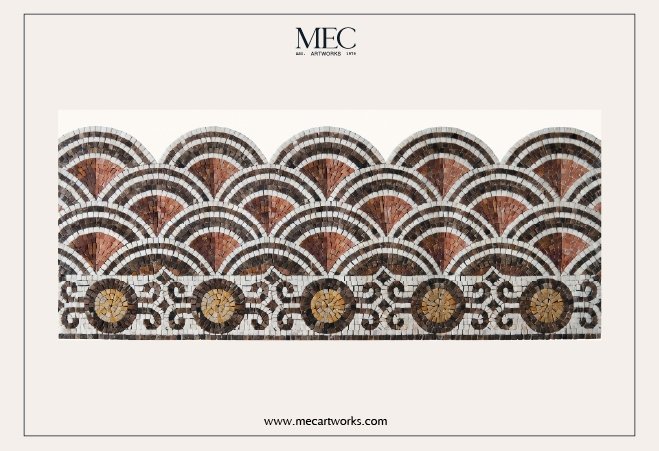
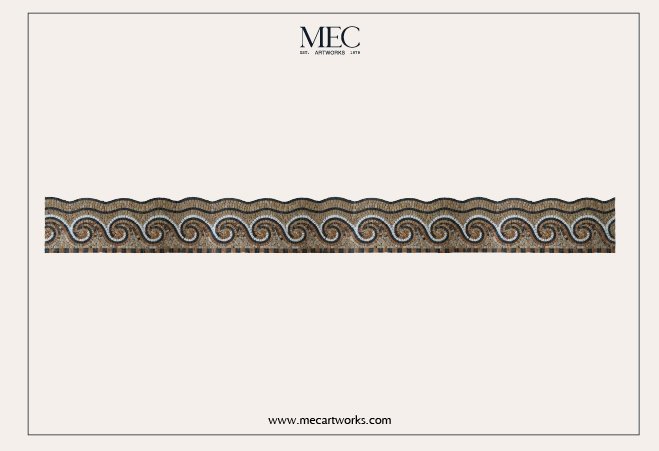
For pools, the architecture should guide the motif. A rectangular pool can support strong linear borders. Curved pools may work better with waves or flowing marine imagery. A large pool floor can accommodate figurative and medallion centerpieces, while smaller pools may benefit from a restrained waterline pattern.
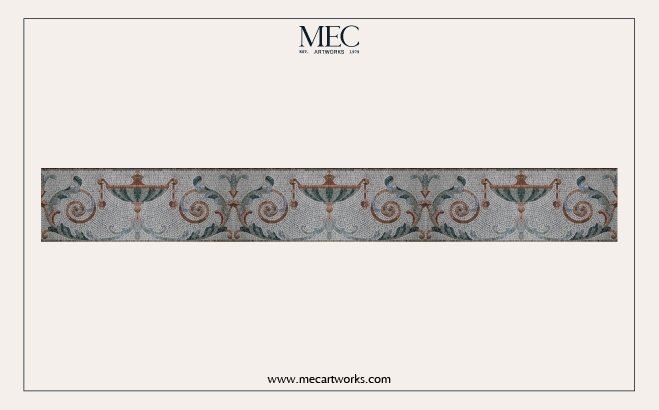
Courtyards can use a different visual hierarchy. Ancient Roman mosaic motifs such as geometric borders can define the perimeter, while a central rosette can anchor a seating or fountain area. For exterior applications, material selection, substrate, waterproofing, grout, movement requirements, and environmental exposure should also be considered.
Bathroom and Hallway Feature Walls
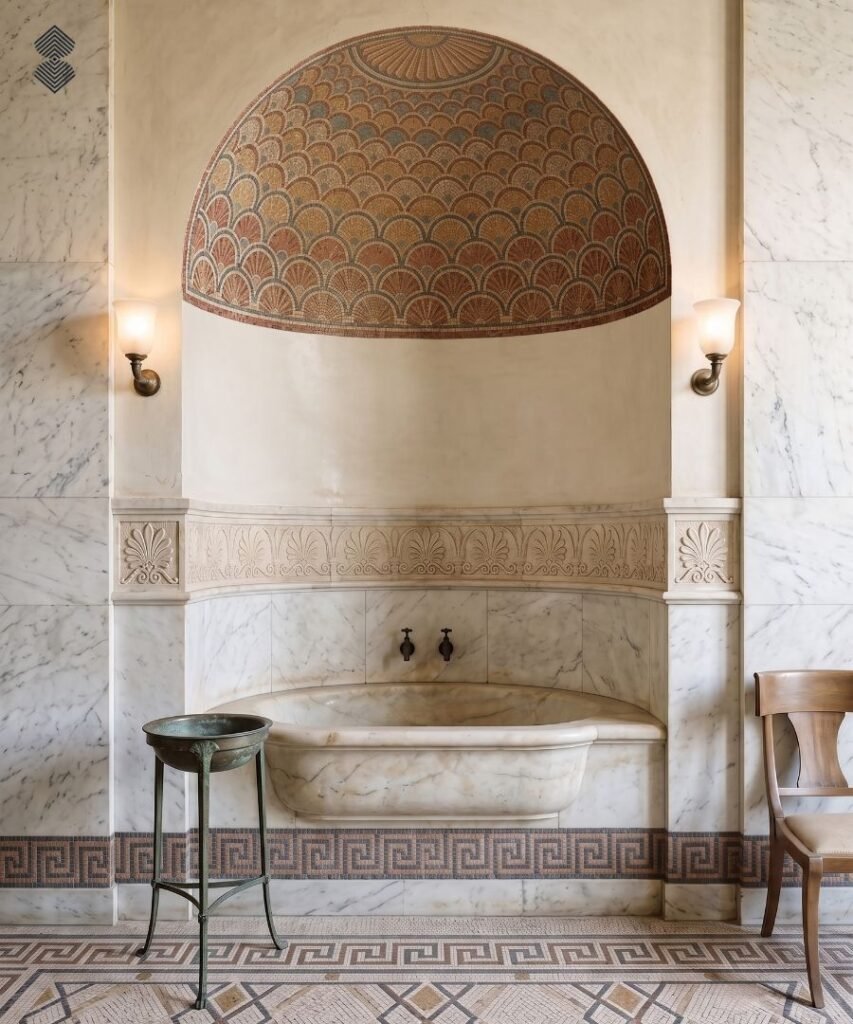
Bathrooms allow Roman motifs to become more intimate. A small botanical panel can sit within a shower niche. A geometric border can frame marble. An arched wall can hold a classical pattern that follows its shape.
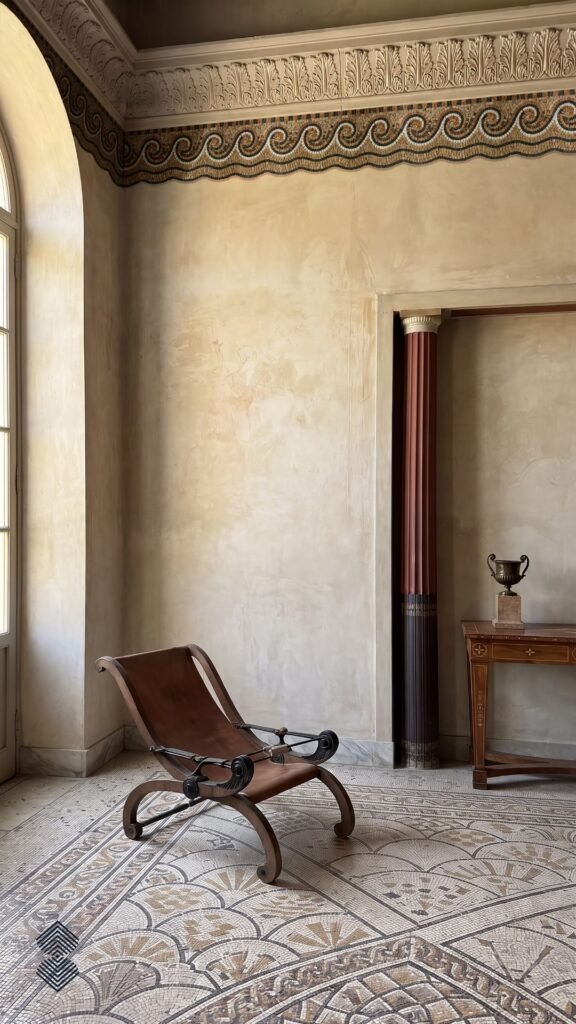
Hallways need more directional thinking. Repeating waves, vines, guilloche, or meanders can visually carry you through the space. On a feature wall, however, the approach can become more pictorial. A single classical figure or larger botanical composition can act as artwork rather than repeating ornament.
Commission Ancient Roman Mosaic Motifs With MEC Artworks
A custom Roman motif mosaic UAE project doesn’t need to begin with a finished pattern. You can start with a Roman reference, architectural drawing, room dimensions, material sample, historic artwork, or simply a motif you like. The design can then be developed around the actual surface.
That might mean adjusting a meander to fit a hallway exactly, scaling a medallion for a villa entrance, simplifying botanical details for a niche, or translating a Roman marine reference into glass for a swimming pool.
Before fabrication, the design can also be visualized in relation to the intended space. This makes it easier to assess scale, placement, color direction, pattern density, and overall composition before moving into hand-cut production. The result doesn’t have to make the room look ancient. It should make a historic design language feel intentional within contemporary architecture.
Final Thoughts: Roman Design for Contemporary UAE Spaces
Ancient Roman mosaic motifs still work because their strength lies in proportion, rhythm, movement, and detail. Meanders can frame a hallway, botanical patterns can soften a courtyard, while marine imagery can bring character to a pool or spa. For UAE interiors, these historic ideas don’t need to be copied exactly. They can be reworked in marble and glass to suit the architecture, color palette, scale, and purpose of the space. The result feels rooted in classical design while remaining distinctly contemporary.
FAQs
What Are the Most Common Ancient Roman Mosaic Motifs?
Common ancient Roman mosaic motifs include meanders, waves, guilloche, rosettes, stars, acanthus leaves, vines, laurel, human figures, animals, marine life, and mythological imagery. Roman compositions often combined geometric, botanical, and figurative elements within the same surface.
Can a Roman Motif Mosaic Be Made in Glass Instead of Stone?
Yes. Ancient Roman mosaic motifs can be recreated in stone, marble, or glass. Stone and marble provide natural variation associated with classical palettes, while glass offers stronger color and reflection. The material can be selected according to the motif, surface, environment, and desired visual effect.
Are Ancient Roman Mosaic Motifs Suitable for Outdoor Pools in the UAE?
Yes, when the materials and complete installation system are suitable for submerged and exterior conditions. Roman waves, marine forms, geometric borders, and medallions are particularly adaptable to pool design. Technical requirements should be determined according to the specific pool and installation conditions.
How Long Does a Custom Roman Motif Mosaic Take to Make?
It depends on the size and complexity of the ancient Roman mosaic motifs. A repeating geometric border takes less time than a detailed hand-cut figurative mural. Tessera size, materials, revisions, dimensions, and installation planning also affect the schedule. A project-specific timeline can be confirmed once the artwork and dimensions are finalized.
Can Roman Motifs Be Scaled Down for a Small Feature Wall?
Yes. However, the composition should usually be redesigned rather than simply reduced. A small wall may benefit from one rosette, figure, wave, meander, or botanical motif instead of several competing elements. Simplifying the design keeps the Roman reference clear and balanced. You can also use the MEC AI Mosaic Studio to visualize how different Roman motifs, scales, and placements could look in your space before developing the final mosaic design.