UAE & GCC


In order to view and appreciate the breathtaking works of the Renaissance, art lovers have been travelling across the globe. Now, imagine being able to bring in that exact feel into your living space. That is exactly what is about to happen. You do not need to book a ticket to France or Italy in order to admire such artwork. Our carefully crafted mosaic designs featuring these historical treasures will now have a permanent spot in contemporary houses and commercial areas, including yours.
During the design planning phase, homeowners tend to go for regular tile work. Some settle for sea life mosaic art for their pool, while others opt for a geometric design for their hallway. However, we then have people who have a deep interest in classical artwork that leans towards rich history. As a result, by converting genius of Leonardo, Raphael and Michelangelo into glass and stone, striking and memorable artwork is built, one that lasts for decades.
Let us explore how some of the most popular paintings have been reimagined tile by tile. We will closely analyze the particular works of Renaissance artists and understand how a sophisticated brushstroke is translated into a mosaic artwork crafted with hundreds of tiny glass pieces.
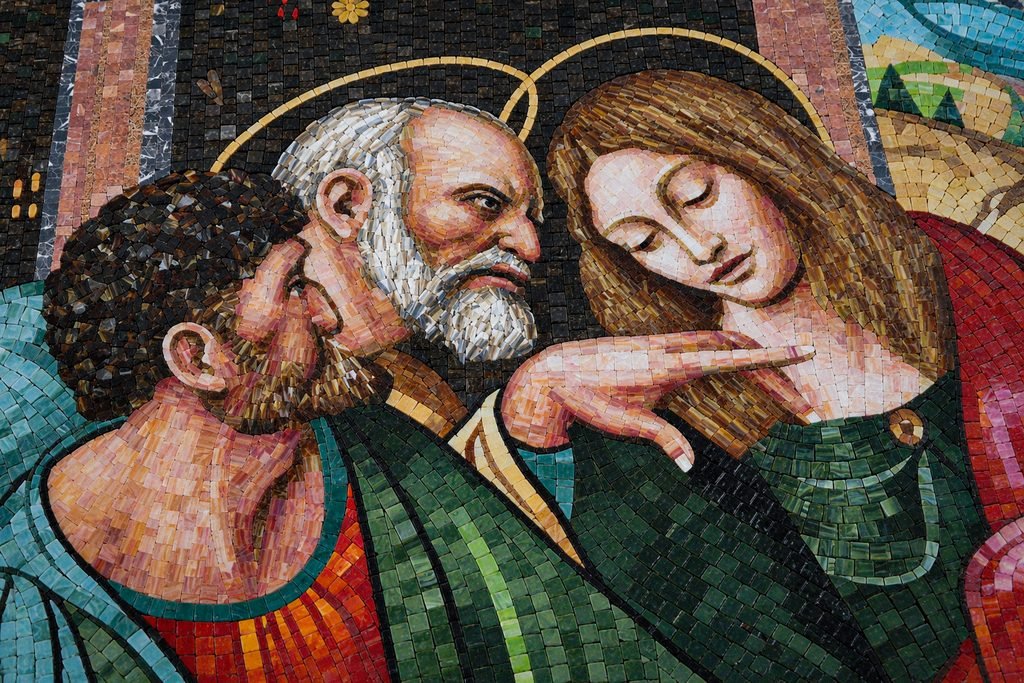
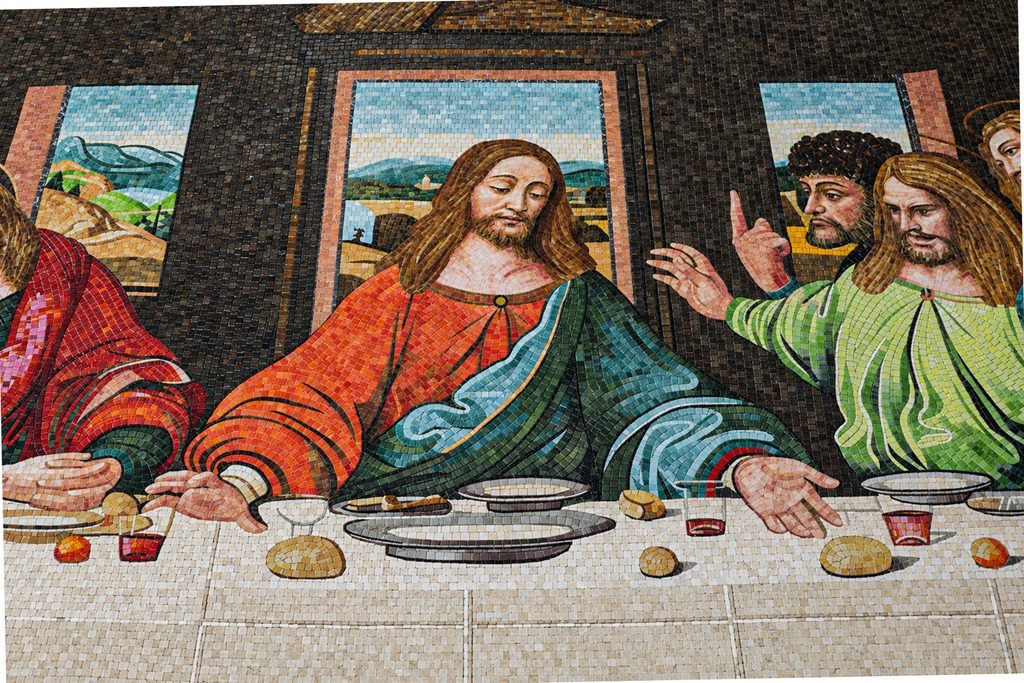

Table of Contents
Why Renaissance Art Works So Well as Mosaic Art
Renaissance art is deeply admired for multiple reasons. It carries a certain emotional resonance and introduces a deep perspective, adding a very rich feel to your room. Many people are intrigued as to how a mosaic artwork which consists of stone and glass pieces can encapsulate the delicate blending techniques of oil paint. This is closely connected to the nature of tesserae. Tesserae are essentially the tiny tiles that are used to form a mosaic. When you look at these from a distance, our eyes naturally merge these small pieces into one complete picture.
The saturated tones within Renaissance art can be beautifully transformed into glass tiles while oil paints tend to fade over a period, glass mosaic art remains intact for a lifetime. What this tells you about our mosaics is that investing in a custom mosaic artwork crafted by MEC means attaining a special mosaic design that will never lose its charm.
Here is a quick look at why these classical styles adapt so perfectly to this medium:
| Artistic Element | How It Appears in Famous Paintings | How It Is Recreated in Mosaic Art |
| Sfumato (Soft Blending) | Subtle, blurred transitions between colours | Using closely matched shades of micro-mosaics |
| Chiaroscuro (Light & Dark) | Dramatic shadows contrasting with bright light | Dark stone mixed with highly reflective glass tiles |
| Linear Perspective | Mathematical lines drawing the eye inward | Directional tile laying (andamenti) to guide the eye |
| Fresco Texture | Matte, integrated into plaster walls | Natural tumbled marble and unglazed ceramic |
Leonardo da Vinci Paintings in Mosaic Art
A discussion pertaining to Renaissance artist is incomplete without Leonardo da Vinci, which is usually the first name that pops up in one’s mind. His work is a beautiful blend of scientific precision and deep human emotion. Changing Leonardo da Vinci paintings in terms of applying them to a new medium requires one to be both an artist and an engineer. This is because you need to capture his classic sfumato technique. This is basically an Italian Renaissance painting method which softens the transitions between different tones. It leaves a hazy and smoky impact without any rigid and stiff borders.
The Last Supper
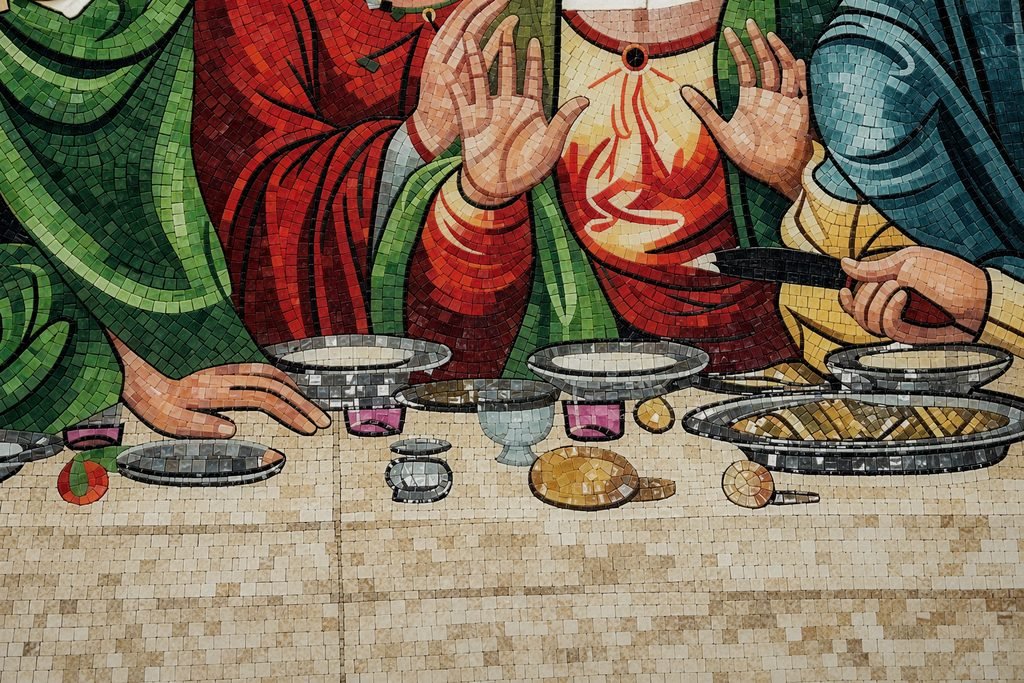
The last supper is very popular for offering high level of depth and perspective. It was originally painted on a dining hall wall in Milan. The interesting part about this artwork is that it instantly pulls your attention right to the middle. While recreating this in the form of a mosaic, artisans incorporate neat, clear rows of tiny rectangular tiles to create the straight lines of the room and the long table.
Creating the apostles’ faces can be tricky. To make sure that they pull this off perfectly, our highly skilled artisans use small bits of tile fitted closely together. What this does is that it lets all the expression and emotion on their faces be displayed clearly. Therefore, although the mosaic is made from hard glass and stone, you can still feel the organic and fluid touch in the final look.
The Annunciation
These paintings by Leonardo are still considered masterpieces; they consist of detailed and vibrant landscapes of Mary and the Angel Gabriel. To craft a mosaic of the Annunciation, our highly skilled artisans use deep greens and subtle browns for the background. Shiny glass is usually used in order to create a shimmery effect which resembles the angel’s birdlike wings that Leonardo painted.
The Virgin of the Rocks
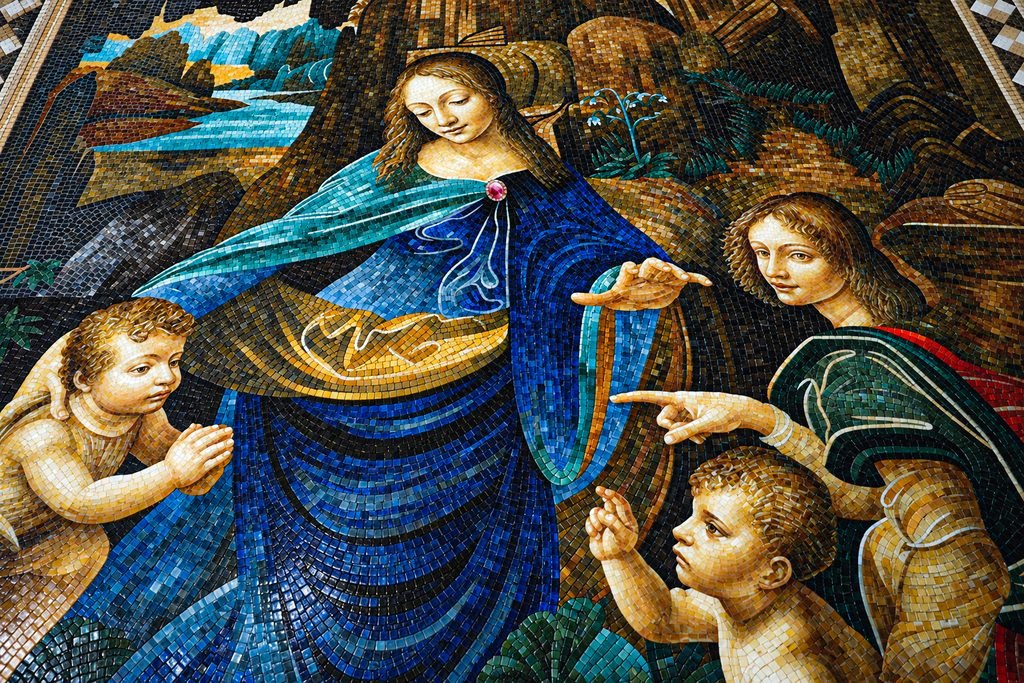
Known for its dark and mysterious background contrasting with the soft and shiny skin of the figures, a mosaic design of the Virgin of the Rocks requires dark, matte stones. As far as the skin tones of the figures is concerned, artisans contrast it with bright, refined marble or glass. This artwork serves as a permanent centerpiece for your living space, adding substantial visual depth to it.
Lady With an Ermine
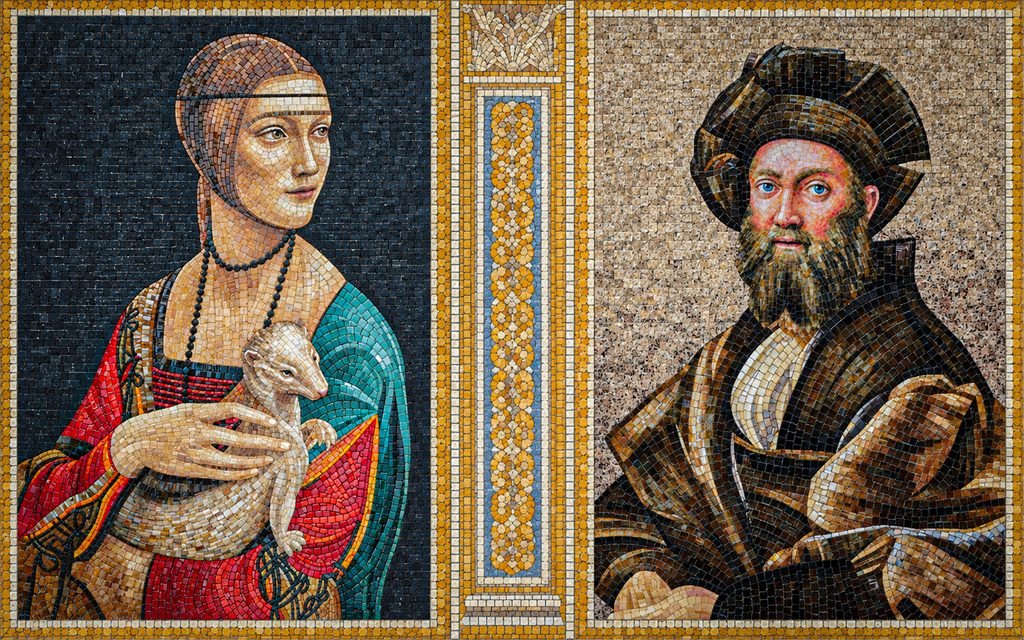
Converting portraits into tiles honestly requires the highest level of skill. It is not an easy task. In the painting Lady with an Ermine, The most important elements are the woman’s eyes and the soft fur of the animal that she is holding. To convert it into a mosaic artwork, artisans have to cut and arrange every single tile in a specific way. This process requires a lot of patience. It exhibits how Leonardo da Vinci’s paintings can be translated into a wonderful design in stone that would last for decades to come.
Raphael Paintings in Mosaic Art
Raphael was celebrated for the absolute clarity of his forms and the effortless grace of his compositions. His work stands as the peak of High Renaissance harmony. Where Leonardo was mysterious and Michelangelo was dramatic, Raphael was perfectly balanced. That balance is what makes his paintings so deeply satisfying to translate into glass and tile. Every figure rests exactly where it belongs, and every curve flows into the next, so the finished mosaic feels calm, composed, and quietly radiant.
The School of Athens
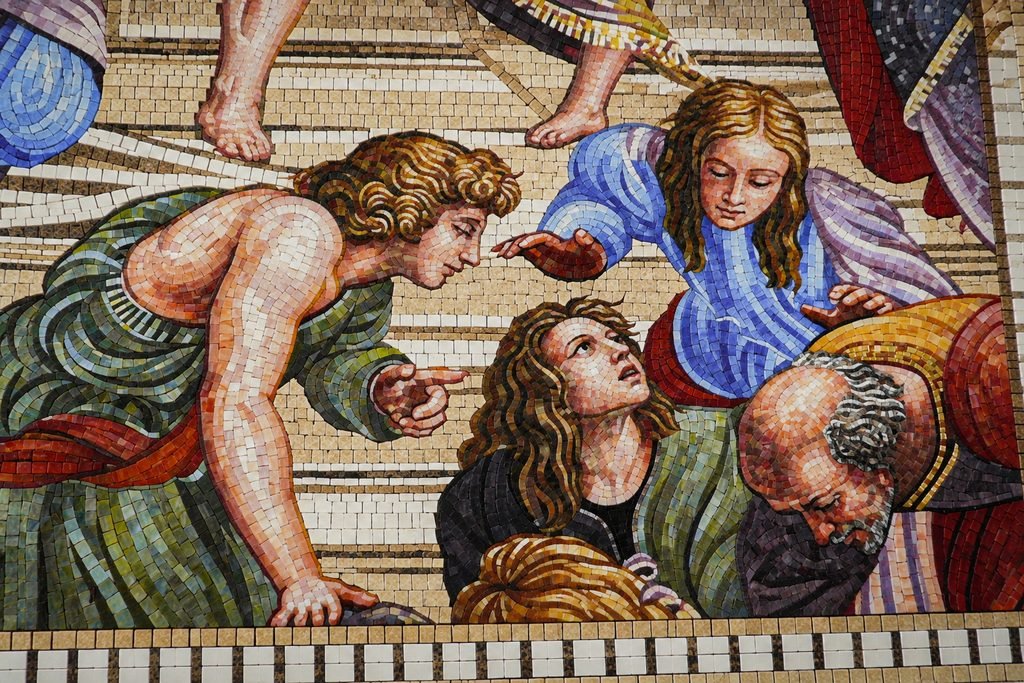
Perhaps the most celebrated of all Raphael’s paintings, the School of Athens makes for an ideal candidate for a grand wall mural in a library or study room. Translating it into mosaic calls for a rich palette of colors to give each philosopher their own presence. The result is a scene where classical architecture and philosophy meet in glass, as timeless as the original painting.
Portrait of Baldassare Castiglione
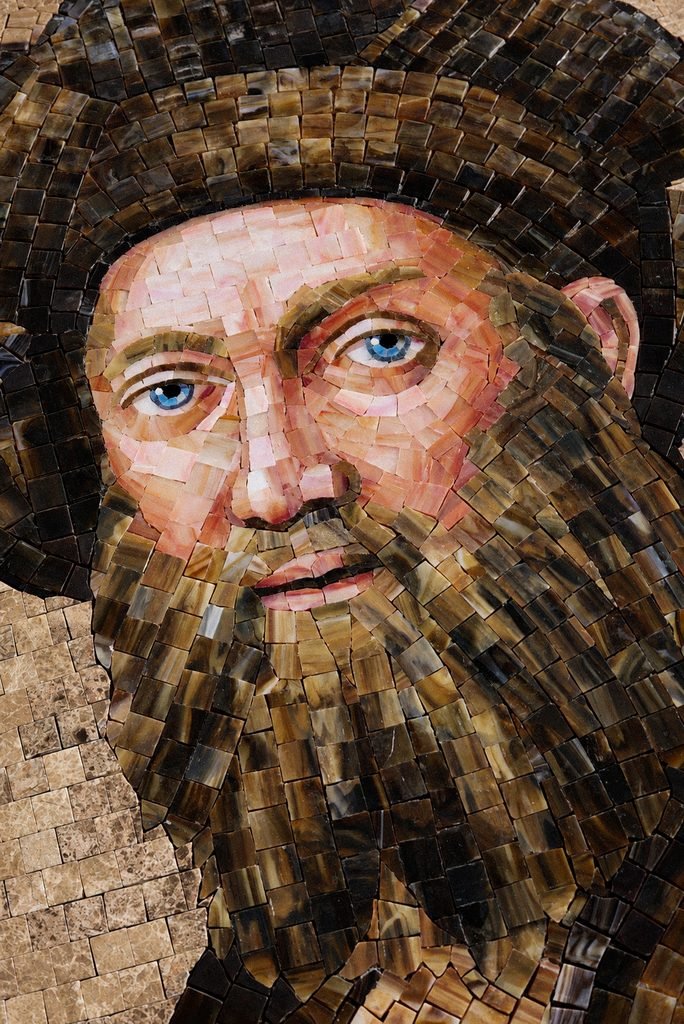
The Portrait of Baldassare Castiglione is considered one of the greatest portraits of the Renaissance. Its subject gazes out with an intelligent, calm expression, wrapped in richly textured winter garments in beautifully subdued tones. To capture this in mosaic, our artisans work in heavily textured natural stones in earthy shades to echo wool and fur. The result is a portrait that feels effortlessly graceful.
Michelangelo Paintings in Mosaic Art
Michelangelo considered himself a sculptor more than a painter. That inclination was evident in his work. His figures felt as if they were carved out of stone, with impeccable musculature. And, since mosaic is a stone-based medium, Michelangelo’s work can be translated into it with natural ease. Individual pieces of stone and glass can be put together in a way that replicates human anatomy.
The Creation of Adam
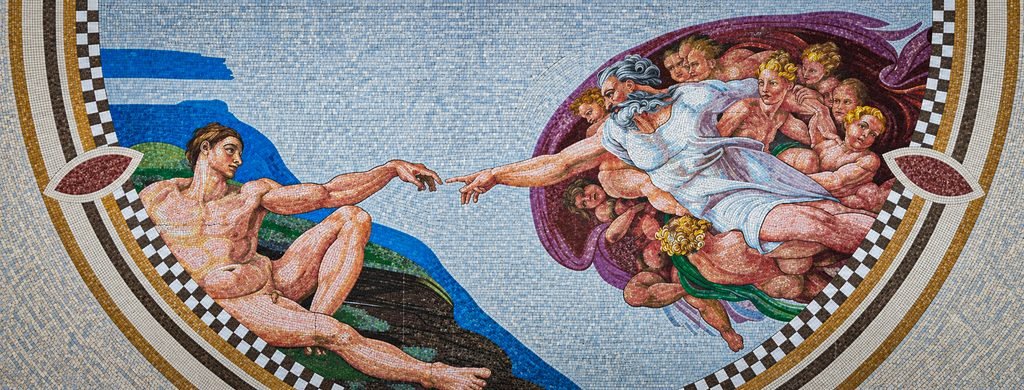
The most iconic scene on the Sistine Chapel ceiling is The Creation of Adam, a moment frozen in time by the near-touching fingers of God and Adam.
When adapted into a wall mural, our artisans give special attention to the negative space between the two hands. A pristine, uninterrupted flow of background tiles lets the spark of life hold center stage. The powerful muscles of both figures are shaded in subtle gradients of flesh-toned marble and glass, so every contour feels warm and alive.
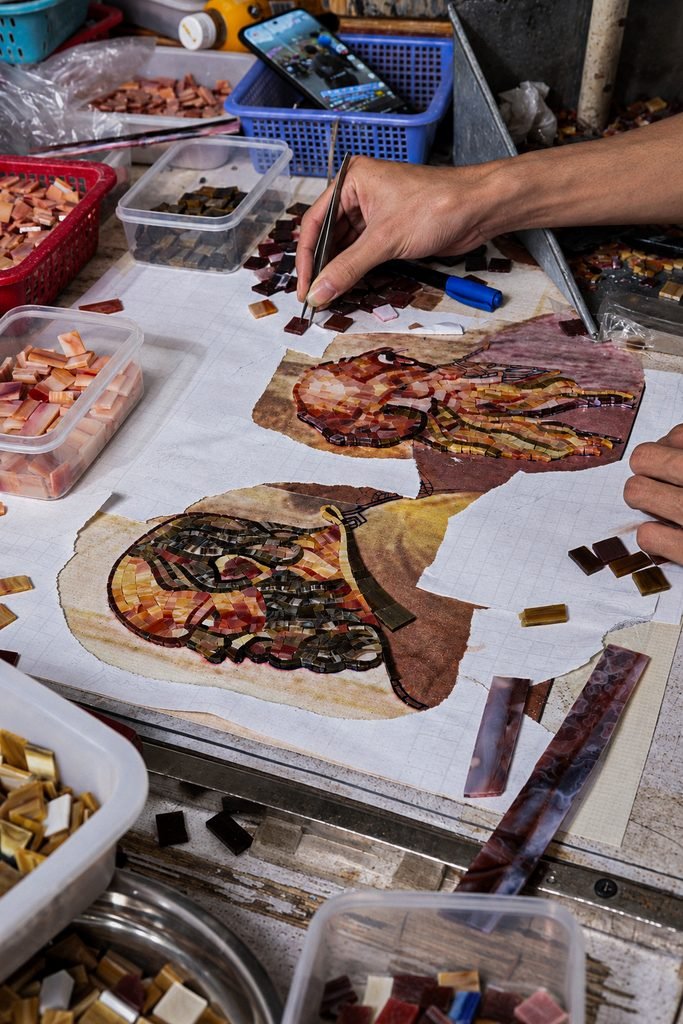
How Famous Paintings Become Mosaic Art
Creating a physical mosaic artwork out of a Renaissance painting is not just about replicating an image. It is one rigorous process. Way before the Renaissance, artists used ancient Roman mosaic patterns to tell stories. In the present era, we take those same old methods and merge them with contemporary techniques to bring Renaissance art back to life.
Here is a breakdown of the materials artisans use when recreating these striking paintings:
| Material Type | Best Used For | Characteristics in a Mosaic |
| Smalti Glass | Halos, rich fabrics, skies | Highly reflective, vivid, traditional Italian material |
| Marble Stone | Skin tones, classical architecture | Natural, subtle gradients, matte finish |
| Gold Leaf Glass | Divine light, borders, accents | Luxurious, glowing, catches ambient light |
| Ceramic | Large background areas, landscapes | Consistent colour, highly durable |
Reading the Painting’s Light and Colour
First of all, you need a detailed color analysis. Before converting a popular painting into a mosaic artwork, you need to choose colors from thousands of preexisting-colored tiles. The paintings are first mapped out, after which the team evaluates which shade of glass or stone will go well with the paintings shadows and highlights. This part is quite crucial when it comes to complex lighting of Renaissance art.
Cutting Tesserae for Faces, Hands and Fabric
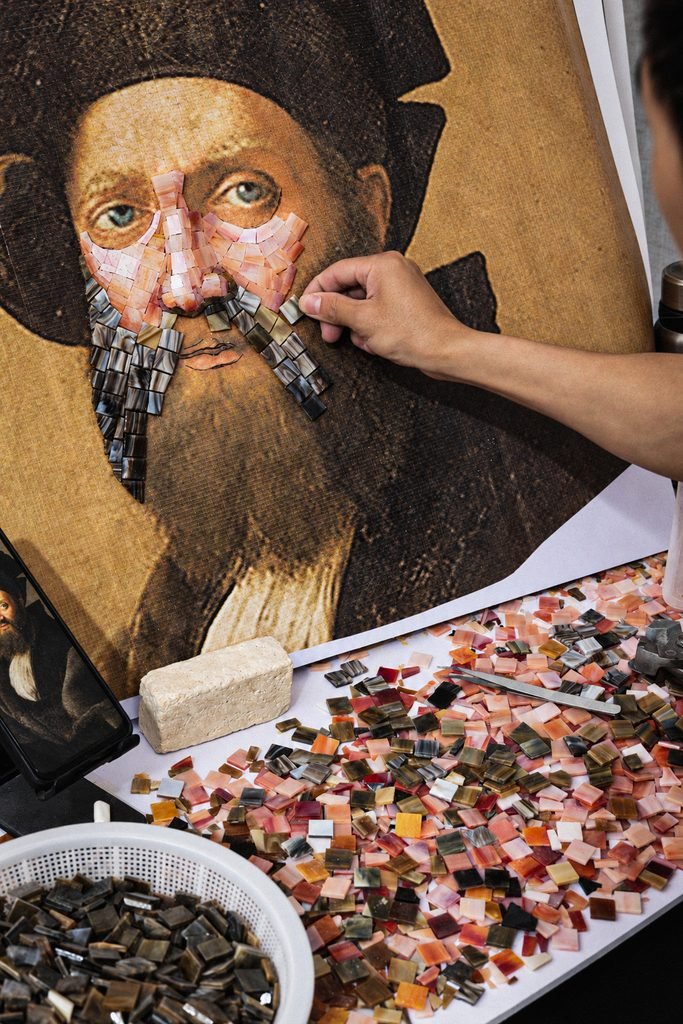
You cannot use regular square tiles to craft the sophisticated features that are present in Renaissance paintings. Our highly trained artisans opt for specialized tools to perfectly shape every single piece of tile manually.
- Faces and Hands: These require the smallest tiles, often cut into curved shapes to follow the natural contours of human anatomy.
- Drapery and Fabric: To exhibit the folds of a heavy cloak, tiles are cut into elongated rectangles and arranged in sweeping, directional lines.
- Backgrounds: To make the central figures stand out, the background tiles are normally laid in a more uniform, subtle grid.
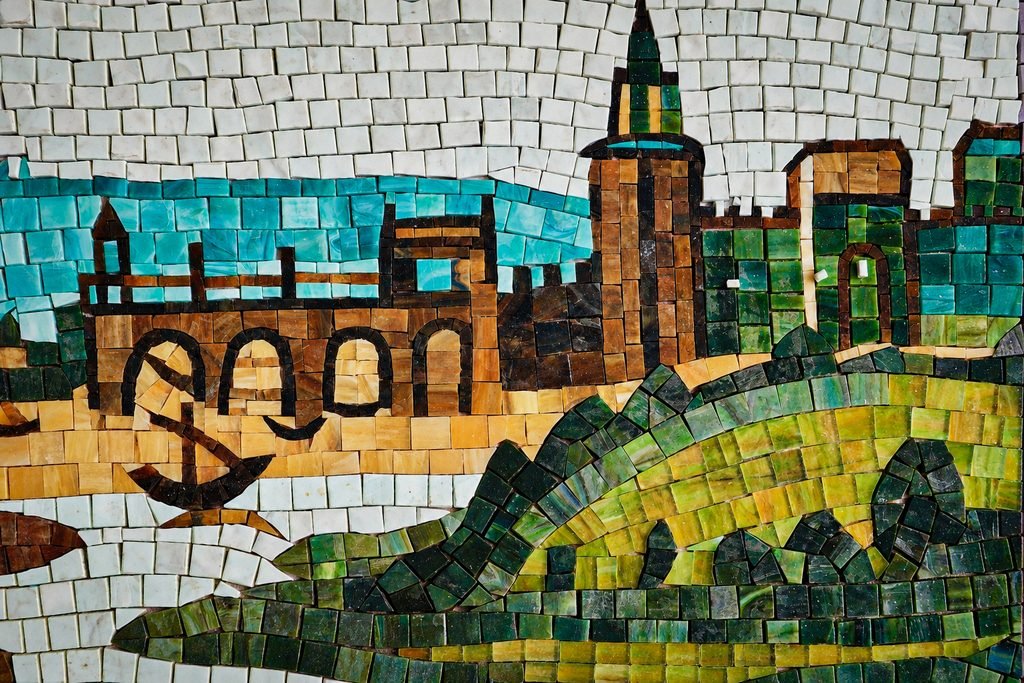
This type of careful cutting is what totally upgrades a regular tile project into authentic mosaic art. For this, you need patience, an in depth apprehension of art history and very skilled hands.
Frequently Asked Questions
Which Renaissance painting works best as mosaic art?
Works with strong contrasting colors and clear central figures work exceptionally well. The Creation of Adam and The Last Supper are highly popular because their compositions are naturally structured and easily readable from a distance. However, skilled artisans can adapt almost any piece of renaissance art to suit your space.
What is the difference between a mosaic and a painting?
When it comes to paintings, liquid pigments are generally used which are used on a canvas or a wall. Paintings also have a lot of room for continuous blending. Mosaic art on the other hand is quite different. It involves arranging thousands of tiny pieces of tiles which are manually cut by artisans. While paintings often fade or peel off over a period, a mosaic tile mural is highly durable and can easily handle moisture and light fading.
Can mosaic art be made for a ceiling or wall mural?
Absolutely. Just as Michelangelo painted the Sistine Chapel ceiling, a mosaic wall mural can be securely installed on both ceilings and vertical surfaces. Using modern, lightweight backing materials and strong epoxy adhesives, these artworks can be placed in living rooms, luxury bathrooms, or grand entryways.
Can I commission mosaic art based on a famous painting?
Of course! Commissioning custom pieces is a very popular and common practice. You can select any artwork that you deeply appreciate. MEC’s team will then scale it according to the specific dimensions of your space. The team will also ensure that no important details are missed.
How much does custom mosaic art cost in the UAE?
Honestly, it depends on multiple factors, such as the size of the design, the materials that are used, and how intricate the pattern is. If the pattern is highly sophisticated and contains a very detailed portrait with tiny glass tiles, it would take longer to craft it as compared to a bigger and simpler geometric design. Here are a few factors that influence the final cost of a custom piece: The total square footage of the intended wall mural. The material choice (natural marble versus 24k gold leaf glass). The level of detail required for faces and hands. The installation environment (indoor living room versus outdoor facade).
Commission Renaissance Mosaic Art in the UAE
There was time when Renaissance masterpieces were reserved to palaces or museums. Today, with the craft of tesserae, it has become possible to see your favorite vision come together as a living work of art on a wall of your choosing. The beauty of mosaic lies in its durability. The colors will not fade, and the textures will hold their ground. A Renaissance recreation adds an unmatched touch of sophistication and elegance. Alongside décor, it serves as a conversation starter. Be it playful sea-life for swimming pools or something inspired by the great masters from the Renaissance era, our team at MEC Artworks is here to help transform your space with custom wall murals. We combine traditional craftsmanship with modern design sensibilities to create flawless installations for clients across the UAE and beyond. Book a mosaic design consultation today.