 UAE & GCC

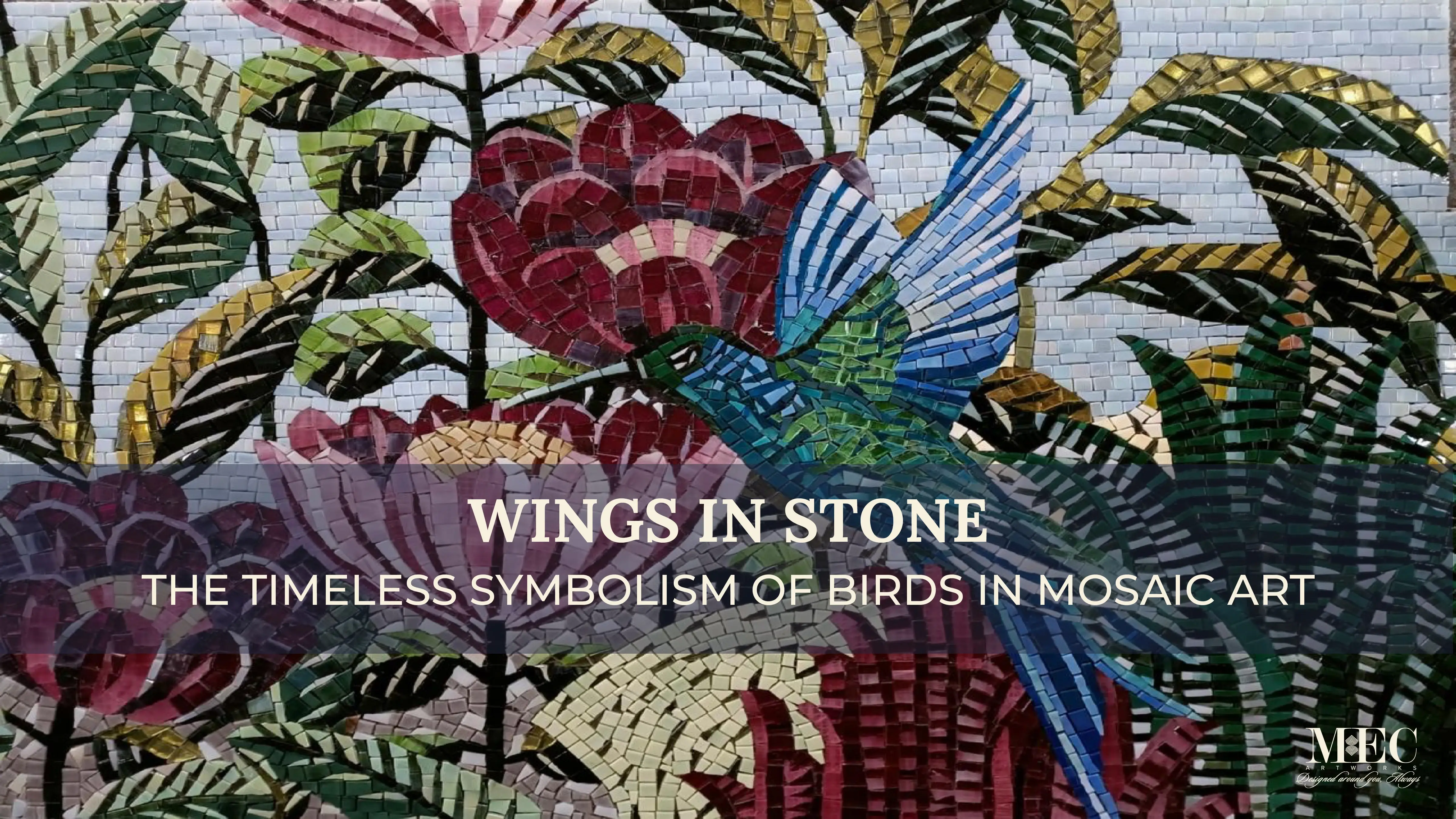
Interior designers use illusory effects all the time such as varied textures, color contrasts, and symbolism. Carefully chosen props reinforce these effects, making spaces feel larger than life.
Bird imagery fits right into their bag of tricks, allowing for spatial widening with the right medium and placement.
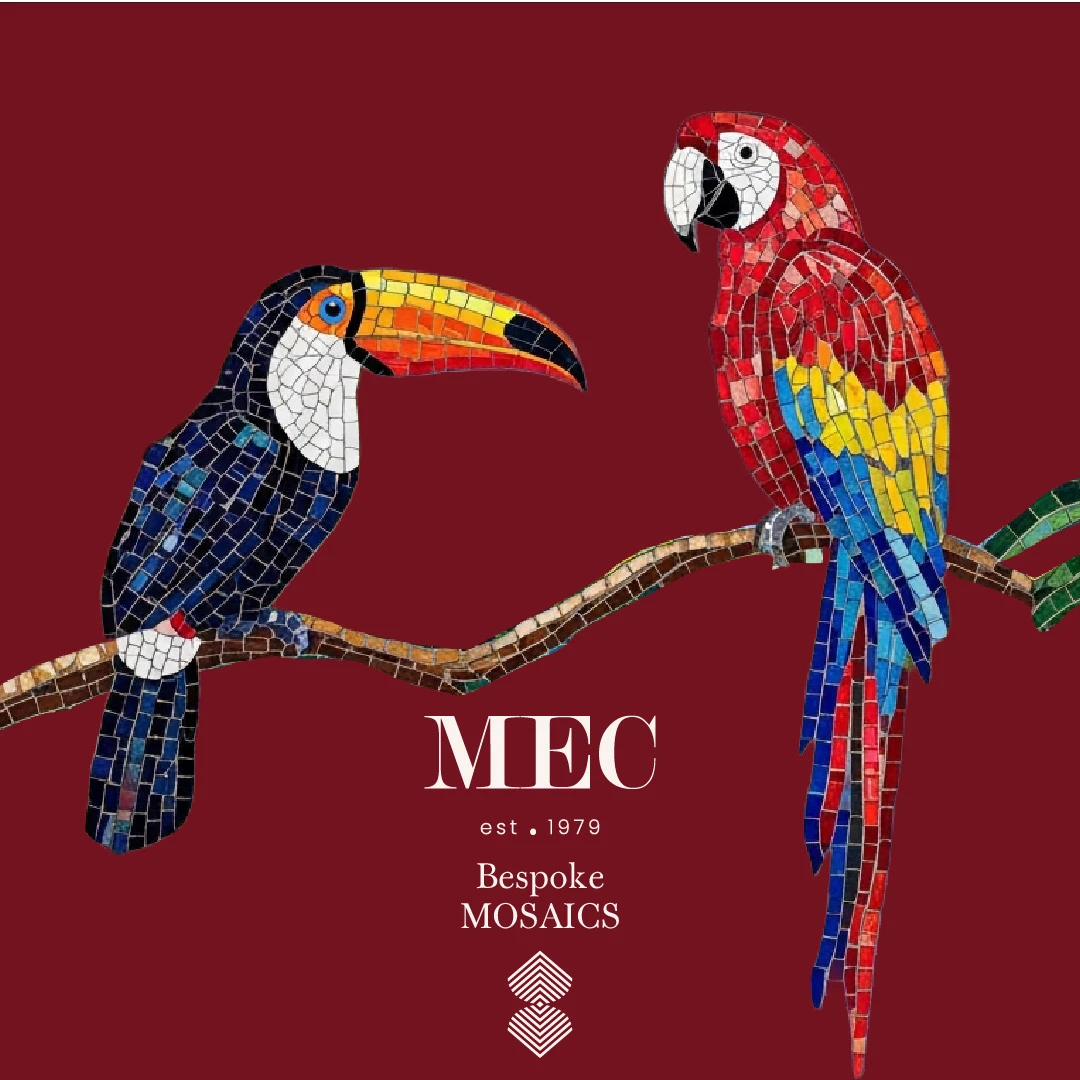
This imagery, although translated popularly onto paint, porcelain, and digital illustrations, lends itself naturally to mosaic, a medium that has depicted birds for thousands of years.
But what do these majestic creatures really symbolise, and why does bird-inspired art resonate across cultures?
In this blog, we will explore the history of bird design in mosaic art, its present-day applications, a comprehensive catalog of bird mosaics, and some exclusive designer insights on the subject matter.
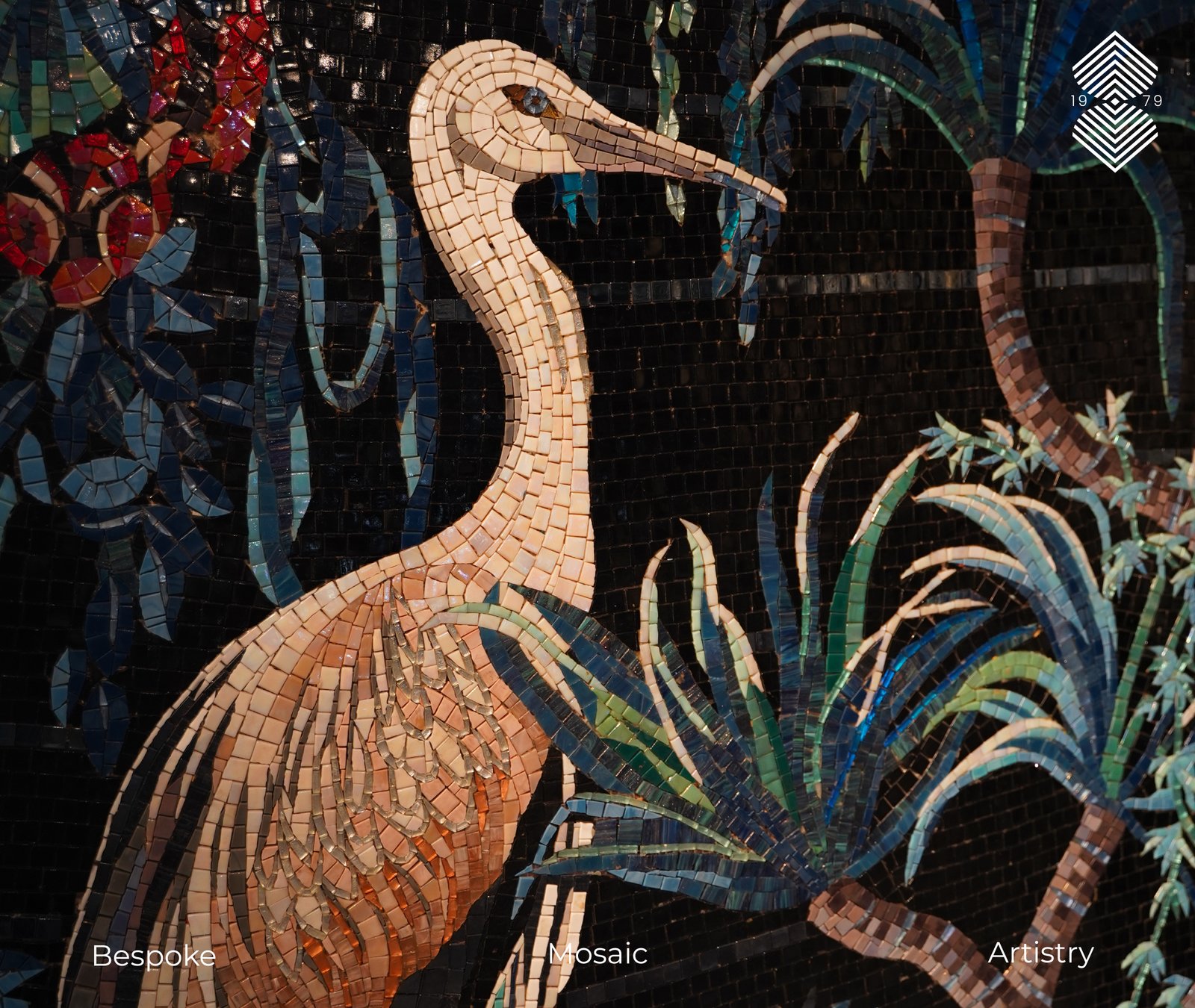
Table of Contents
From Ancient Mosaics to Modern Interiors
Bird-inspired art has existed for eons, admired in ancient art circles and imperial courts. To dig deeper into their symbolic nature, it is important to understand their history.
This type of art was once a monarchic tradition. It is now found more frequently in domestic interiors than before. Historically tied to grandeur, these creatures displayed themselves on an equally grand scale.
Designers sometimes used architectural spaces designed to accommodate panoramic displays to showcase bird-focused paintings and mosaics.
|
Type of Bird |
Symbolism in Art |
|---|---|
|
Swan |
Elegance, transformation, beauty |
|
Peacock |
Pride, immortality, opulence |
|
Robin |
Renewal, hope, new beginnings |
Understanding these symbols can help you choose birds that add meaning, movement, and mood to your mosaic designs.
You can check out our complete bird mosaic catalog as well.
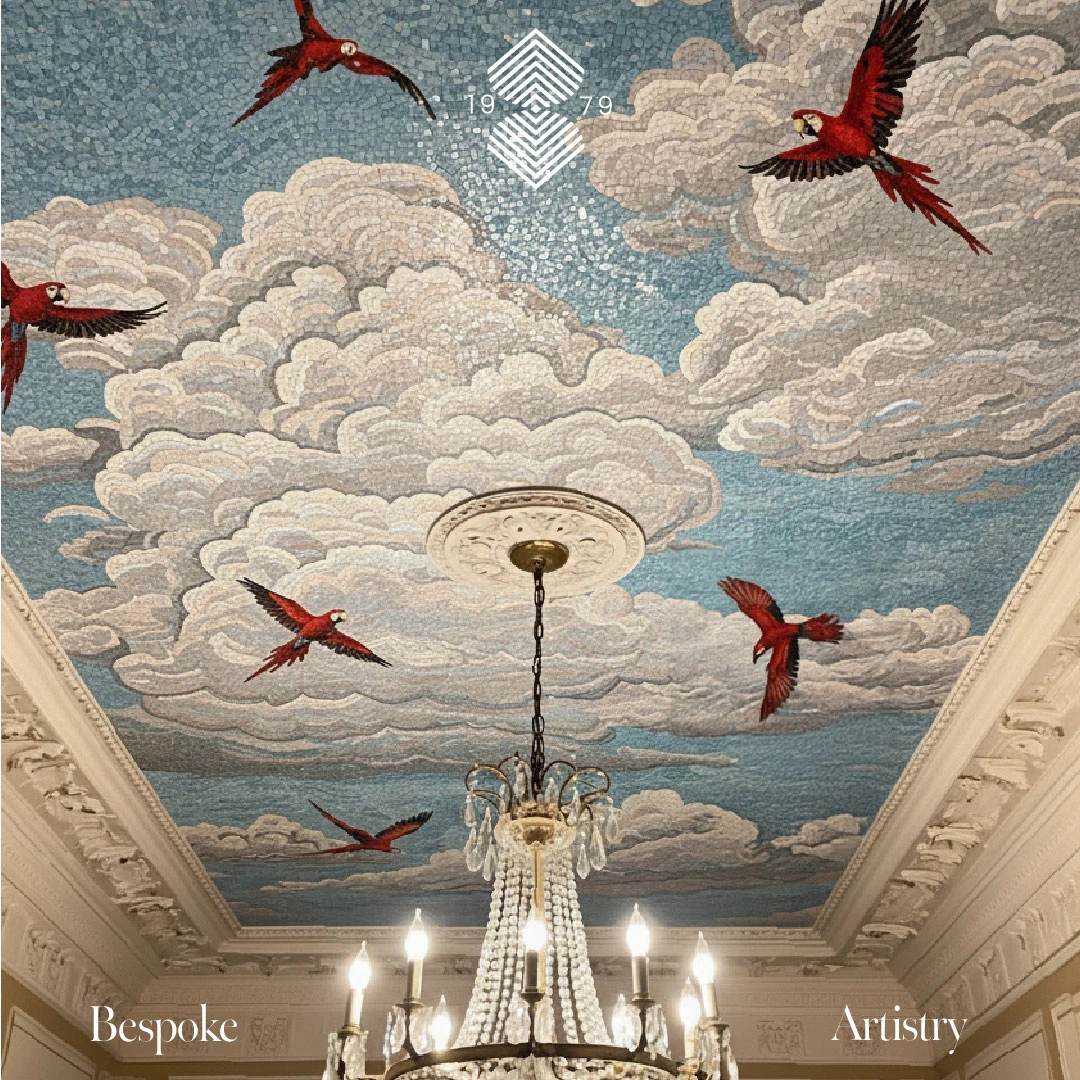
Trompe-l’œil murals, amusingly translated as ‘trick the eye,’ have been deceptively used throughout time. These function as optical illusions, often depicting horizon-style art.
Found on ceilings, walls, and even floors, present as portals to an astral reality of cloud populated skies, exotic birds in flight, and beautiful flora.
For modern day artists, birds continue to serve as a charming subject matter in mosaic art.
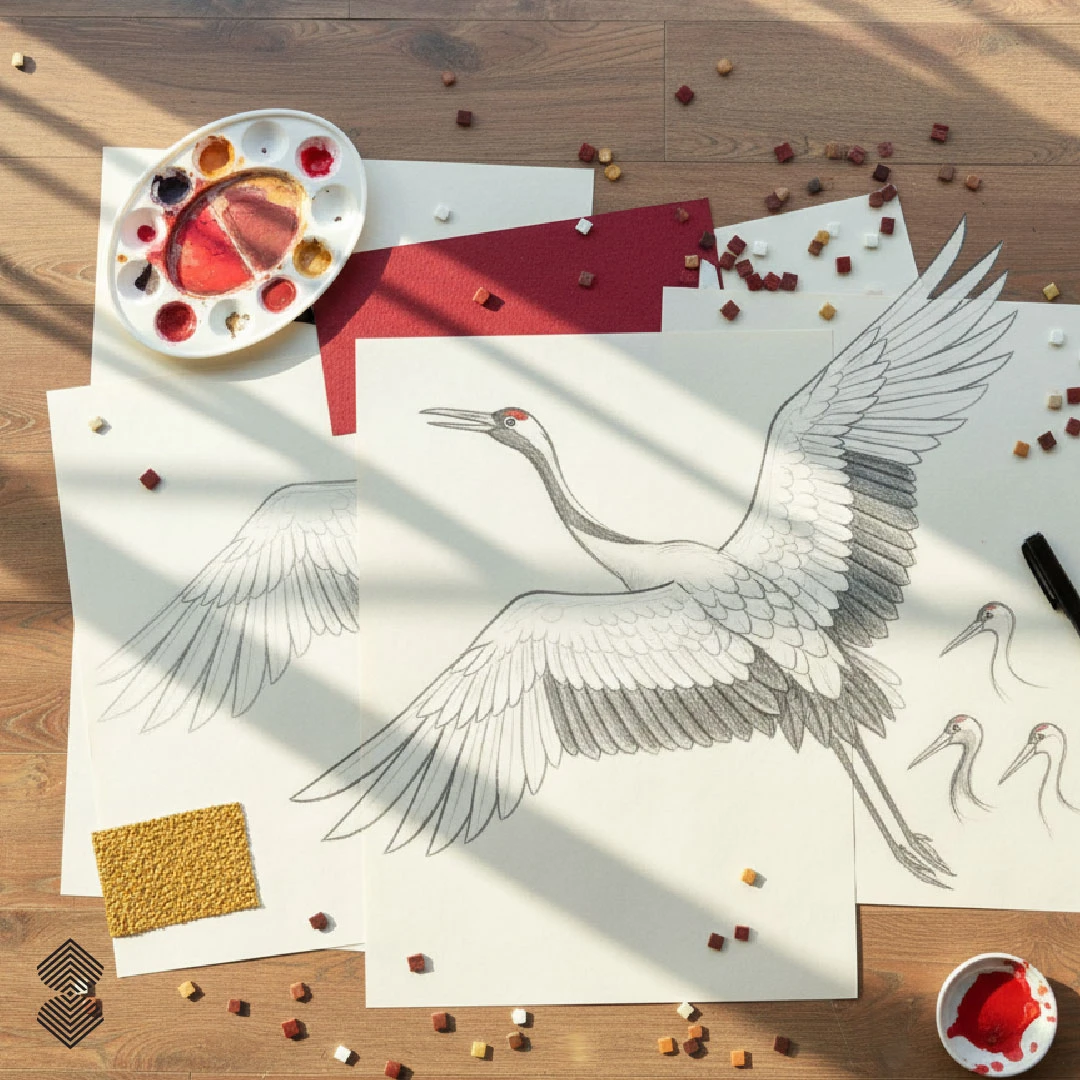
Bird mosaics have been a key part of our projects. We focus on wing posture, color gradation, and tesserae placement to convey motion and depth in each composition.
Design Team, MEC
Tweet
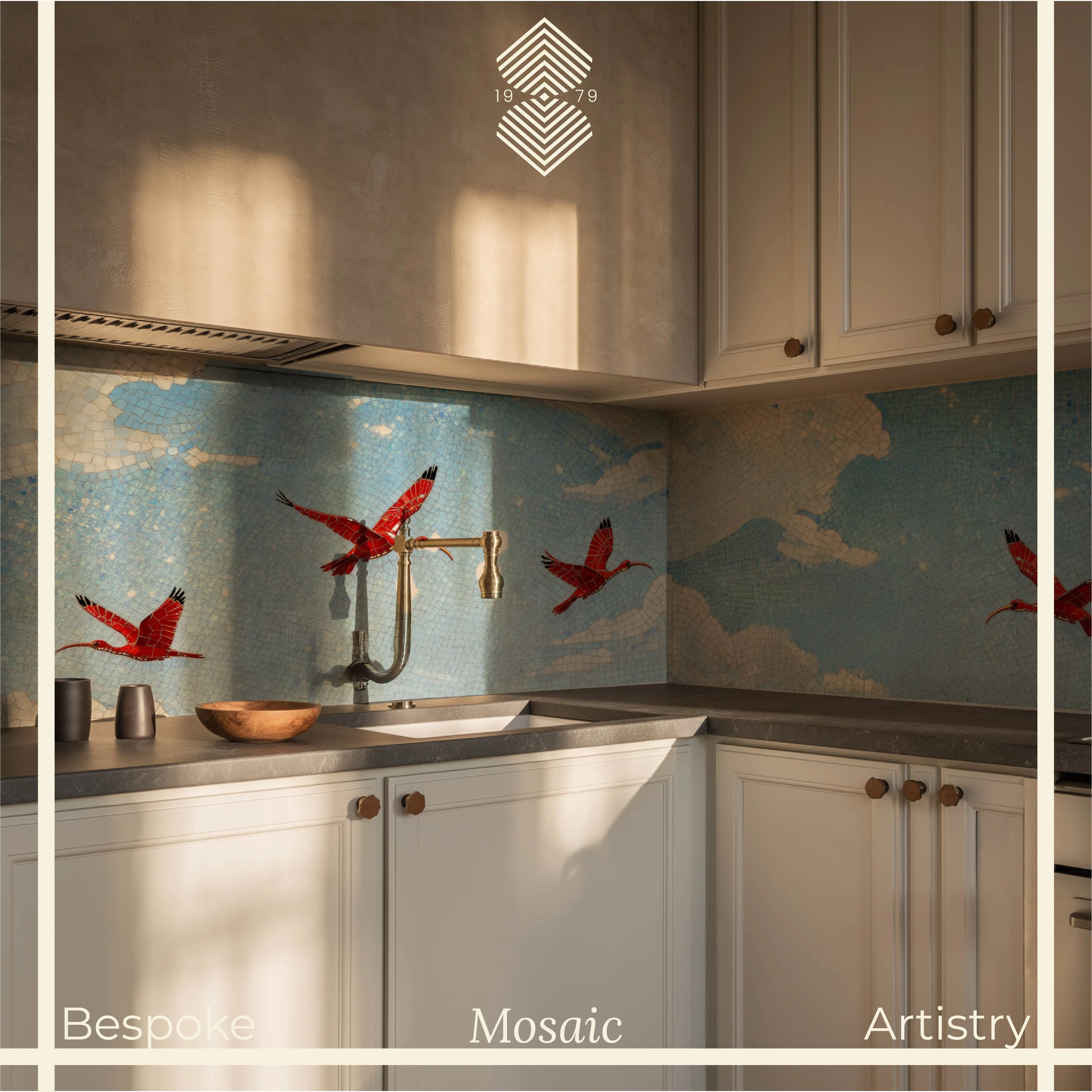
Bird Mosaic in Contemporary Interior Design
As noted in Architectural Digest’s reflection on the enduring appeal of swan imagery, today’s interiors are increasingly inward-looking, using symbolic motifs to express emotion, memory, and personal narrative rather than overt ornament.
The enduring legacy of bird mosaic itself speaks to a broader design impulse. After years dominated by flat finishes and industrial uniformity, designers are returning to mosaic as a statement medium.
What truly distinguishes modern bird mosaics is their alignment with broader design values. Birds act as visual links between interior spaces and the natural world. Their presence reinforces a sense of openness and ecological awareness.
Material choices reflect this shift, for example:
- Recycled glass,
- responsibly sourced stone,
- and low-impact methods
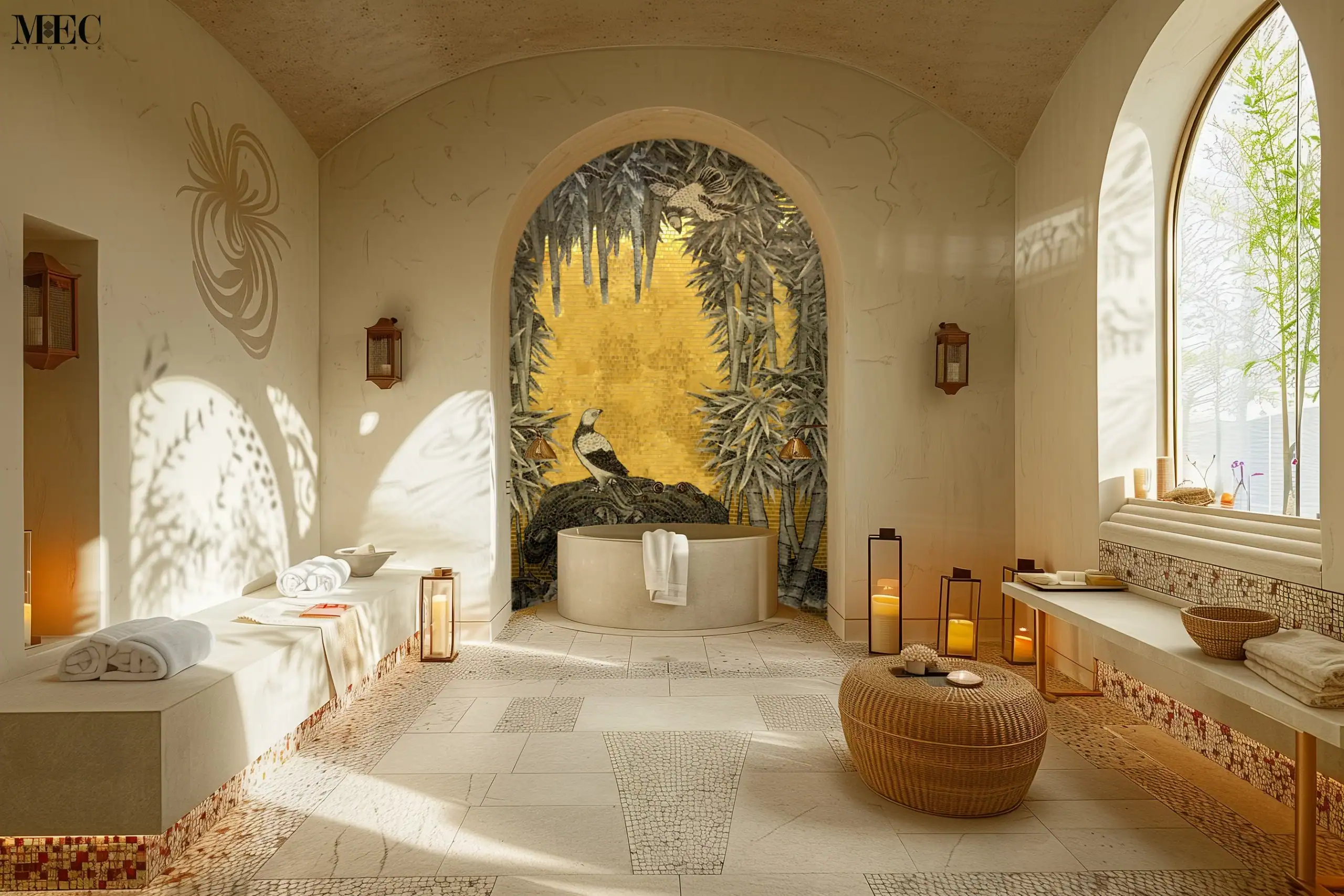
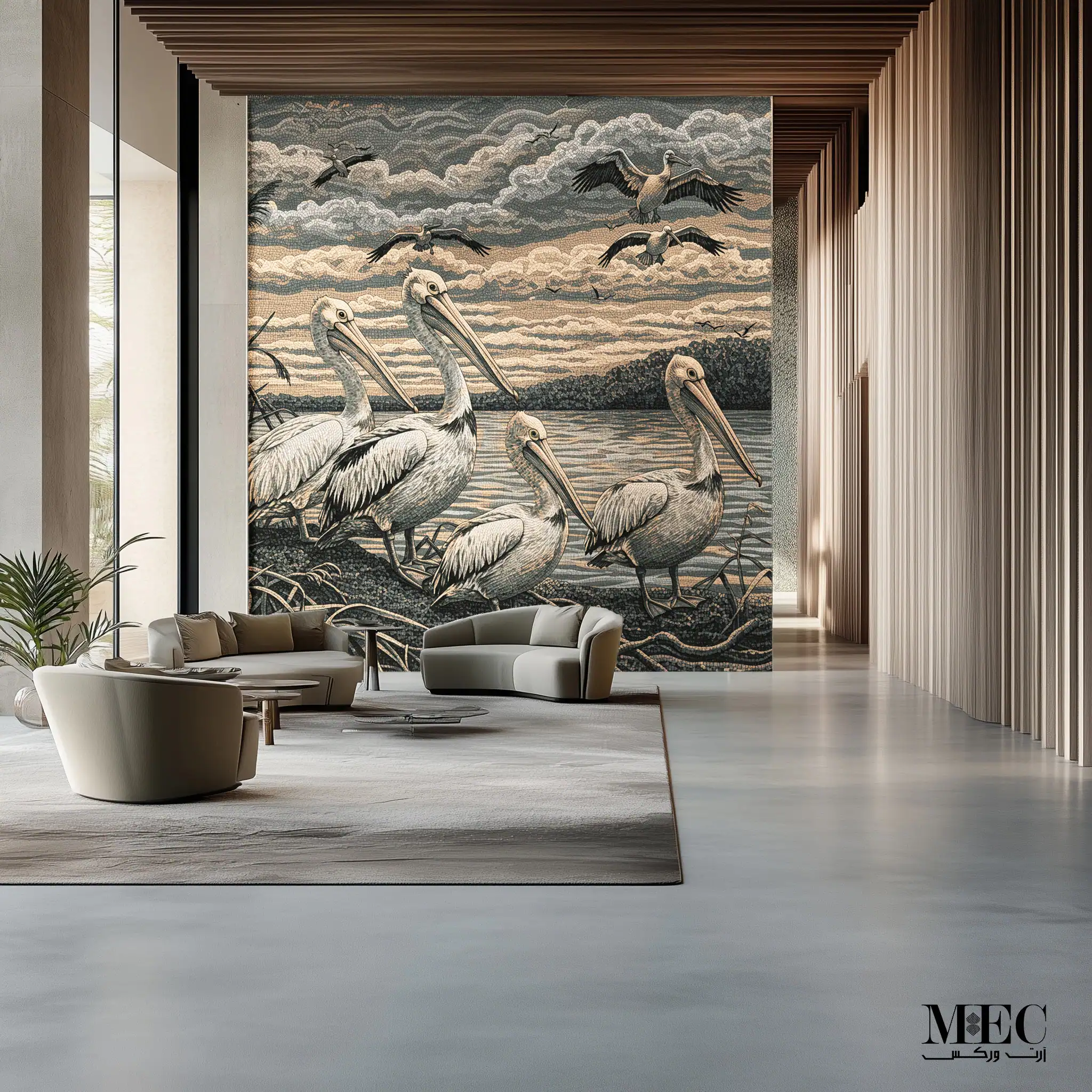
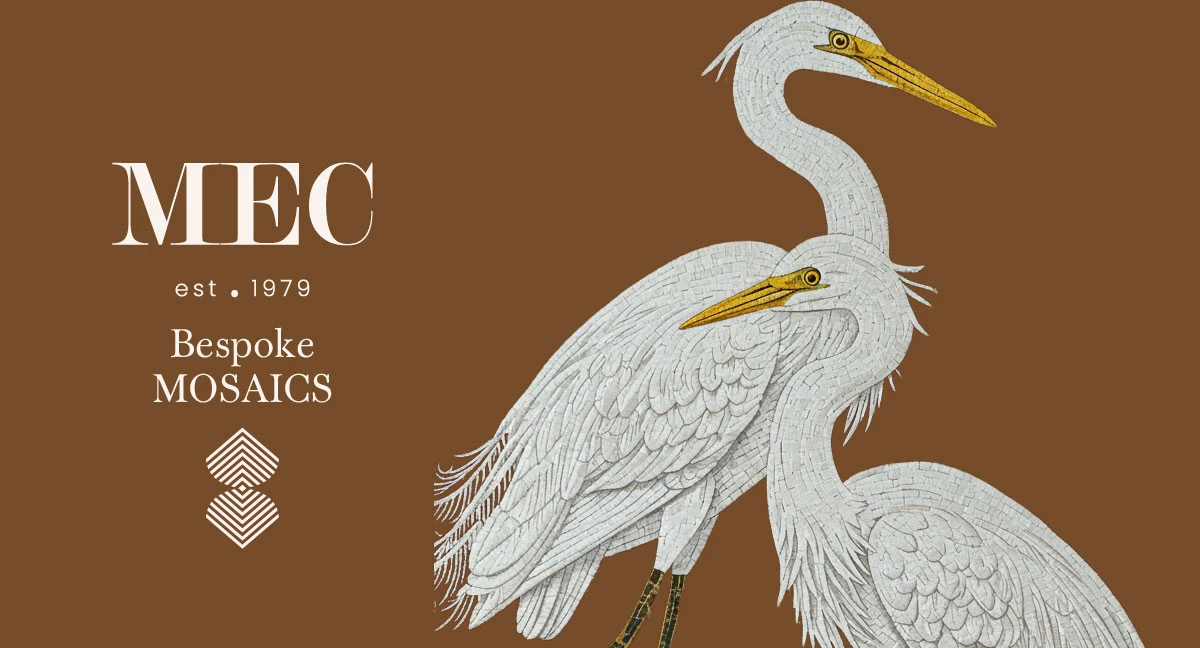
In this context, bird mosaics are about the inherent desire to weave living symbolism into everyday spaces, like this custom bird mosaic by MEC.
Narrative Mosaics: How Birds Function Within Larger Stories
Just as authors use birds to communicate plot, foreshadow, or guide the reader, mosaic artists use bird imagery to lead the viewer’s eye, mark transitions between scenes, or reinforce symbolic meaning.
Learn more about narrative mosaics from our full feature.
Birds have often been the protagonists of mosaic storytelling, and that is precisely where their power lies. But they also operate in the margins, inhabiting thresholds, appearing along borders, arches, and visual pauses.
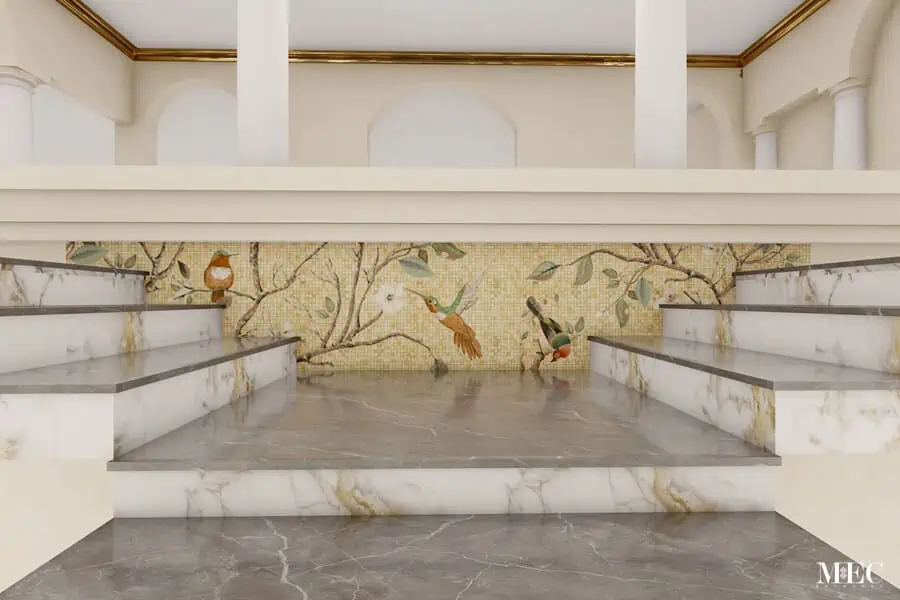
Direction plays an equal role. A bird flying toward a central figure often signals arrival, blessing, or attention, while one angled away can suggest departure, loss, or the passage of time.
Paired birds introduce another layer of narrative complexity. When mirrored across an axis or positioned in balance, they suggest order, symmetry, and continuity.
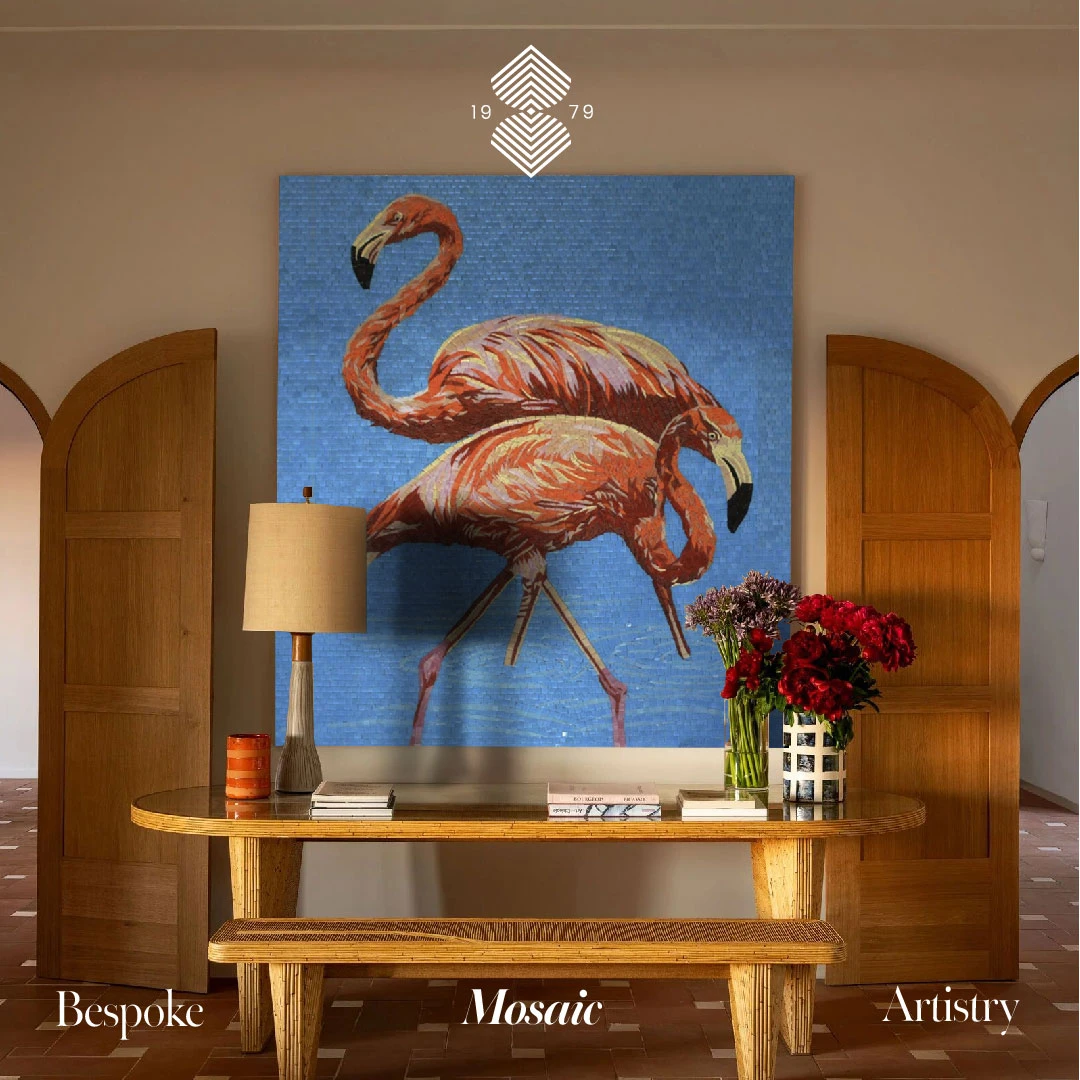
In sacred and domestic mosaics alike, these pairings often echo larger ideas of harmony, partnership, or duality, reinforcing themes without spelling them out.
How to Use Birds in Mosaic Design
Commissioning a bird mosaic is an opportunity to bring vitality into a space. There are endless options to choose from, each bird with its unique symbolism.
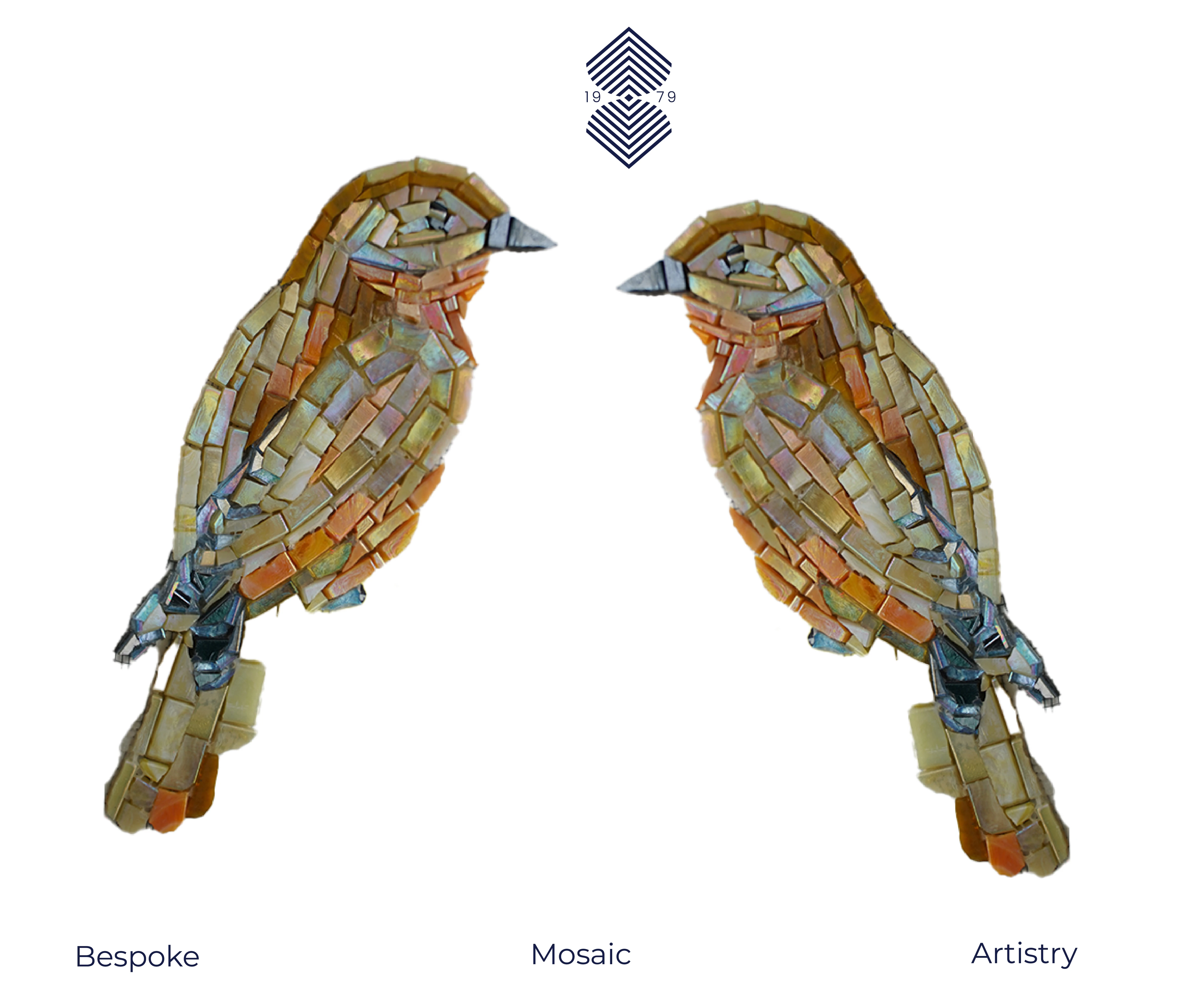
The African glossy starling is a hypnotizing character. Its translation to mosaic is near-perfect, achieved with the use of iridescent tesserae. This captures the natural structural coloration unique to this species, like that found in violet-backed starlings.
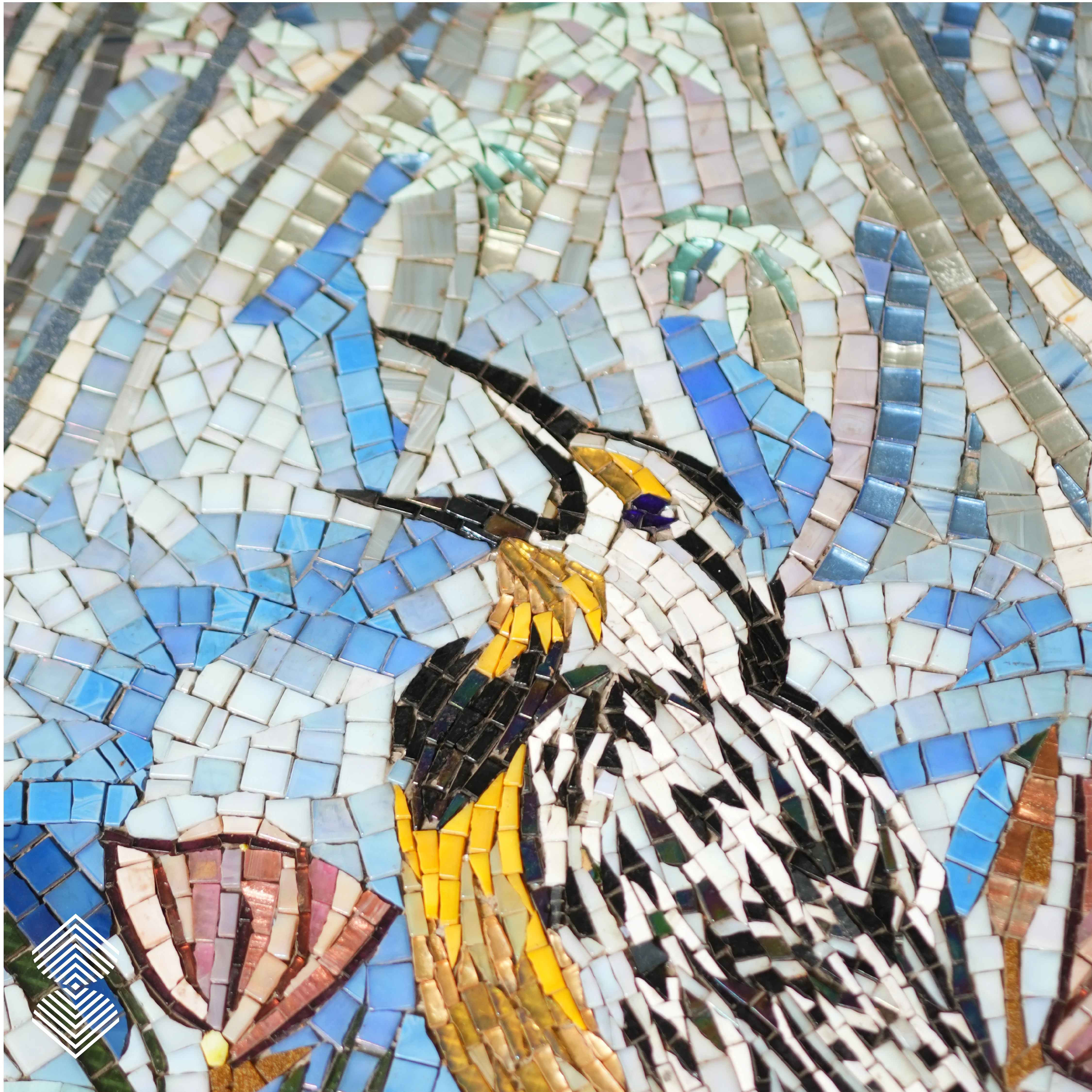
Most importantly, mosaic considers the viewer’s experience. To achieve this, there are several practical aspects to consider when commissioning a piece:
- Pose: Pick birds whose natural forms and wing positions complement the space and the desired mood.
- Placement: Determine the size and location relative to furniture, sightlines, and ceiling height to maximize visual effect.
- Light Interaction: Evaluate how natural or artificial lighting will highlight the mosaic.
- Mood and Story: Clarify what feeling or narrative the piece should convey, whether serenity, energy, or whimsy.
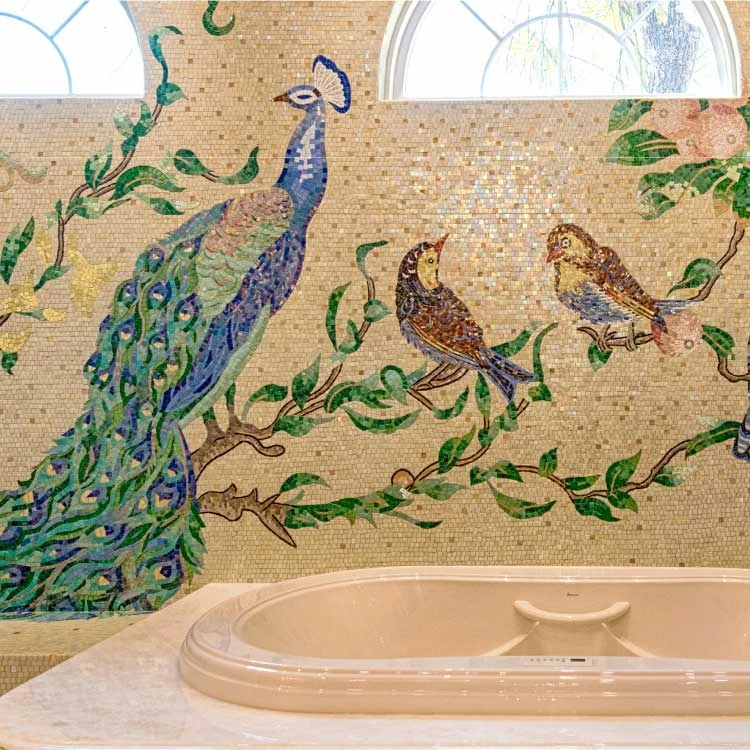
A striking creation by MEC, this peacock mosaic serves as inspiration for bold, artistic bathroom interiors.
Trend Forecast 2026: Birds in Mosaic Art
Now a quarter into the century, bird-inspired art continues to inspire interiors worldwide.
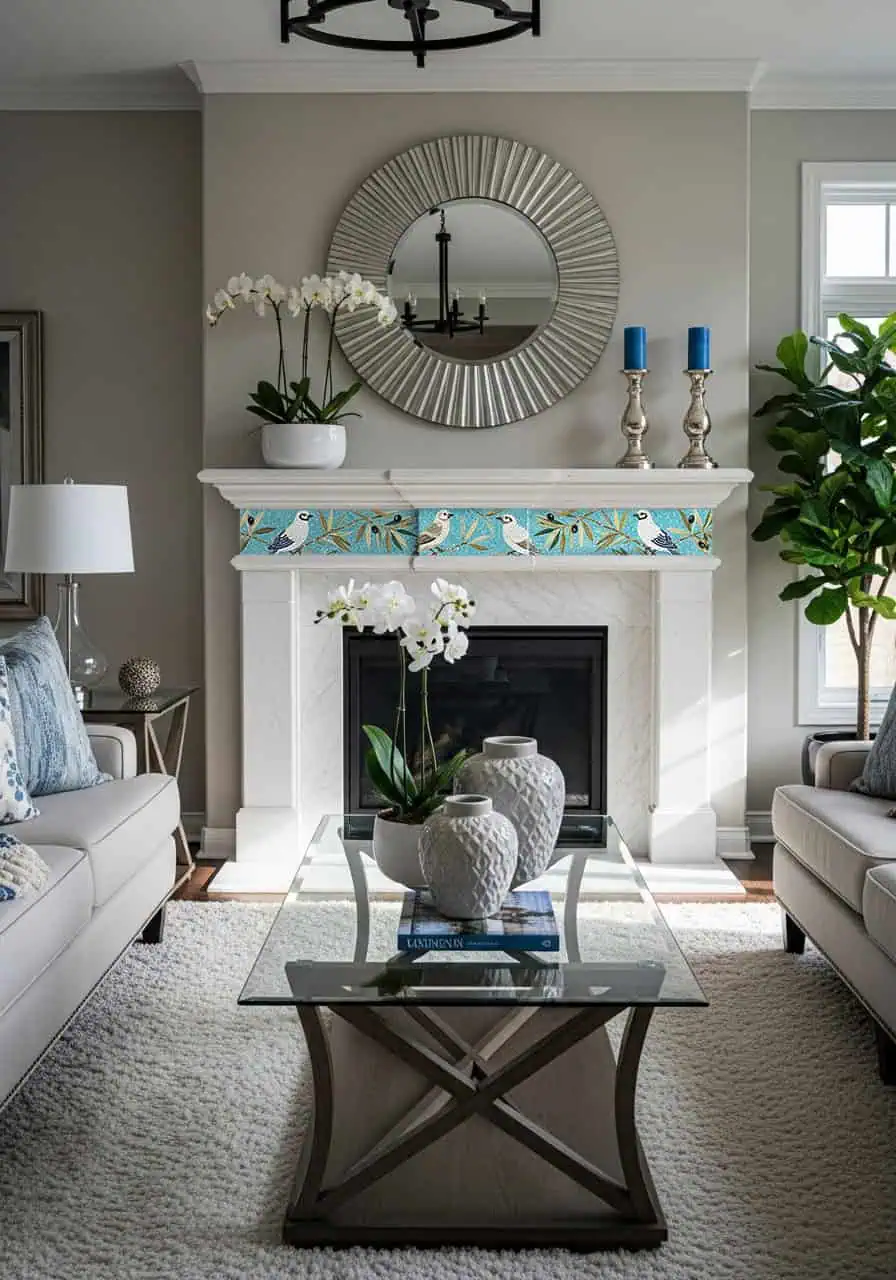
Many modern mosaicists are inspired by the classics, keeping the tradition alive while adding their own twist. Some reinterpret ancient patterns with bold colors, abstract forms, or unexpected materials.
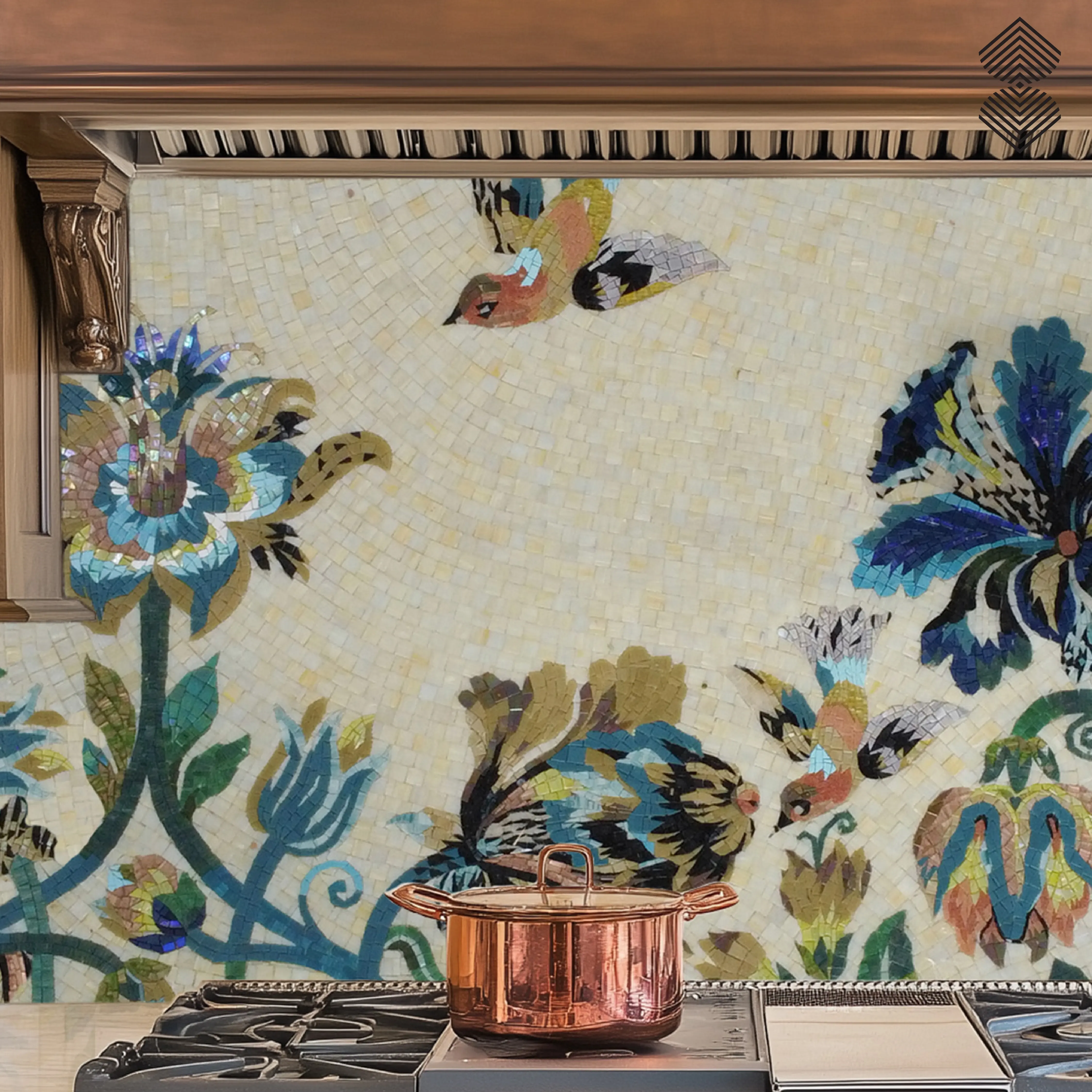
Birds are also a beloved subject in chinoiserie mosaic art, having graced Shangri-la–inspired landscapes.
The Psychology of Pattern and Color in Mosaics
Even without conscious thought, the patterns and colors you choose can influence how a space feels, how viewers move through it, and how long they linger.
Designers and artists have been leveraging these effects for centuries, often without realizing the psychology behind them.
How Patterns and Colors Shape Experience
- Reflective vs. matte surfaces: Shiny glass tesserae energize a space, while matte stones create grounding, meditative zones.
- Micro vs. macro patterns: Tiny, intricate mosaics slow the eye and encourage contemplation; bold, large patterns make a space feel expansive and immediate.
- Color contrast for motion: Adjacent contrasting hues trick the eye into perceiving subtle movement, giving mosaics a dynamic, almost living quality.
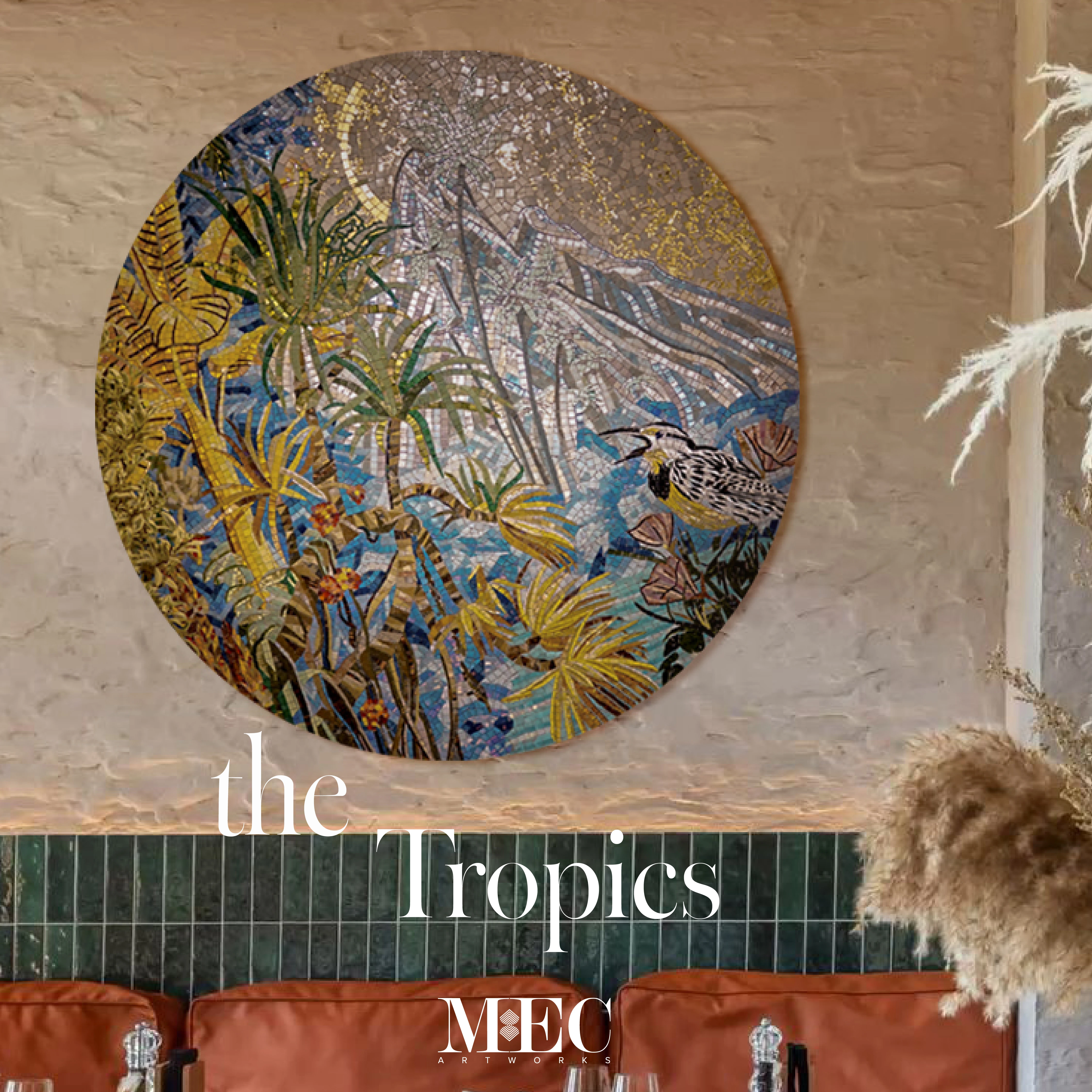
By understanding the hidden language of color and pattern, designers can transform a mosaic from a static decoration into an experience that resonates with anyone who walks into the room.
Wings That Outlast Empires
Birds in mosaic have always belonged to this quieter category of endurance. They are not tied to a single empire, belief system, or design movement, which may be why they slip so easily through history.
Long after the politics of a place have eroded, the bird remains readable.
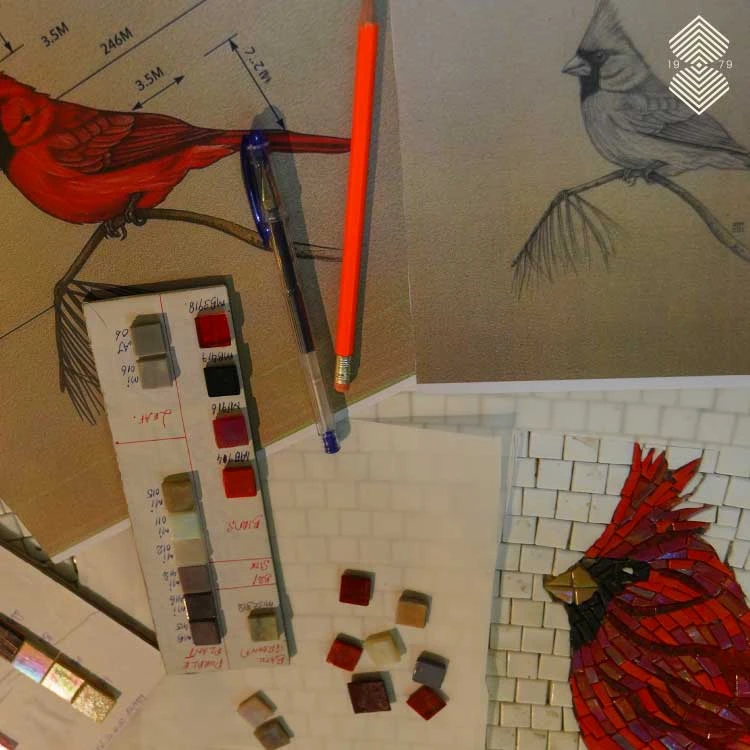
A bird mosaic does not demand context or explanation. It meets the viewer where they are.
In a modern interior, it might recall freedom, memory, or simply a moment of stillness in an otherwise accelerated world.