 UAE & GCC

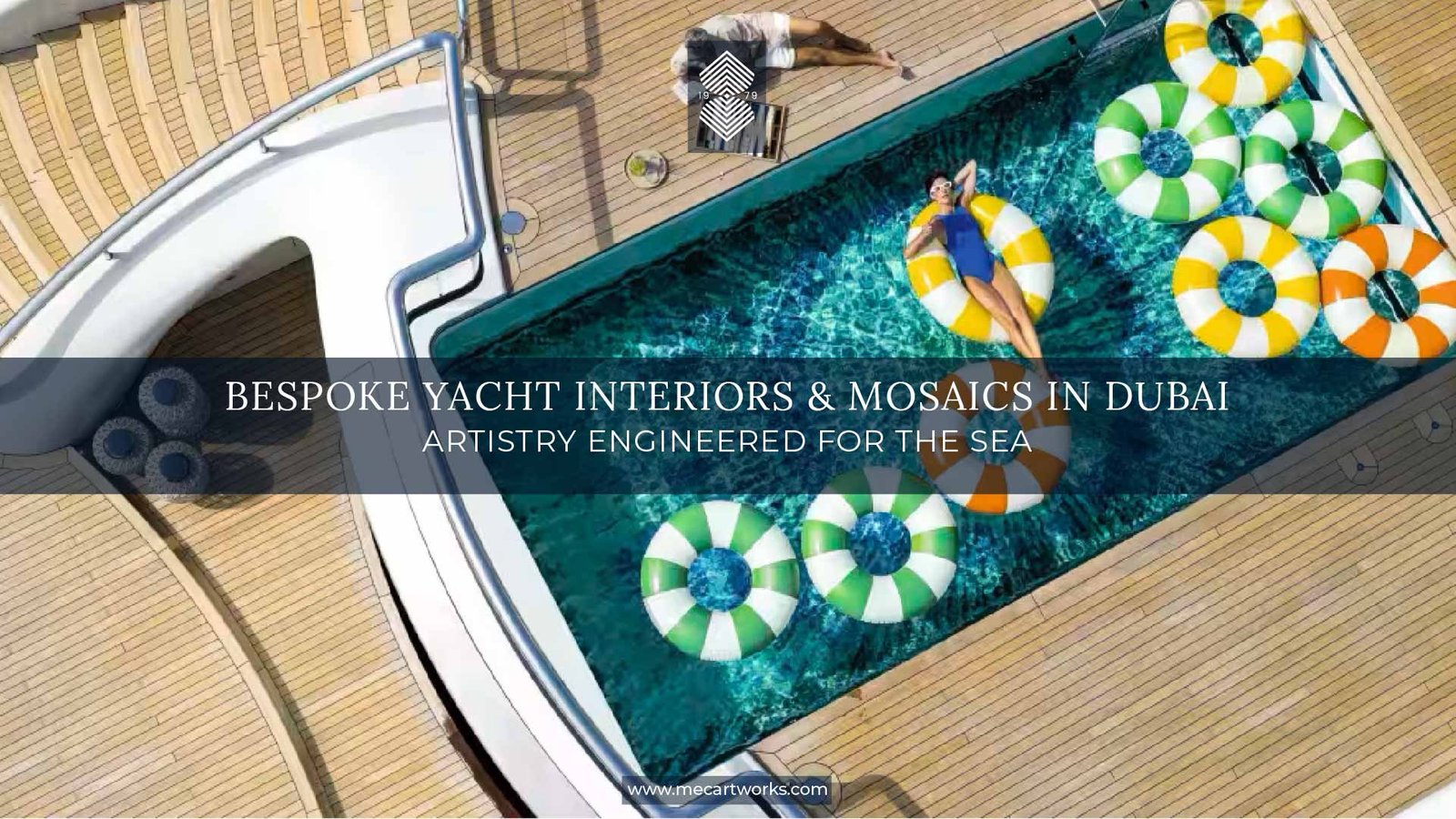
Dubai has become one of the world’s most exciting yachting hubs. Dubai Harbour alone has close to 700 berths and can accommodate yachts up to 160 meters, making it a major destination for superyachts, refits, and high-end marine design.
For owners, designers, and shipyards, this creates a new design challenge: yacht interiors can’t just look beautiful. They must also handle movement, salt air, humidity, UV exposure, vibration, and strict marine safety expectations.
That is where bespoke luxury mosaics for private yachts become special. A mosaic can turn a pool floor, spa wall, beach club, salon, or cabin feature into permanent art. However, on a yacht, every artistic choice must work with maritime engineering.
A beautiful surface is not enough. It has to stay beautiful at sea.
Table of Contents
2026 Yacht Interior Trends: The Rise of Wellness Sanctuaries
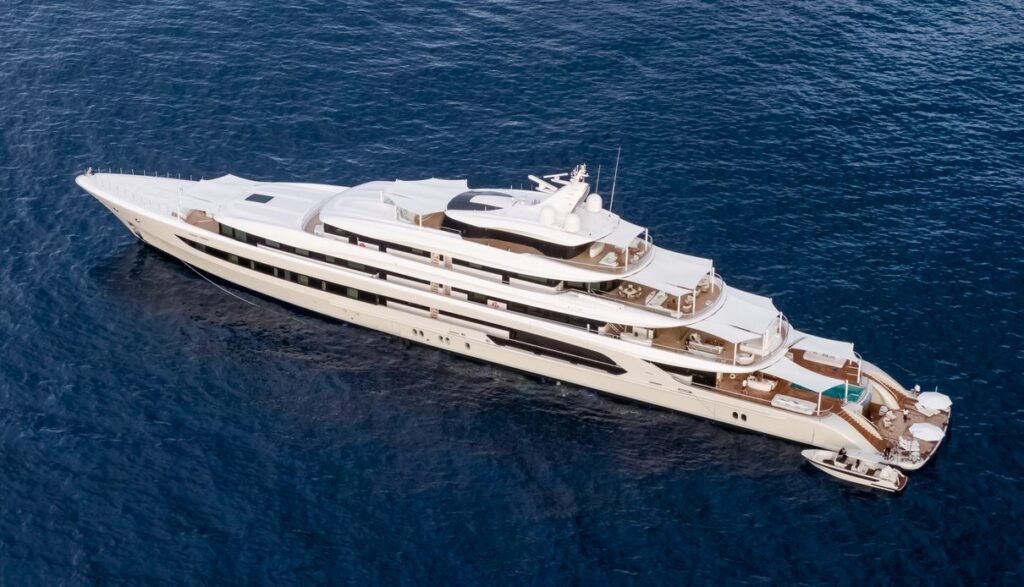
Luxury yacht design has moved far beyond polished wood, leather panels, and marble slabs. Today’s owners want interiors that feel deeply personal. They want spaces that reflect culture, lifestyle, heritage, and taste.
This is why Yacht interiors Dubai are becoming more expressive. Yacht owners in the UAE often want design details that feel exclusive, not copied from a showroom catalog. Bespoke mosaics fit that demand perfectly because every piece can be designed from scratch.
A custom mosaic can become:
- A dramatic pool mural
- A spa wall with flowing water-inspired patterns
- A private cabin feature wall
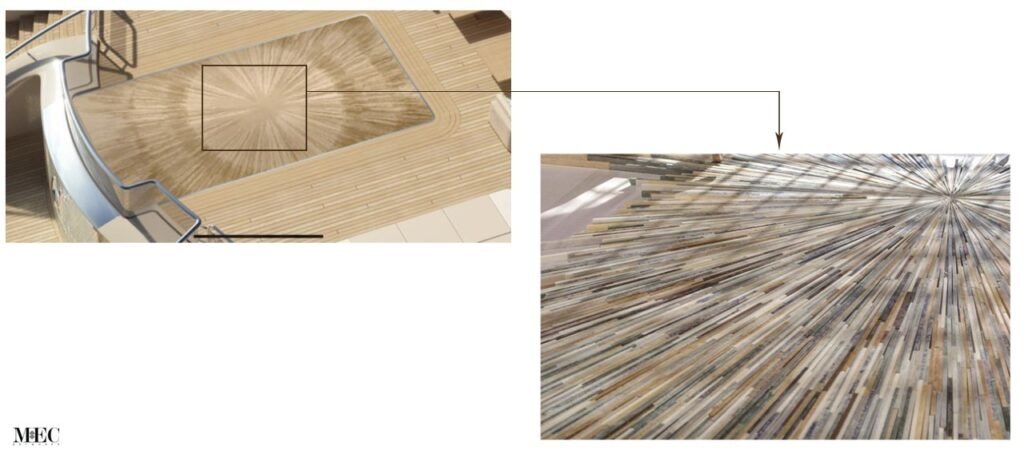
- A beach club floor medallion
- A typography logo mosaic
- A custom Islamic geometric pattern
- A glass mosaic for underwater lighting effects
Unlike standard marine panels, mosaics bring texture, reflection, movement, and craft into the space. They catch sunlight differently throughout the day. At night, under warm yacht lighting, they feel rich and layered.
| “A yacht interior should not feel like a floating hotel room. It should feel like a private world designed around the owner.” |
For Dubai-based superyachts, this matters even more. The design language often blends modern luxury with regional artistry. Think soft gold accents, ocean prism mosaic, pearl-like finishes, arabesque geometry, and refined stonework.
Where Bespoke Mosaics Work Best on Private Yachts
| Yacht Area | Best Mosaic Use | Key Design Need |
| Swimming pools | Underwater murals, gradients, logos | Water-safe glass and flexible bonding |
| Beach clubs | Feature floors and wall art | Non-slip surface and salt resistance |
| Spas | Wellness walls and steam areas | Moisture control and calming palette |
| Cabins | Headboards, niches, feature walls | Lightweight backing and refined detail |
| Bathrooms Spaces | Shower walls and vanity backsplashes | Waterproofing and easy cleaning |
| Deck areas | Decorative borders and medallions | UV stability and slip resistance |
This is why Mosaic art for yacht beach clubs in Dubai, and wellness sanctuary yacht design are becoming strong design directions. Yacht owners want areas that feel like private resorts, not just functional spaces.
Engineering Mosaics for the High Seas: Durability & Performance
A private yacht is always moving. Even when docked, it responds to water, wind, vibration, heat, and humidity. This makes yacht mosaics very different from residential mosaics.
A villa floor can rely on a stable slab. A yacht’s surface cannot. Marine mosaic designs must account for:
- Vessel vibration
- Hull movement
- Weight limits
- Salt-air exposure
- UV exposure
- Moisture and condensation
- Cleaning chemicals
- Fire safety expectations
- Curved or flexible substrates
The International Maritime Organization sets safety frameworks for ships, including fire protection and onboard material safety through SOLAS-related requirements. For yacht interiors, this means designers must think beyond appearance when selecting mosaic tile materials.
Lightweight Fabrication for Vessel Fuel Efficiency
Weight matters on a yacht. Every material adds load. Heavy finishes can affect balance, performance, and fuel efficiency.
Traditional thick stone slabs may look luxurious, but they can become impractical in marine interiors. But mosaic tiles solve this problem when designed with controlled thickness and lightweight backing.
For example, lightweight glass mosaics for yacht swimming pools can create a dramatic underwater feature without the weight burden of large stone panels. Small tesserae also allow the surface to follow slight curves and movement more naturally.
A well-planned lightweight mosaic system may include:
- Thin hand-cut glass tesserae
- Lightweight mesh or face-mounted sheets
- Marine-suitable backing systems
- Controlled adhesive thickness
- Reduced mortar buildup
- Sectioned panels for easier installation
The goal is simple: create impact without unnecessary load.
Vibration-Tolerant Bonding & Flexible Grout Systems
Yachts vibrate. Engines, generators, water movement, and hull flex all create motion. If the bonding system is too rigid, the mosaic can crack, loosen, or delaminate over time.
This is where Vibration-resistant tile bonding becomes essential. For mosaics, that means the installation team must consider:
- Flexible adhesive layers
- Movement joints
- Substrate preparation
- Grout flexibility
- Waterproofing compatibility
- Expansion and contraction behavior
Small mosaic pieces naturally distribute stress better than large-format slabs. Instead of forcing one large surface to absorb movement, many small tesserae share the load. It’s like a flexible suit of armor.
This is why hull flex-tolerant mosaics make sense for curved bulkheads, yacht pools, and spa areas. They adapt better to movement when paired with the right installation system.
Corrosion-Resistant Materials for Salt-Air Environments
Salt air is beautiful from the deck. It is brutal on materials. Salt can attack metals, stain weak surfaces, and accelerate wear. In yacht interiors and exterior leisure zones, material selection must be careful.
A Marine-grade mosaic tile UAE specification should prioritize:
- Non-porous glass
- High-quality smalti
- Properly sealed natural stone
- Corrosion-resistant metal accents
- UV-stable pigments
- Moisture-safe backing systems
- Salt-resistant adhesives and grouts
Glass performs especially well in marine environments because it is dense, non-porous, and color-stable. Natural stone can also work beautifully, but it needs the right finish, sealing, and maintenance plan.
Moreover, for Dubai yachts, UV exposure adds another layer. Sunlight can be intense, especially on open decks, pools, and beach clubs. Materials must hold their tone under bright light rather than fading quickly.
Thermal Expansion Management in Changing Marine Climates
Yachts travel. A vessel may spend one season in Dubai, another in the Mediterranean, and another in cooler waters. This means surfaces expand and contract as temperatures shift. Large panels can struggle with this movement. Mosaics handle it better because the surface consists of smaller units.
Still, the system must be planned correctly. Important details include:
- Smaller tesserae for better movement tolerance
- Flexible joints in key locations
- Proper substrate preparation
- Compatible adhesive and grout
- Correct curing time before launch or use
- Protection from moisture during installation
In short, yacht mosaics need both artistry and engineering. One without the other is asking for trouble.
Signature Marine Material Library
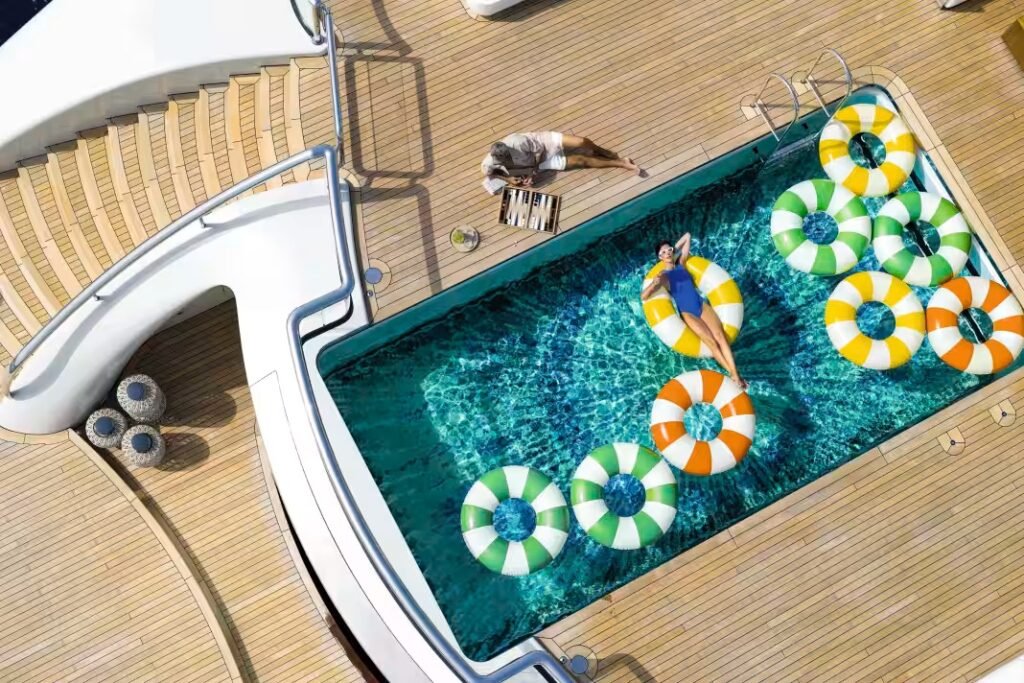
The material palette for yacht mosaics should feel luxurious, but it also needs to behave well at sea. A yacht is not the place for random decorative tiles. Every material must justify its place.
Non-Slip Mosaics for Onboard Himalayan Salt Saunas & Spas
Beach clubs and spas need safe surfaces. Wet feet, saltwater, sunscreen, and movement can make glossy floors risky. That is why Non-slip mosaic for Jumeirah private boat decks should focus on texture, grout spacing, and surface finish.
A mosaic naturally offers more grip than many large-format tiles because it has more grout lines. These small joints can improve traction when planned correctly.
For wet yacht areas, designers should consider:
- Honed stone instead of polished stone
- Textured glass where appropriate
- Smaller tesserae for better foot grip
- Marine-compatible grout
- Easy-clean finishes
- Drainage direction
- Comfortable barefoot texture
Stone and marble mosaics work beautifully in wellness areas. Beige limestone, soft white marble, green stone, and charcoal accents can create a calm spa atmosphere. When paired with warm lighting, the space feels like a private retreat. This is the heart of wellness sanctuary yacht design.
PIXL Technology for Seamless Underwater Pool Murals
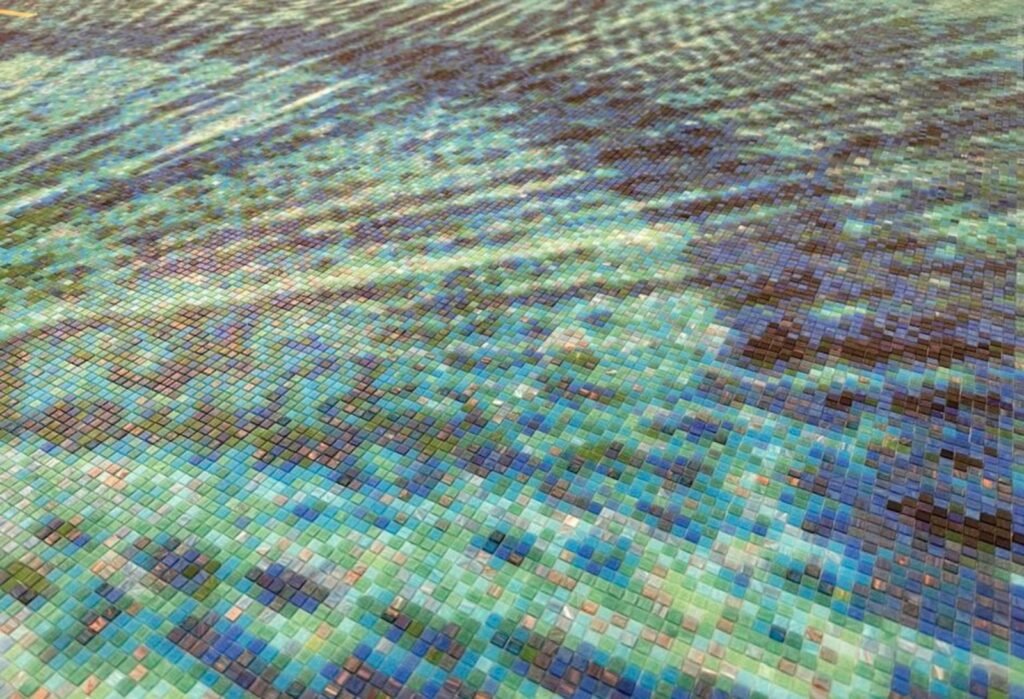
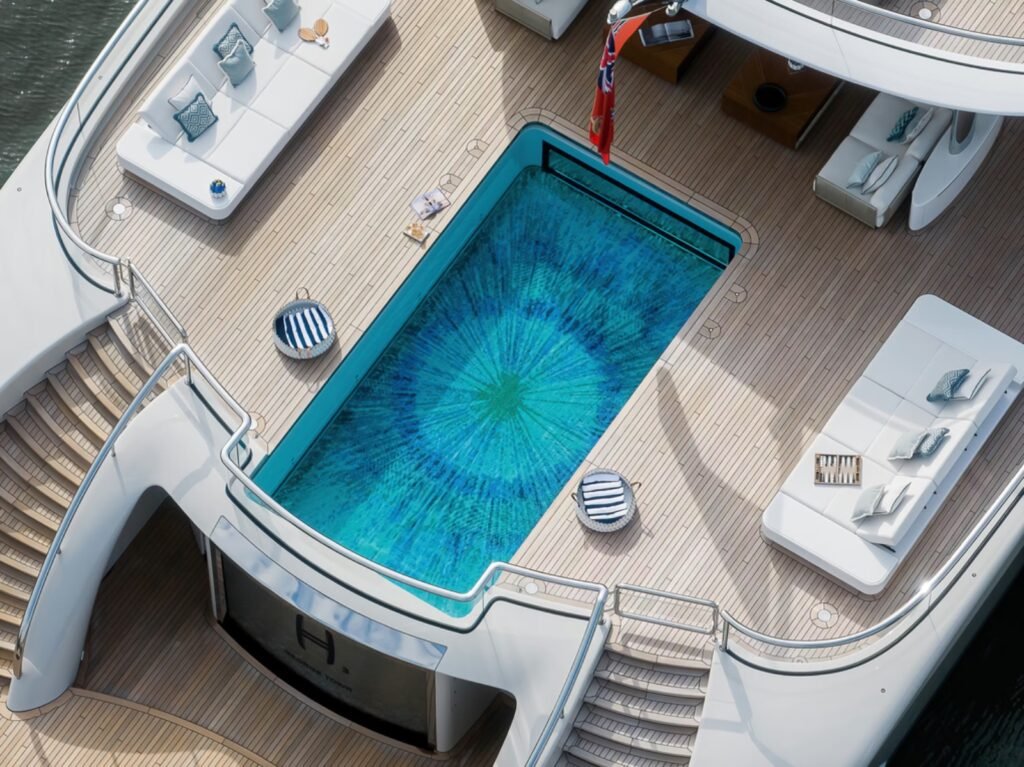
Underwater surfaces expose every design flaw. Sheet lines, grid marks, and repeated patterns become more visible under water and light. PIXL-style mosaic fabrication helps solve this issue by using carefully placed small glass pieces to create smooth gradients, flowing color transitions, and detailed imagery.
This works well for:
- Ocean-inspired pool floors
- Coral reef murals
- Abstract blue gradients
- Yacht logos underwater
- Family crests
- Marine life scenes
- Infinity spa interiors
For Lightweight glass mosaics for yacht swimming pools, this approach offers both beauty and control. Designers can create the illusion of depth without relying on heavy materials.
Why Bespoke Mosaics Outperform Standard Marine Finishes
Standard marine finishes have their place. Panels, vinyls, veneers, and conventional tiles can work in many areas. However, they rarely deliver the same level of uniqueness, permanence, and artistic value as bespoke mosaic artwork.
Standard Finishes Often Repeat
Many yacht interiors look similar because they rely on the same supplier catalogs. You’ll often see repeated marble-effect panels, neutral wall coverings, and predictable spa tiles across different vessels. Bespoke mosaics change that completely.
At MEC Artworks, every mosaic tile art project in the UAE starts from a blank canvas. Instead of choosing from pre-made options, you work with a dedicated design team to create something tailored to your yacht’s architecture and identity. This allows full control over design, material, and colour customisation.
Mosaics Adapt Better to Curves
Large tiles and rigid panels often struggle on curved yacht surfaces. They require cuts that interrupt the design and break visual flow. Mosaics behave differently. Because they are made of smaller tesserae, they follow curves more naturally. This makes them ideal for every space.
Mosaics Distribute Stress
A single slab can crack under pressure. A mosaic surface spreads movement across hundreds or thousands of small pieces. This natural flexibility becomes even stronger when combined with proper installation systems.
That is why vibration-resistant tile bonding and hull flex-tolerant mosaics work together so effectively. MEC Artworks takes this further by engineering mosaics specifically for performance, not just aesthetics. Material selection, backing methods, and fabrication techniques are all aligned with real-world marine conditions.
Mosaics Create Permanent Identity
A yacht is a long-term investment. Its interiors should feel timeless, not temporary. Bespoke mosaics excel here because they are not tied to trends. They are designed around meaning. At MEC Artworks, the design process often involves interpreting the owner’s vision, lifestyle, and cultural influences into a lasting surface. For example:
- A Dubai owner may choose Islamic geometry in blue and gold
- A Mediterranean yacht may use deep cobalt and white stone
- A wellness-focused yacht may feature soft green glass and flowing patterns
- A family yacht may include a crest or symbolic motif
Each of these choices turns a surface into a story. That is the real difference. Standard finishes decorate a space. Bespoke mosaics define it.
Final Thought: Where Art Meets Ocean Engineering
Designing for the sea changes everything. A surface must do more than look refined. It must perform under pressure, movement, and time. As explored throughout this guide, bespoke mosaics bring a rare balance of beauty and engineering to yacht interiors. They adapt where rigid materials fail. They endure where standard finishes wear out. More importantly, they give your yacht something most vessels lack: identity.
In a world where many yacht interiors feel similar, a custom mosaic turns your space into something unmistakably yours. It’s not just decoration. It’s a permanent expression of craftsmanship, culture, and intent. And at sea, that difference is everything.
FAQ’s
Are mosaics suitable for marine environments with constant movement?
Yes, mosaics can work very well on yachts when the system is engineered correctly. The key is not just the tile. It is the full installation assembly. A yacht mosaic tile art project should use flexible bonding, suitable grout, proper waterproofing, and movement-aware detailing. Smaller tesserae also help distribute stress across the surface.
What is the best material for yacht mosaics in Dubai?
Glass mosaic tile is one of the strongest choices for Dubai yacht interiors because it is resistant to moisture, salt exposure, and UV fading. Natural stone also works well in cabins, spas, and feature areas when properly sealed. For exterior wet zones, a Marine-grade mosaic tile UAE specification should focus on slip resistance, salt resistance, and UV stability.
Can mosaics be used in yacht swimming pools?
Yes. Yacht pools can use mosaics when the design includes proper waterproofing, submerged-condition adhesives, and lightweight fabrication. Lightweight glass mosaics for yacht swimming pools are especially useful because they create rich underwater color without adding unnecessary weight.
Are mosaics safe for yacht beach clubs and decks?
They can be safe when designed with the right surface finish. For wet walking areas, use smaller tesserae, textured finishes, and proper grout spacing. A Non-slip mosaic for Jumeirah private boat decks should prioritize barefoot comfort, water drainage, and slip resistance.
How do yacht mosaic projects fit into refit schedules?
For Yacht refit services Dubai, the best approach is early planning. Designers should finalize drawings, samples, and section maps before the vessel enters the shipyard. This reduces delays and helps contractors install the mosaic during the correct stage of the refit.