 UAE & GCC

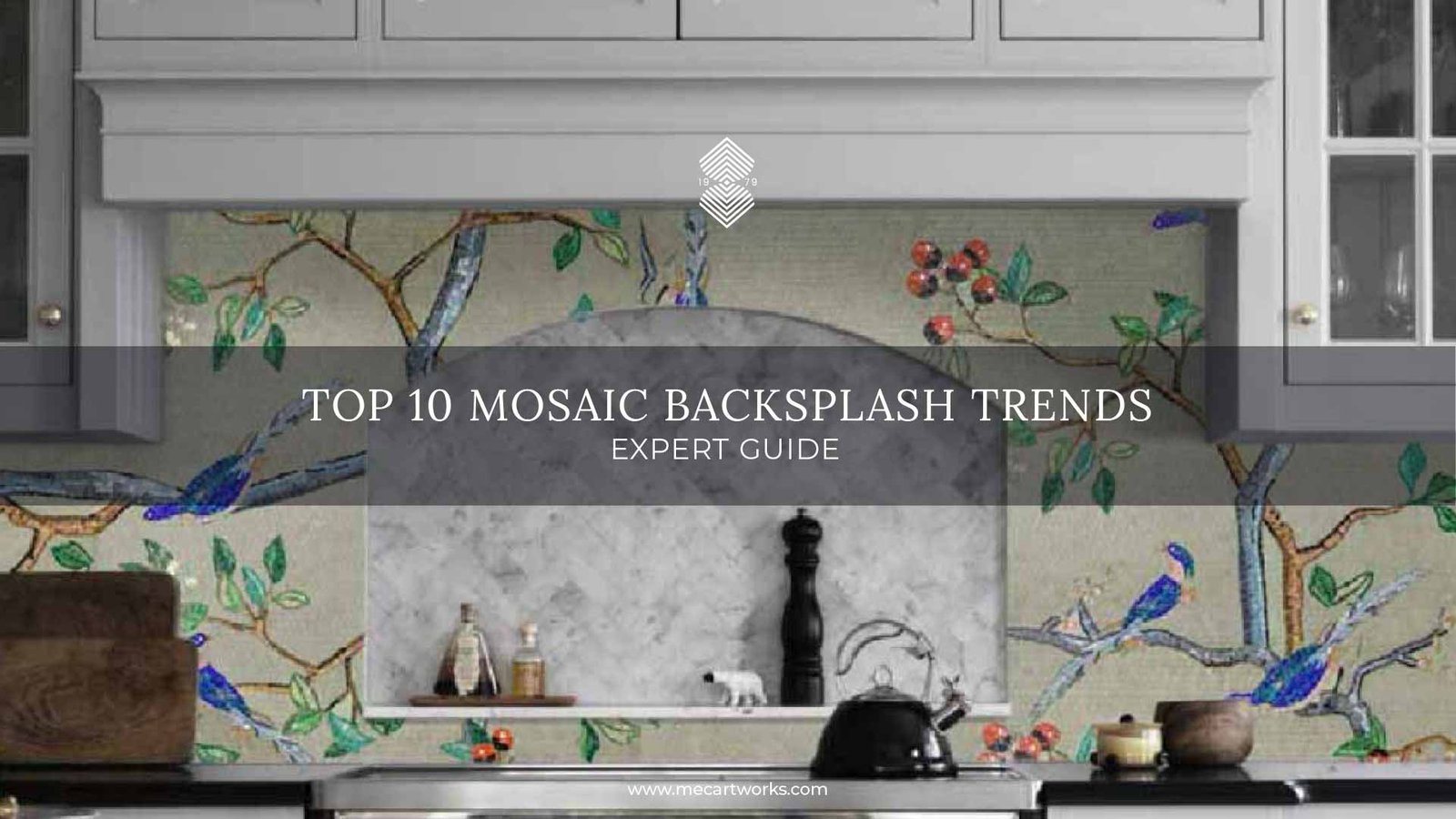
A kitchen backsplash used to be the quiet worker in the room. It caught splashes, handled steam, and quietly sat behind the cooktop without asking for attention. That has changed. In today’s high-end UAE homes, the backsplash is no longer a filler surface. It is architectural mosaic art. It frames the kitchen, sharpens the material palette, and often becomes the first detail your eye lands on.
That shift matters even more in the Emirates. Kitchens in Dubai and Abu Dhabi are often open, sunlit, and deeply integrated into the wider living space. They need materials that can hold up visually and technically. Heat, strong daylight, polished cabinetry, natural stone islands, and luxury appliances all raise the standard. A bland backsplash simply can’t keep up.
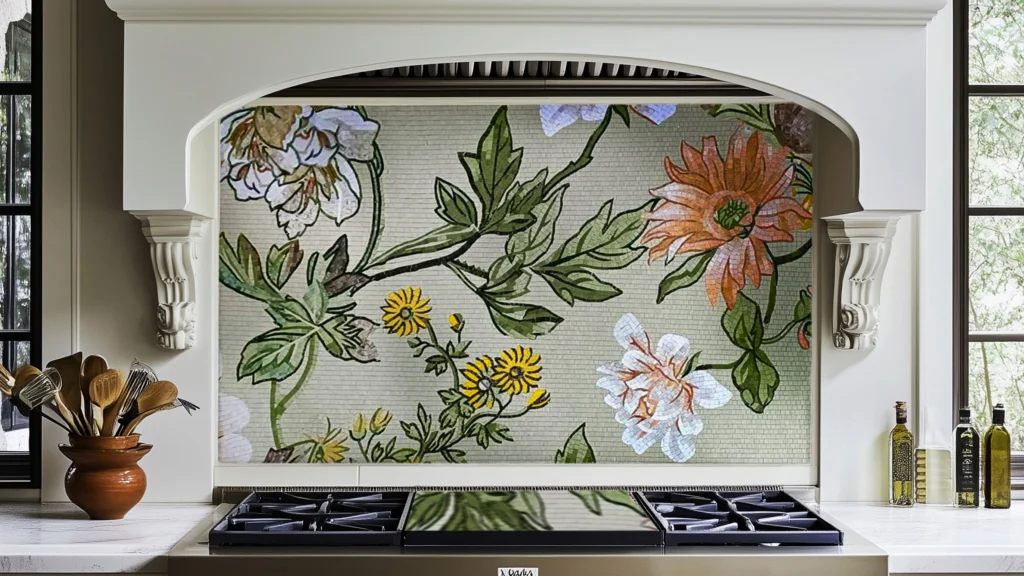
This guide looks at the mosaic backsplash trends shaping upscale kitchens across the UAE. It also explains how to choose a custom kitchen backsplash that feels timeless rather than trendy. Some ideas lean dramatically. Others whisper instead of shouting. All of them work best when design, material, scale, and craftsmanship are aligned.
Table of Contents
The Evolution of the Kitchen Backsplash: From Utility to Architectural Art
The old backsplash formula was simple. Pick a safe tile. Run it a short distance above the counter. Match the grout. Move on. Luxury kitchens don’t work that way anymore.
Today, the elegant kitchen backsplash mosaic tiles often act as a visual bridge between the countertop, upper cabinetry, range hood, and surrounding walls. In many villas, penthouses, and designer apartments, the kitchen is visible from the dining and living areas. That means the backsplash has to do more than survive tomato sauce. It has to hold the room together.
This is where kitchen mosaic design stands apart. A mosaic surface gives you scale control, material contrast, pattern intelligence, and directional movement. Large slabs can feel sleek, yes. However, mosaics give you something slabs often can’t: rhythm. They let you shift from quiet texture to expressive detail without breaking the architecture.
That’s one reason backsplashes now behave more like curated wall compositions than background finishes. In premium interiors, they’re treated with the same seriousness as a stone fireplace surround or a hand-finished floor medallion. The surface may be compact, yet its visual influence is huge.
For UAE homes, that evolution feels especially natural. Interiors here often balance minimal modern lines with richer material moments. A mosaic backsplash fits that language beautifully. It can be restrained, geometric, biophilic, sculptural, or luminous. Moreover, it can be tailored to the kitchen’s exact proportions rather than forcing the room to adapt to a standard tile module.
Why Mosaic Backsplashes Outperform Generic Tile Fields
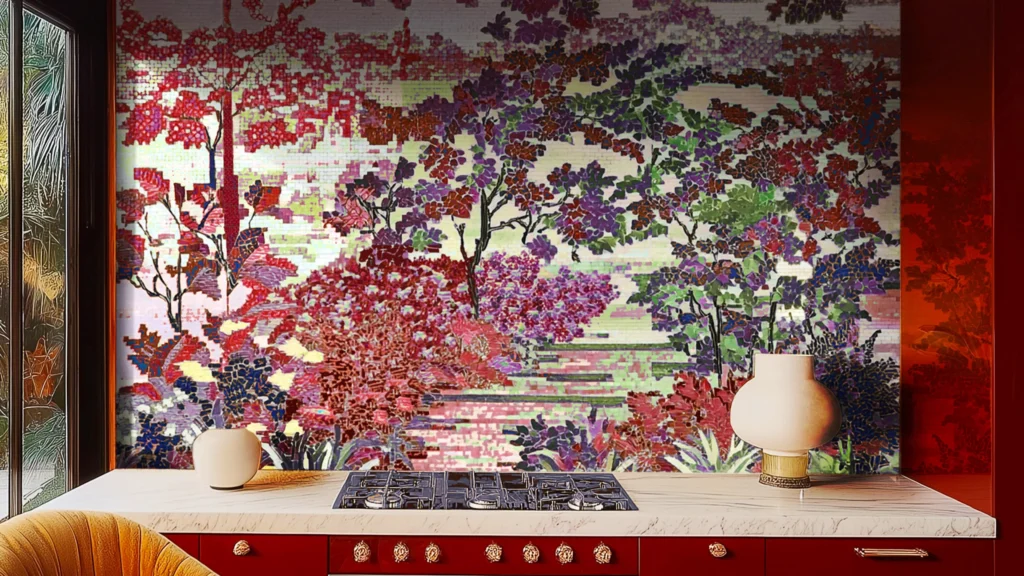
A well-made backsplash mosaic can:
- Follow awkward or custom dimensions with precision
- Soften the transition between heavy stone counters and sleek cabinetry
- Introduce texture without clutter
- Create movement through hand-laid direction and spacing
- Feel bespoke rather than catalog-driven
That last point matters. In luxury design, sameness is the enemy. A mosaic wall backsplash should feel placed, not pasted.
Top 10 Kitchen Mosaic Backsplash Design Trends for 2026 in the UAE
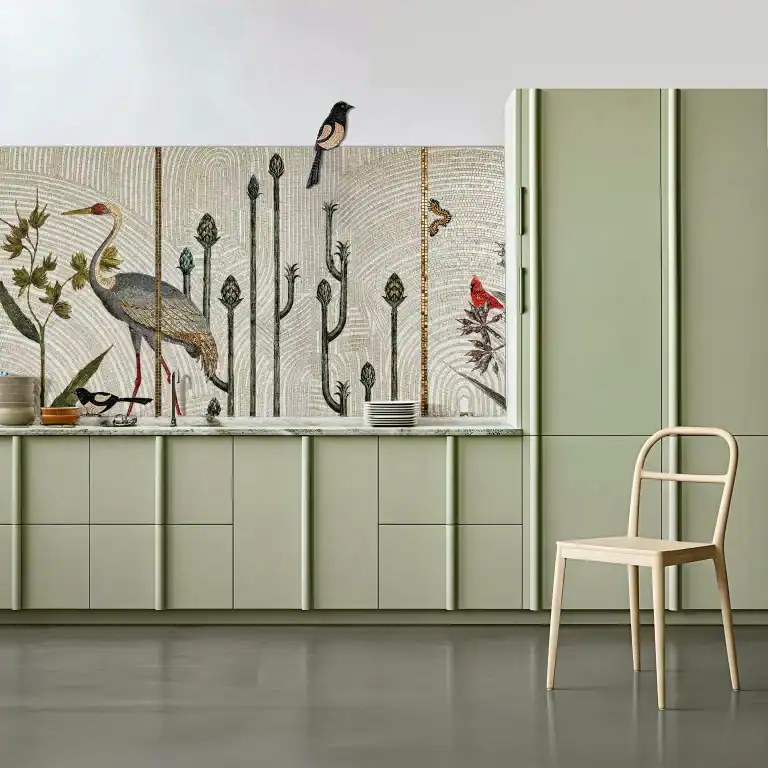
1. Biophilic Murals: Bringing Nature into the Heart of the Home
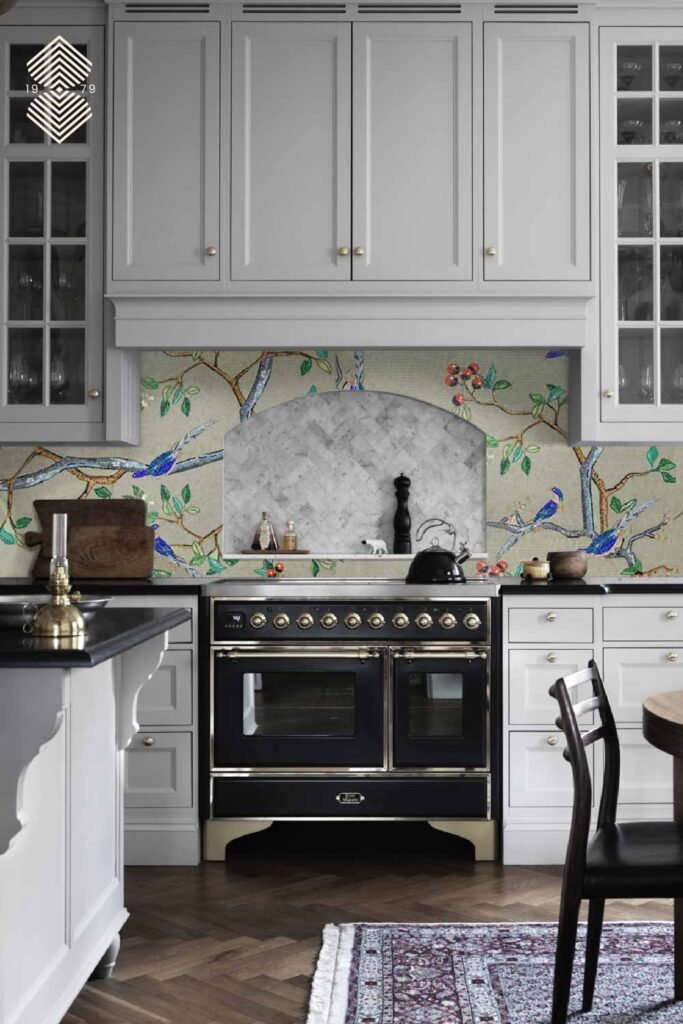
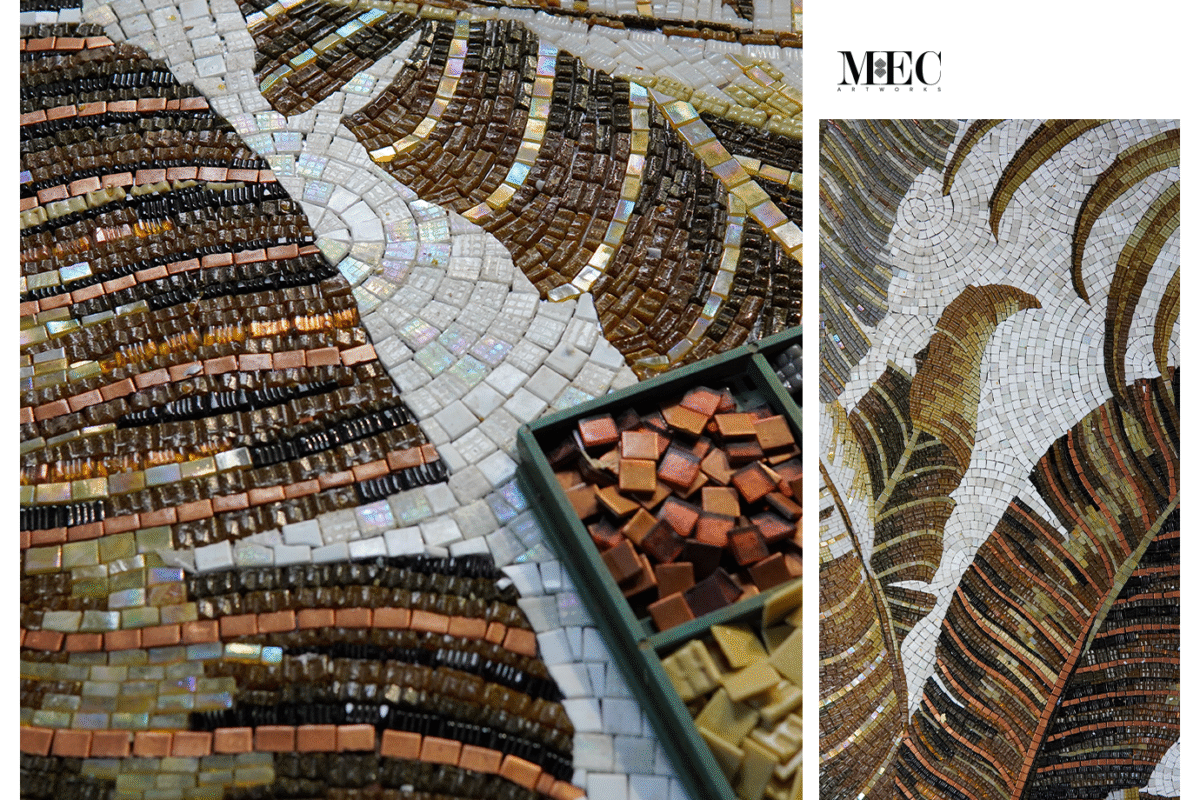
One of the strongest modern kitchen mosaic trends for luxury villas is the rise of biophilic imagery. That doesn’t always mean a literal jungle mural. Sometimes it’s a subtle composition of leaves, stems, vines, reeds, or flowing abstract forms inspired by nature.
Why does this trend work so well in kitchens?
Because kitchens are active spaces. There is steel, stone, glass, light, and motion everywhere. Biophilic mosaic tile design surfaces bring a softer counterpoint. They add life without adding fuss. Think of them as the room’s deep breath.
In a UAE setting, biophilic backsplashes often work best when they avoid theatrical excess. A large parrot scene may suit a particular client, though many luxury homes benefit more from tonal botanical imagery. Palm fronds in pale stone. Layered leaf shadows in mixed green glass. Abstract reed patterns in ivory and sand. These choices feel sophisticated and regionally appropriate.
| Design tip:When the backsplash includes natural motifs, keep at least one surrounding element calm. For example, pair a foliage mosaic with flat-panel cabinetry or a simple honed countertop. Otherwise, the room starts to feel like every instrument in the orchestra is playing a solo. |
2. 3D Sculpted and Fluted Luxury Stone Mosaics
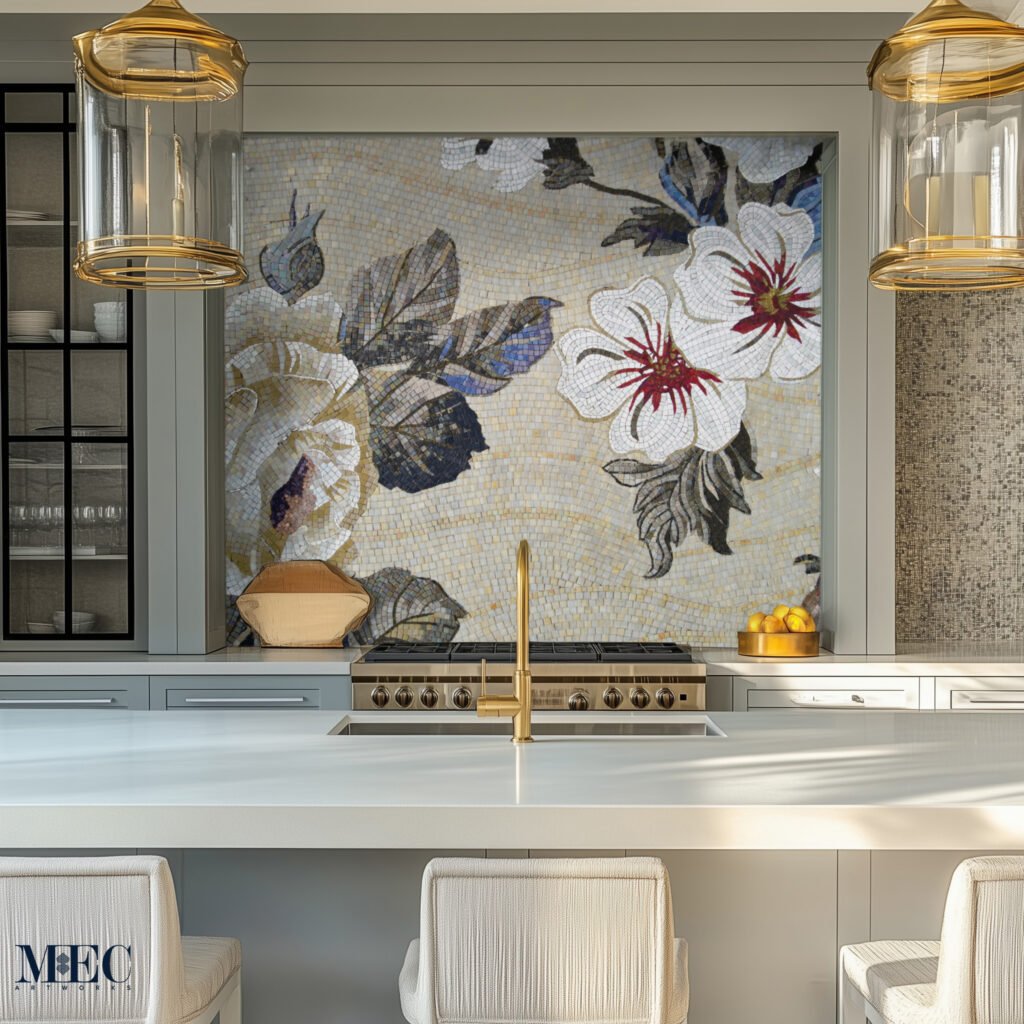
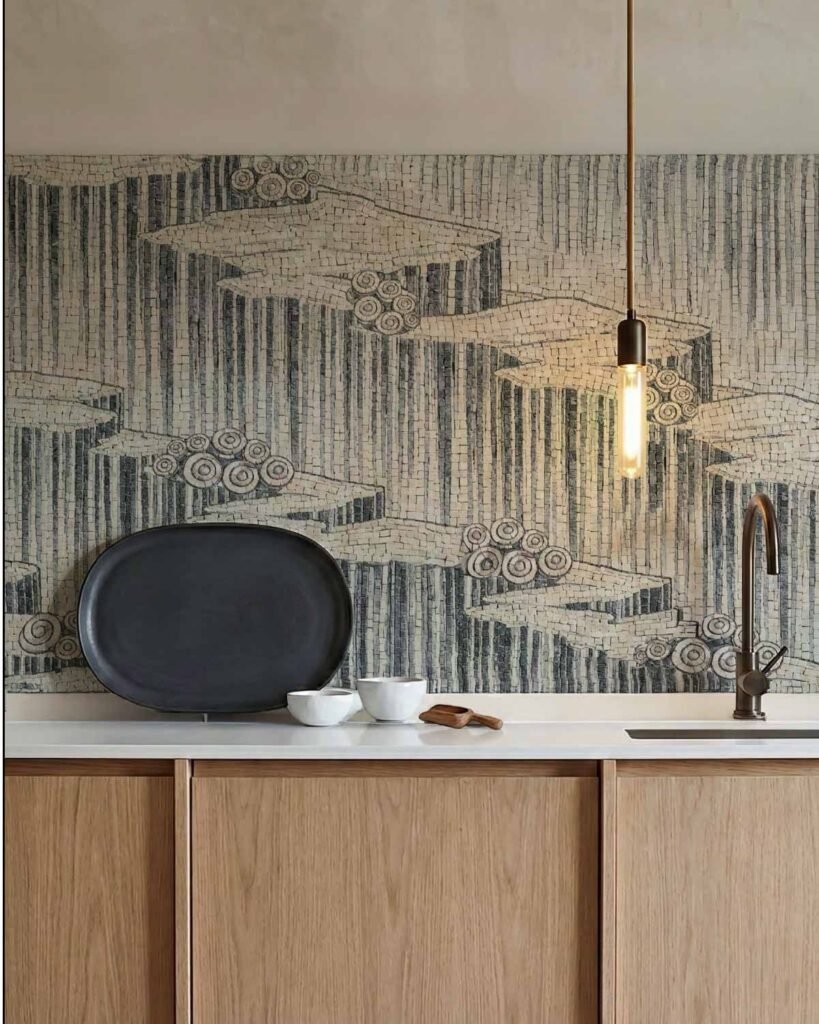
Texture is having a real moment in luxury interiors. Not fake texture. Not a machine-printed illusion. Real shadow, real relief, real material depth.
That’s why 3D sculpted and fluted stone mosaics have become one of the most compelling mosaic backsplash trends in high-end kitchens. They do something flat tile can’t. They catch light at different angles throughout the day. Morning sun skims the surface one way. Evening pendants reveal another layer. The backsplash stays active even when the palette stays quiet.
In a UAE home, this trend often looks strongest in pale limestone tones, warm ivory marble, or soft beige stone. That palette works with desert light and doesn’t fight the rest of the material scheme. The goal is not to make the wall scream. It’s to make it shimmer.
3. Mediterranean Revival: Hand-Painted and Blue-White Zellige
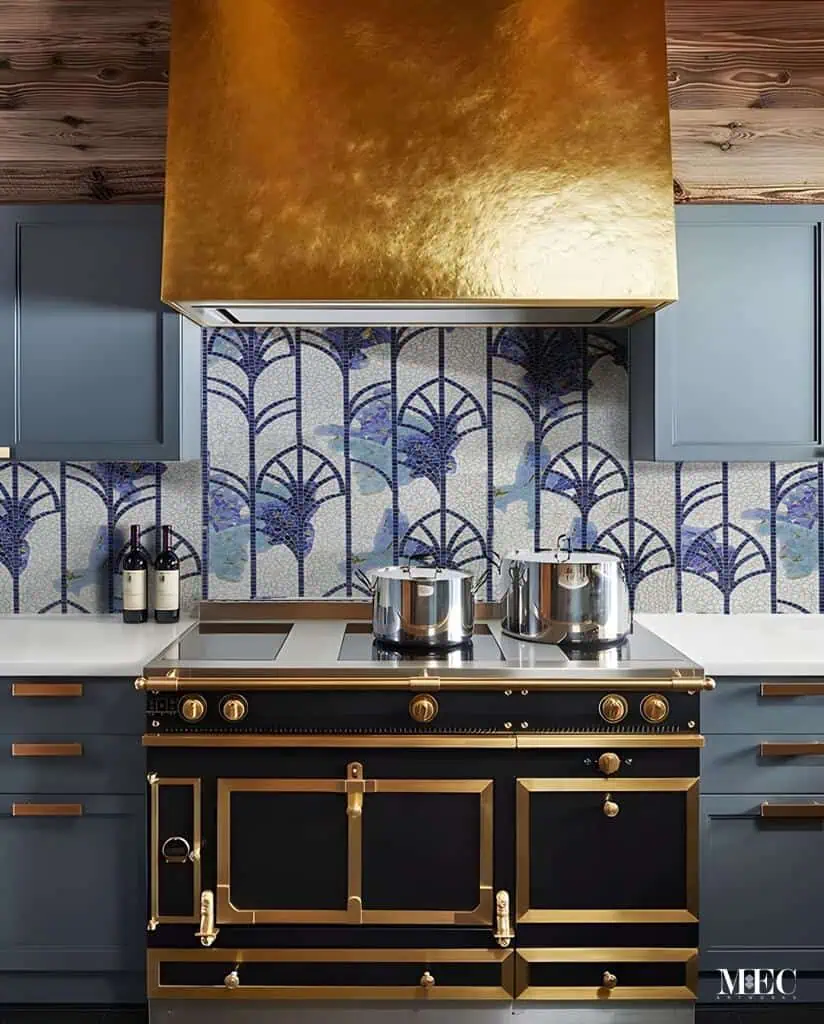
This trend has real staying power because it combines emotion with craft. It feels human. It feels sun-washed. It feels collected rather than mass-produced.
Mediterranean surfaces, especially zellige-inspired backsplashes, are appealing because they reject sterile perfection. Their charm comes from a slight variation. One tile catches more light. Another has a softer edge. A third shifts in tone by a fraction. Together, they create a wall with pulse.
For UAE kitchens, the blue-white version of this trend feels especially relevant. It speaks to coastal freshness and Mediterranean calm. However, there’s also a broader revival happening in blush, olive, chalky green, pale ochre, and creamy neutrals. The trend is no longer just cobalt and white. It has matured.
4. Metallic Inlays: Brass and Gold Leaf Accents
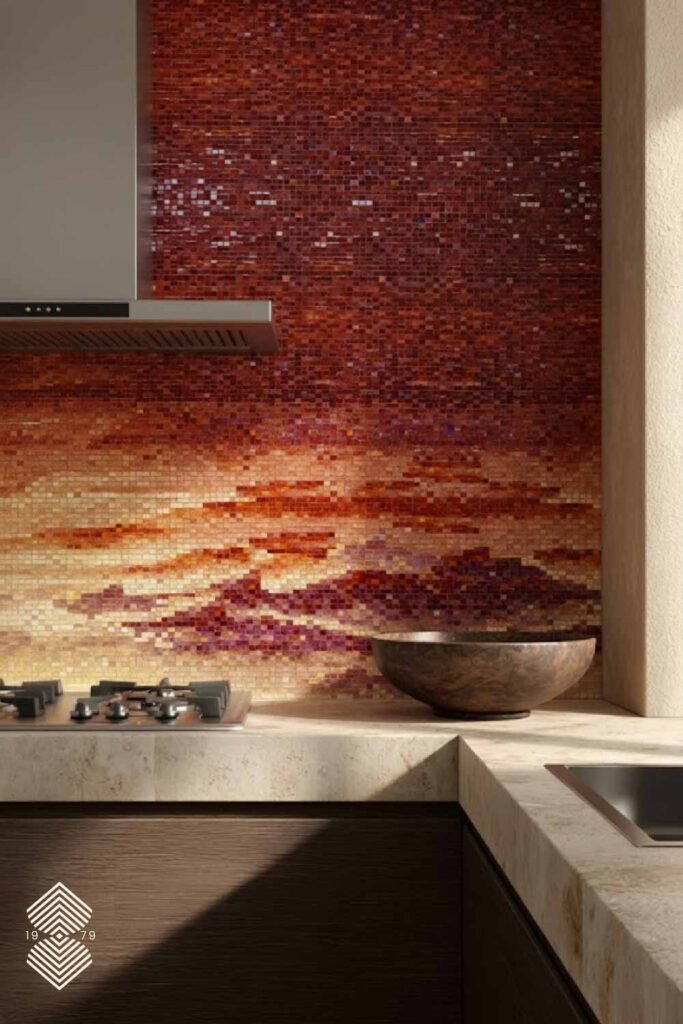
Metallic details in a backsplash can go spectacularly right or spectacularly wrong. There is not much middle ground.
When used well, brass or gold-toned inlays bring controlled sparkle. They catch light, tie into hardware, and lift a neutral scheme without overwhelming it. Used badly, they look like a stage costume. The trick is proportion.
In most kitchen mosaic design projects, metallic accents appear as linework, pinstripes, borders, or small tesserae embedded within stone or glass. They do not dominate the composition. They season it.
This trend is especially effective in luxury UAE kitchens because the region’s interiors often embrace warm metal hardware, sculptural lighting, and refined detailing. A backsplash with subtle metallic articulation can connect the hood trim, faucet finish, and cabinet pulls into one coherent material story.
| Practical note: Choose the metal treatment carefully. Some finishes are best used in lower-splash areas or sealed decorative zones. Others perform better when integrated into glass or stone compositions designed for kitchen use. This is not an area to improvise on-site. It needs material clarity from the start. |
5. Sustainable Luxury: Recycled Glass and Eco-Friendly Tesserae
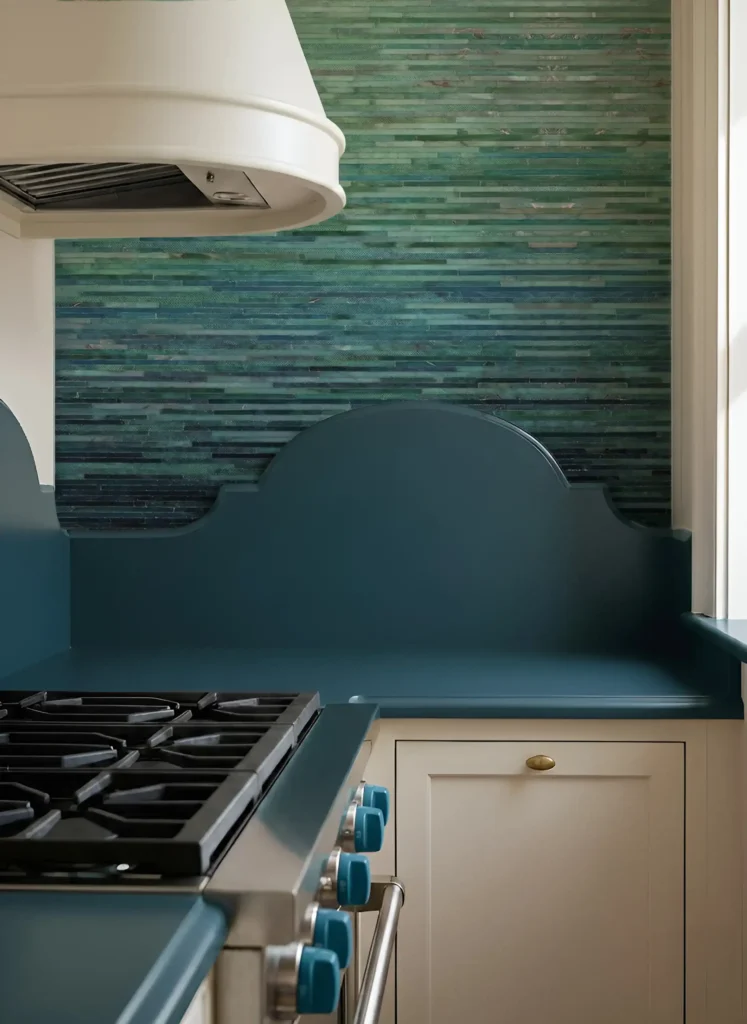
Sustainability is no longer a side conversation in premium design. It’s part of how serious projects are evaluated. Dubai’s Green Building Regulations were developed to improve building performance by reducing the use of energy, water, and materials while improving health and overall building quality.
That broader shift has helped push sustainable mosaic tile materials for kitchens into the luxury conversation. Recycled glass mosaics are a major part of that movement. They offer color depth, high reflectivity, strong stain resistance, and a cleaner environmental story than purely disposable surface choices.
In kitchen terms, this trend is attractive because it does not ask you to choose between ethics and beauty. Recycled and reclaimed mosaic tiles can be jewel-like, misty, translucent, matte, glossy, or softly iridescent. They work in both bold and quiet kitchens.
6. Full-Height Statement Walls: The Ceiling-High Mosaic
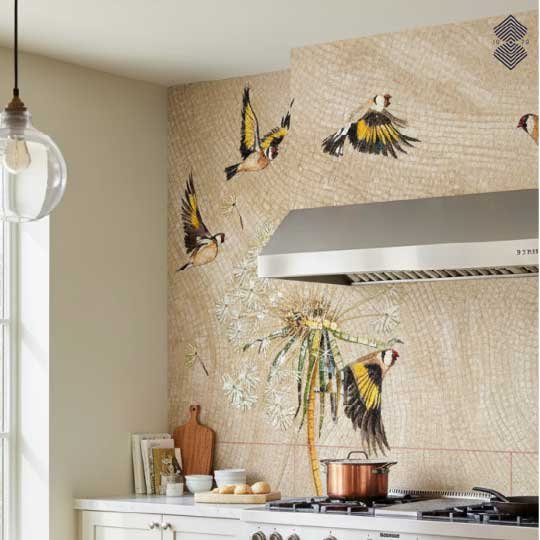
The backsplash line is climbing. In many premium kitchens, it no longer stops under the upper cabinets. It stretches upward, wraps a whole wall, or continues behind floating shelves and custom hoods.
This is one of the strongest mosaic backsplash trends for homes that want drama without adding extra furniture or clutter. A full-height mosaic wall turns the kitchen into a designed volume instead of a collection of separate parts.
That move is especially effective in open-plan UAE homes. Large living spaces can swallow detail. A standard 18-inch backsplash sometimes feels visually underpowered. A full-height mosaic wall gives the kitchen enough vertical presence to stand its ground.
7. Moody Monochrome: Nero Marquina and Charcoal Herringbone
Not every luxury kitchen wants brightness. Some want depth. Some want shadow. Some want a little cinematic tension.
That is where moody monochrome backsplashes enter the frame. Black marble, charcoal glass, smoked stone, graphite mosaics, and dark herringbone layouts create kitchens with real atmosphere. They feel intentional. They also photograph beautifully, which never hurts in high-end residential design.
Black mosaic glass tiles, in particular, remain powerful because they have both gravity and elegance.
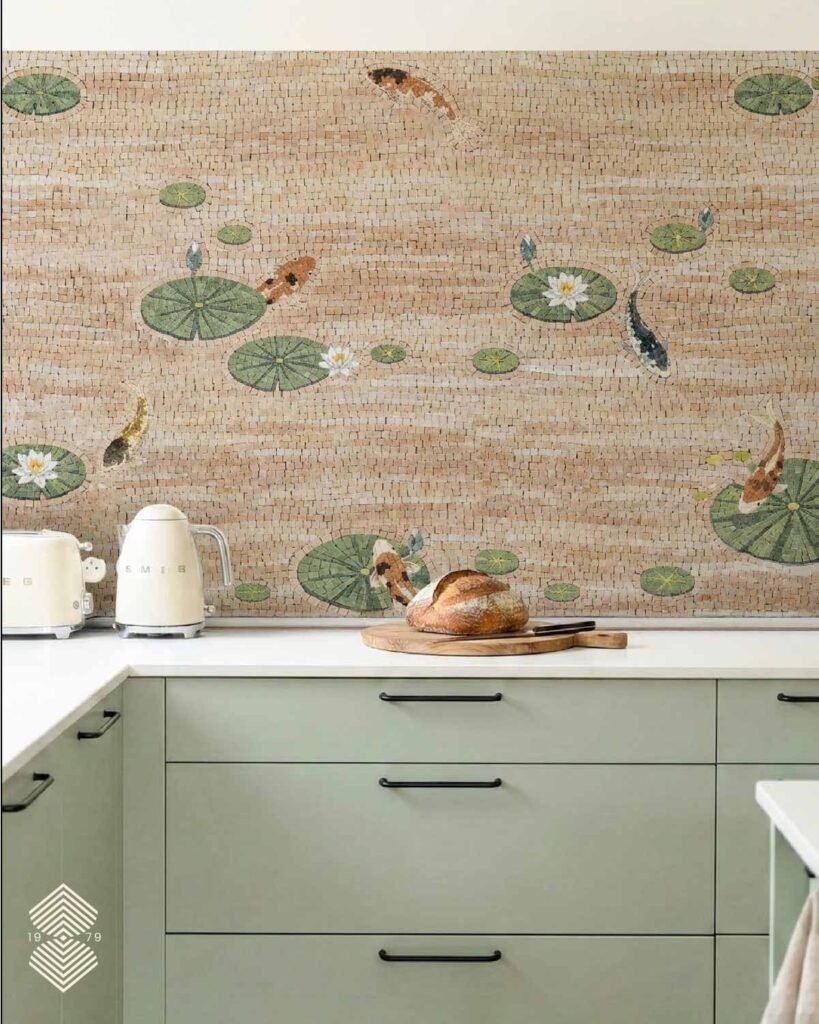
8. Warm Desert Neutrals: Sandy Travertine and Terracotta Blends
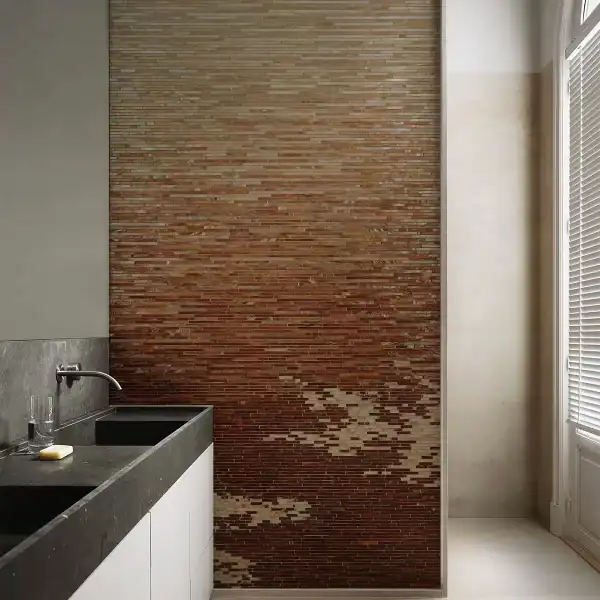
Some trends feel imported. This one feels rooted.
Warm desert neutrals speak directly to the geography and light of the region. Think sand, dune beige, pale clay, limestone, soft taupe, and muted terracotta. These tones don’t just look beautiful in UAE homes. They belong there.
This trend works because it creates warmth without fuss. A sandy travertine mosaic backsplash can feel luxurious in a deeply understated way. It doesn’t beg for attention. It earns it slowly.
9. Geometric Arabesque: A Modern Middle Eastern Touch
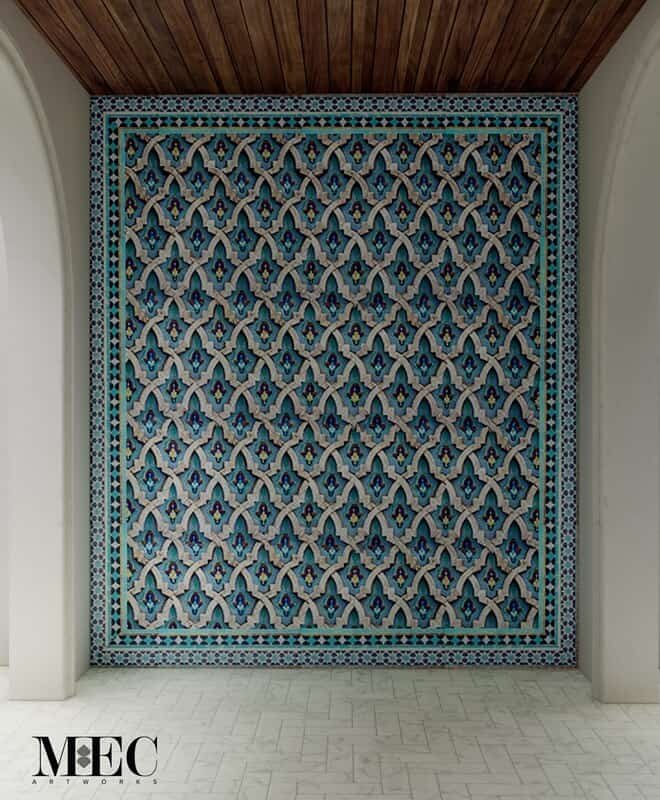
Some trends travel well across borders. Others feel strongest when they draw from a place. Geometric arabesque mosaics belong in the second group.
This direction reinterprets traditional Islamic geometry for contemporary kitchens. The result doesn’t have to look historic or ornate. In fact, the best versions often simplify the pattern, enlarge the scale, or reduce the palette so the geometry reads clearly inside a modern interior.
That regional connection gives the backsplash more cultural depth. It also prevents the kitchen from feeling anonymous. A thoughtfully designed arabesque mosaic can speak to the Middle East without becoming a theme set.
10. Mixed Material Fusion: Combining Matte Glass and Polished Marble
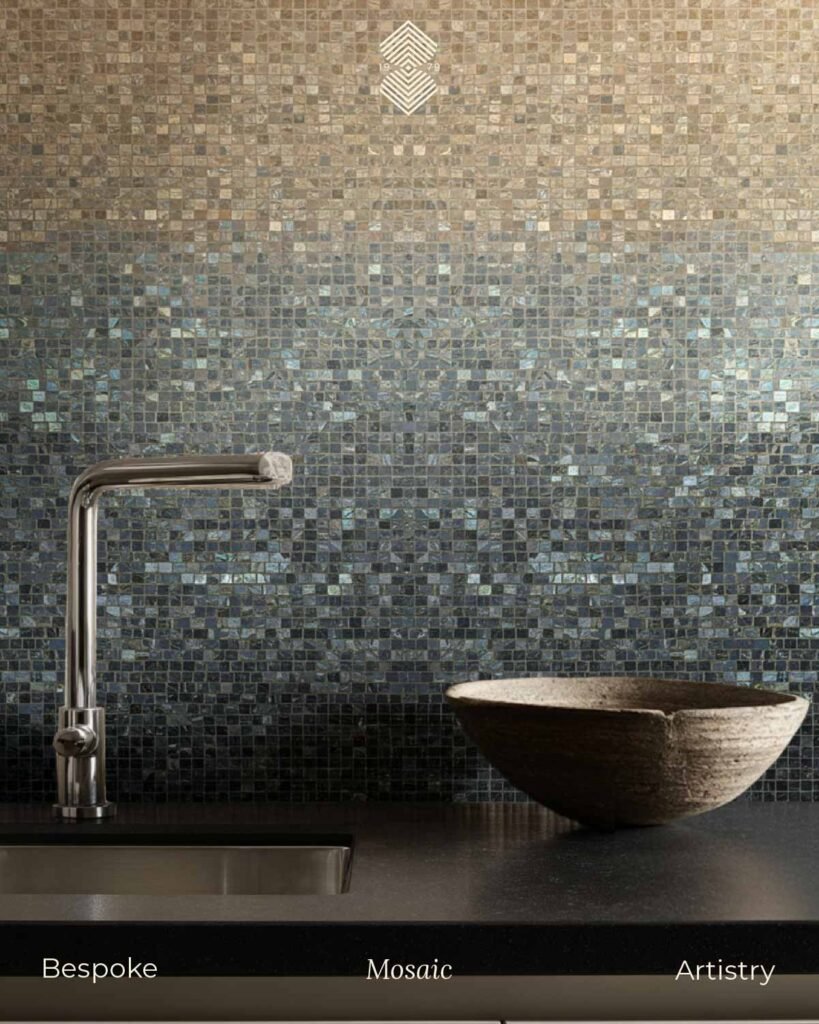
This trend is all about tension. Soft and sharp. Matte and glossy. Opaque and reflective. Natural and precise.
Mixed-material mosaics are rising because luxury home kitchens increasingly avoid one-note surfaces. Designers want texture layering, though they want it under control. A mixed-material backsplash gives you that contrast in a compact field.
One of the most elegant combinations is matte glass with polished marble. The stone provides body and natural variation. The glass catches and diffuses light. Together, they create depth that changes as you move through the room.
Designing for the UAE: Climate-Resistant and High-Performance Materials
Design trends are fun to discuss. Performance is where the real story begins.
The UAE climate is hard on materials. The national climate fact sheet notes that summer temperatures in the country can climb as high as 50°C, particularly in hotter regions, while statistical climate data for Abu Dhabi also shows how high temperatures interact with significant humidity.
Even when a kitchen is air-conditioned, that climate context still matters. Sun pours through the glazing. Outdoor and indoor zones often connect. Humidity, cooking vapors, and strong daylight shape how surfaces age.
What High-Performance Backsplash Materials Need to Do
A backsplash in a UAE luxury home should offer:
- Color stability under strong light
- Low porosity or an appropriate sealing strategy
- Resistance to grease and frequent cleaning
- Compatibility with cooktop heat conditions
- Long-term visual integrity, not just short-term shine
Heat and Humidity Resistance for Dubai Kitchens
Materials near cooking zones need common sense, not wishful thinking. Dense glass mosaics perform well because they are non-porous and easy to wipe down. Stone mosaics can also perform beautifully, though they need the right finish, thoughtful sealing, and proper fabrication.
UV Stability for Sun-Drenched Open Kitchens
Open kitchens with big glazing need surfaces that won’t lose their dignity under strong daylight. Glass, quality stone, and well-selected mixed media tend to hold up better visually than surfaces that depend on surface coatings or printed effects. The sun is the ultimate truth teller. It reveals shortcuts fast.
Why Choose MEC Artworks for Custom Kitchen Mosaic Backsplashes in the UAE
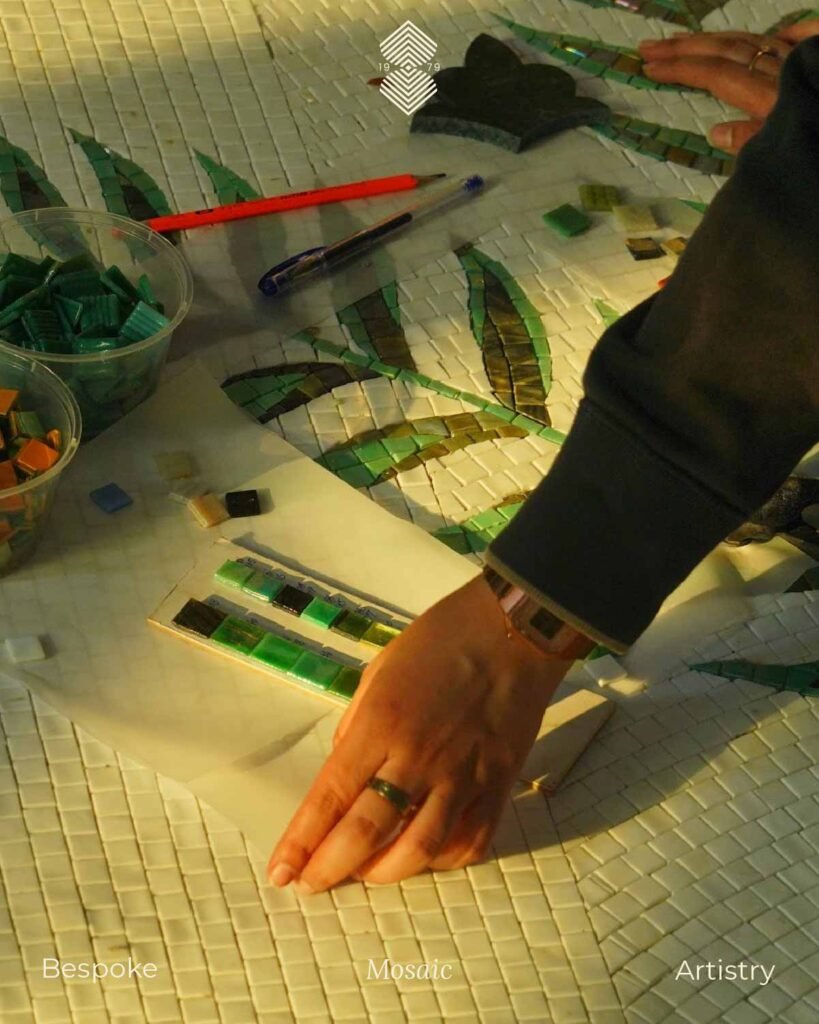
MEC Artworks does not approach mosaic tile design projects as off-the-shelf décor. Each composition is designed around the kitchen’s dimensions, cabinet language, countertop material, and lighting conditions. That matters because a backsplash has to belong to the room, not just fit inside it.
Conclusion: Choosing a Mosaic Backsplash Trend That Will Last
Trends come and go. Kitchens stay.
That is why the smartest approach to mosaic backsplash trends is not to chase novelty for its own sake. Instead, choose a direction that suits the architecture, the light, your material palette, and how you actually live.
If you want softness, biophilic or Mediterranean-inspired surfaces may be the answer. If you want depth, go moody and monochrome. If you want regional resonance, geometric arabesque patterns can be exceptional. If you want quiet warmth, desert neutrals are hard to beat. And if you want a backsplash that truly feels custom, mixed-material or hand-cut compositions offer a richer result than stock tile ever will.
FAQ’s
Which mosaic materials are easiest to clean in a high-use kitchen?
Glass mosaic and many recycled-glass mosaics are typically the easiest to clean because the surface is dense and non-porous. Grease and food splashes usually wipe off quickly with the right cleaner. Honed marble can also work well, though it asks for more thoughtful sealing and routine care. If your kitchen sees heavy daily cooking, lean toward smoother surfaces over deeply carved textures.
Can I customize a mosaic pattern to match my cabinetry?
Yes. In fact, that is one of the strongest reasons to choose a bespoke kitchen mosaic tile design. A backsplash can be tuned to your cabinet color, finish, line direction, and hardware tone. You can echo fluted millwork, repeat a brass detail, soften a sharp cabinet grid, or bring in a contrasting material that still feels connected. The best results come when the backsplash is designed as part of the kitchen rather than selected at the end.
Are hand-cut mosaics more durable than machine-made tiles?
Durability depends on more than whether the piece is hand-cut or machine-cut (waterjet cutting). Material type, thickness, finish, substrate, installation method, and location all matter. However, hand-cut mosaic tile UAE projects often have a major advantage in one area: design integrity. Hand-cut work allows better control over curves, transitions, spacing, and visual movement. That can lead to a more resolved final surface, especially in custom patterns and architectural compositions.
What is the lead time for a bespoke mosaic backsplash in Dubai?
Lead time varies with the design complexity, material mix, sample approvals, and fabrication method. A relatively straightforward bespoke backsplash wall design may move faster than a mural-style or mixed-material design. As a general project reality, custom work needs time for design development, mockups or sampling, fabrication, packing, and installation planning. The earlier the backsplash is integrated into the kitchen schedule, the smoother the outcome tends to be.
Do 3D textured mosaics catch grease and dust easily?
They can collect more residue than a flat tile because relief creates more edges and valleys. That does not mean you should avoid them. It simply means placement matters. Many kitchens use textured mosaics brilliantly in lower-splash areas, coffee zones, side walls, or framed feature panels while keeping the main cooktop zone smoother and easier to wipe. Think of texture as a spice. Use it in the right quantity and in the right place.