 UAE & GCC

Artaic vs. MEC Artworks UAE: Robotic Precision vs. Hand-Cut Soul in Mosaic Design
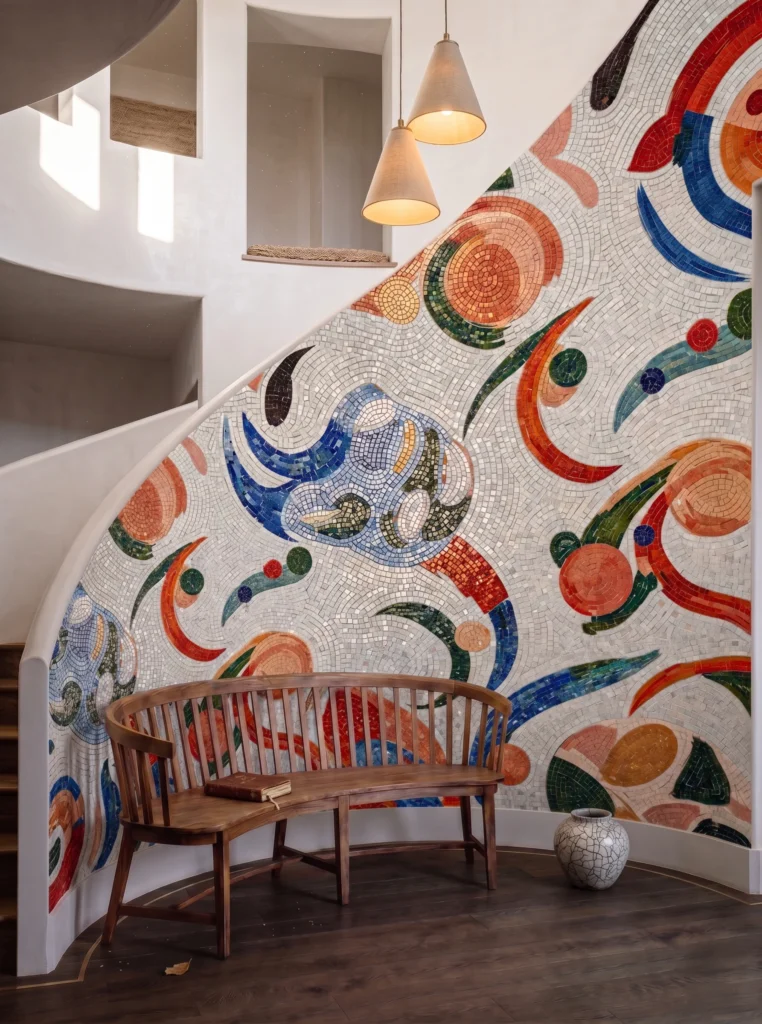
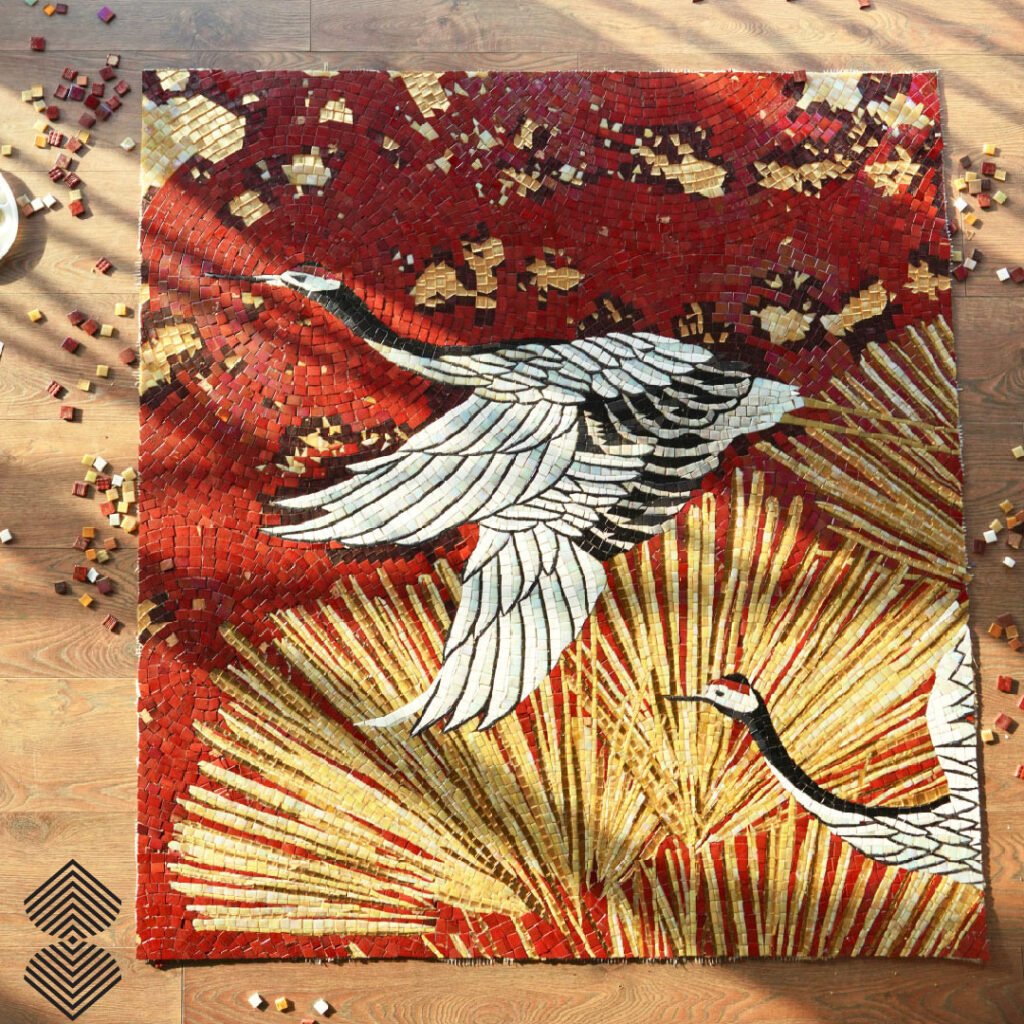
The Evolution of Mosaic Art: Artisanal Craftsmanship vs. Modern Automation
Modern mosaic fabrication exists between two distinct approaches: robotic assembly and traditional hand-cut craftsmanship. While both can produce visually detailed surfaces, the artistic result, material behavior, and architectural integration differ significantly.
Artaic’s fabrication model relies heavily on robotic assembly systems, software scaling, and automated tile placement, designed for rapid production and modular repetition. While technically efficient, rigid grid systems can create visible pixelation, mechanical repetition, and limited artistic flow.
At MEC Artworks, every tessera is individually shaped and positioned by artisans using traditional andamento techniques refined for luxury UAE mosaic projects. This handcrafted approach allows:
- Organic visual movement and flow
- Seamless artistic transitions
- Custom hand-cut tessera shaping
- Architectural integration beyond standard tile systems
Rather than producing standardized surfaces, MEC Artworks creates bespoke mosaic compositions designed specifically for luxury villas, pools, hospitality interiors, and architectural environments across Dubai, Abu Dhabi, and the GCC.
Deep Dive: The Core Differences Between Artaic Robotic Fabrication and Handcrafted Mosaic Art in UAE Luxury Design
| Feature | Artaic Robotic Fabrication | MEC Artworks Hand-Cut Craftsmanship |
|---|---|---|
| Tile Alignment | Fixed grid positioning | Fluid andamento movement |
| Visual Flow | Pixelated transitions | Organic visual rhythm |
| Tessera Shapes | Uniform machine-cut pieces | Individually hand-cut tesserae |
| Artistic Detailing | Limited by automation geometry | Intricate curves and refined detailing |
| Material Range | Standard porcelain and glass | Marble, smalti, gold leaf, mixed-media |
| Surface Texture | Flat repetitive finish | Layered depth and handcrafted texture |
| Design Flexibility | Modular production systems | Fully bespoke artistic compositions |
| Curved Surface Adaptation | Limited flexibility | Natural adaptation to curves |
| Design Character | Mechanical repetition | Bespoke architectural artistry |
| Production Method | Software-guided automation | Artisan-led hand placement |
Material Versatility & Luxury Surface Depth in UAE Mosaic Design
Material selection dramatically influences how a mosaic performs visually and structurally within luxury architectural environments across the UAE. Automated robotic systems are typically limited to highly standardized flat materials optimized for machine-based fabrication, including uniform vitreous glass, flat porcelain systems, and repetitive modular tile formats. While efficient for mass production, these materials often limit artistic depth, texture variation, and architectural individuality.
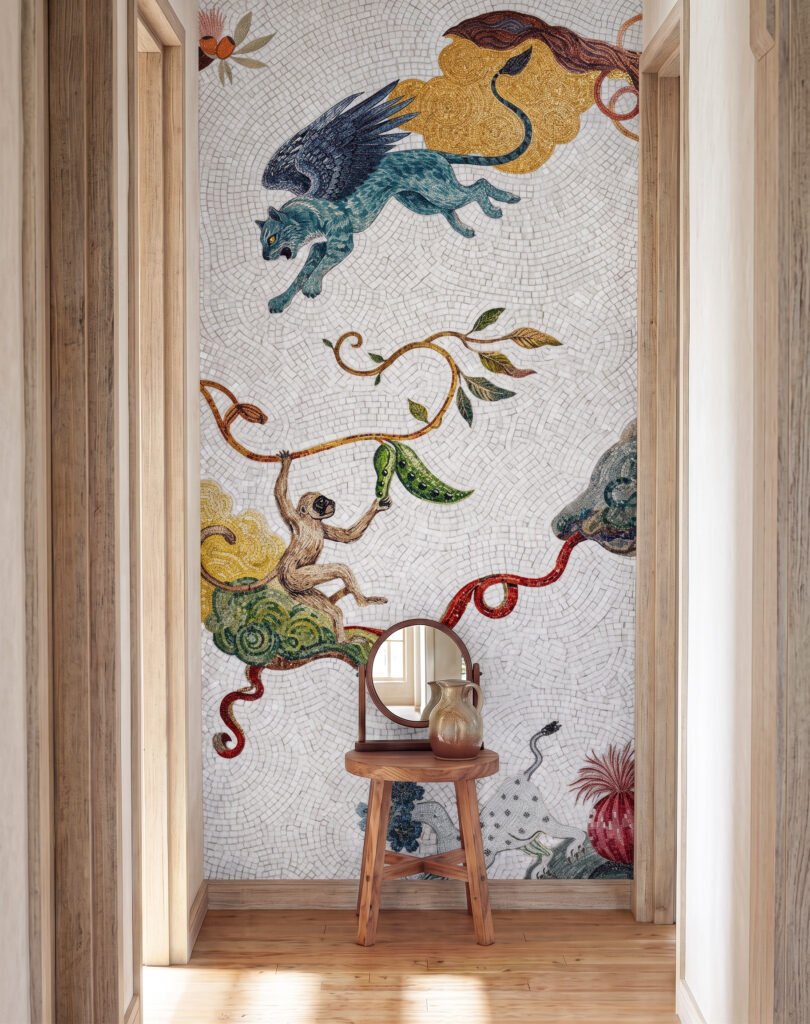
At MEC Artworks, we work with a far broader range of handcrafted materials suited for luxury UAE interiors, bespoke villas, hospitality environments, spas, and custom yachts. This material flexibility allows greater richness, surface depth, and artistic refinement throughout the final installation.
- Rare marble and natural stone
- Murano smalti glass mosaics
- 24k gold leaf tesserae
- Textured mixed-media compositions
- Bespoke luxury pool mosaic finishes
This wider material palette allows our mosaics to integrate more naturally within luxury UAE architecture while creating surfaces that feel immersive, handcrafted, and architecturally unique.
Performance, Longevity & Grout Aesthetics in UAE Luxury Spaces
Mechanical Surface Appearance
Robotic mosaics typically produce highly uniform grout spacing through standardized alignment systems. While technically precise, this can create a more rigid and mechanical appearance across luxury UAE architectural spaces.
- Visible grid alignment
- Mechanical surface rhythm
- Repetitive modular appearance
- Abrupt grout transitions
- Standardized production finish
Craftsmanship
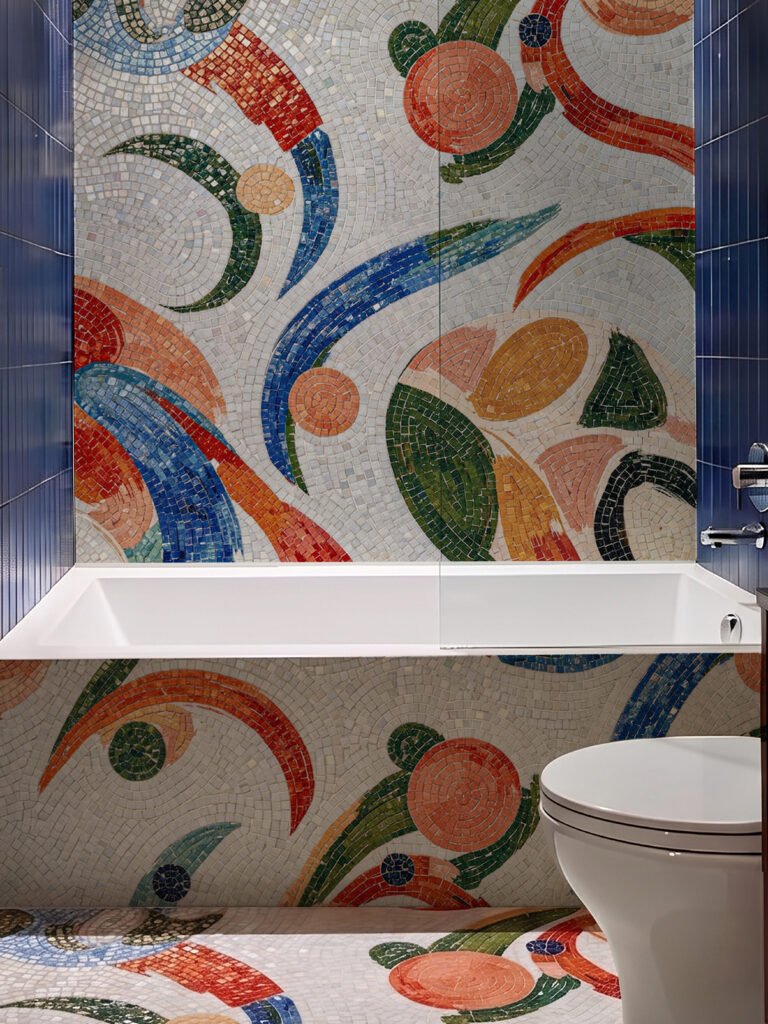
MEC Artworks uses traditional hand-laid mosaic techniques where tesserae vary subtly in spacing, orientation, and size. This creates softer visual movement, better artistic continuity, and a more natural handcrafted appearance.
- Seamless visual blending
- Reduced visual rigidity
- Organic artistic flow
- Sustainability luxury
- Luxury handcrafted character
When to Choose Artaic Robotic Fabrication vs. Handcrafted Mosaic Artistry in UAE Luxury Projects
Robotic fabrication can work well for projects prioritizing production speed, modular repetition, and large-scale standardized installations. Ideal robotic applications include:
- Commercial branding walls
- Fast-turnaround developments
- Repetitive corporate environments
- Budget-focused large-scale surfaces
However, luxury environments across Dubai and the GCC often demand a level of artistic refinement that automated systems cannot fully replicate. MEC Artworks is especially suited for:
- Bespoke luxury pool mosaics
- Luxury villas and penthouses
- Yacht interiors and spas
- Hospitality feature walls
- Grand architectural statement surfaces
In these environments, handcrafted mosaics become part of the architecture itself rather than simply decorative tile applications.
Why Hand-Cut Mosaics Create Superior Luxury Pool Visuals in UAE Projects
Luxury pool mosaics require seamless visual continuity underwater. In robotic fabrication systems, modular sheet assembly and rigid spacing often create visible grid effects, abrupt gradients, and mechanical transitions. At MEC Artworks, artisans use hand-cut placement techniques and andamento-led flow to create:
- Seamless underwater gradients
- Organic color transitions
- Reduced visible grid lines
- Natural curved surface adaptation
- Bespoke luxury pool artistry
Using face-mounted fabrication and artisan placement, MEC Artworks creates pool mosaics that appear visually continuous rather than mechanically segmented.
Comparative Breakdown: Choosing Artaic Mosaics vs. Handcrafted Approaches for UAE Luxury Architecture
| Artaic Robotic Mosaics | MEC Artworks Handcrafted Mosaics |
|---|---|
| Robotic pick-and-place automation | Fully hand-cut tesserae |
| Grid-based alignment | Traditional andamento technique |
| Standardized flat tile materials | Mixed-media artisanal materials |
| Software-generated scaling | Fully bespoke artistic interpretation |
| Standard modular systems | Bespoke luxury pool mosaics |
| Production efficiency | Heirloom-quality craftsmanship |
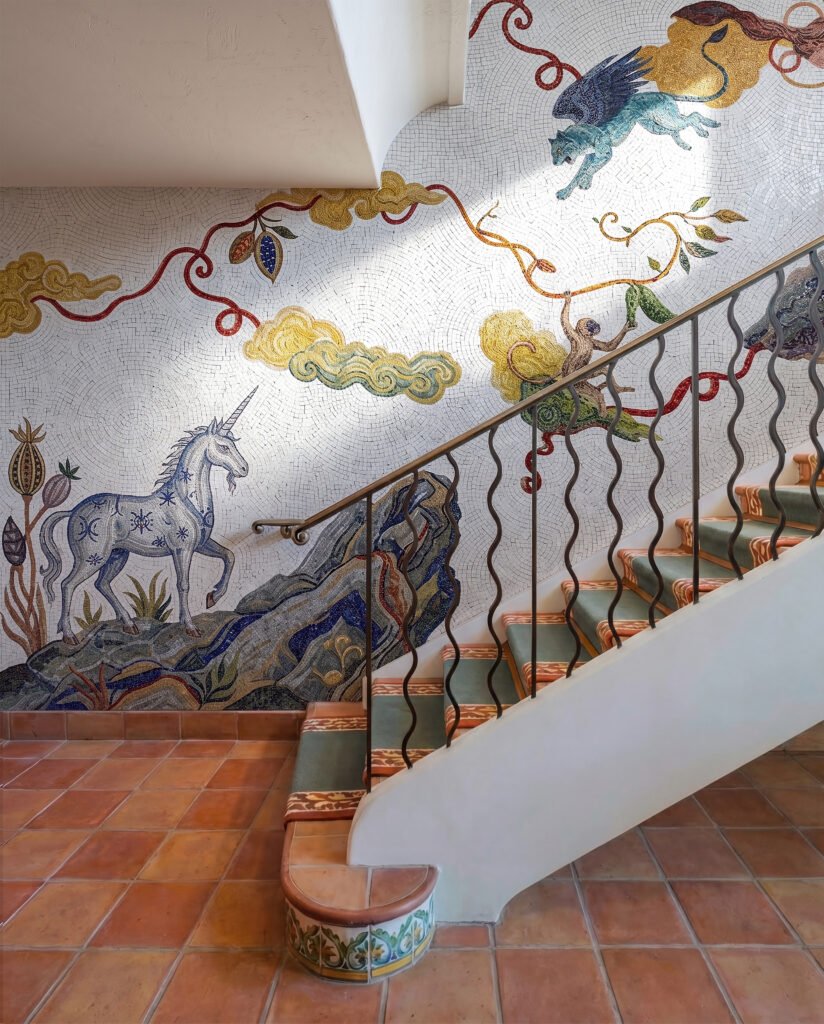
UAE Luxury Design: Architectural Mosaic Integration vs. Surface Application
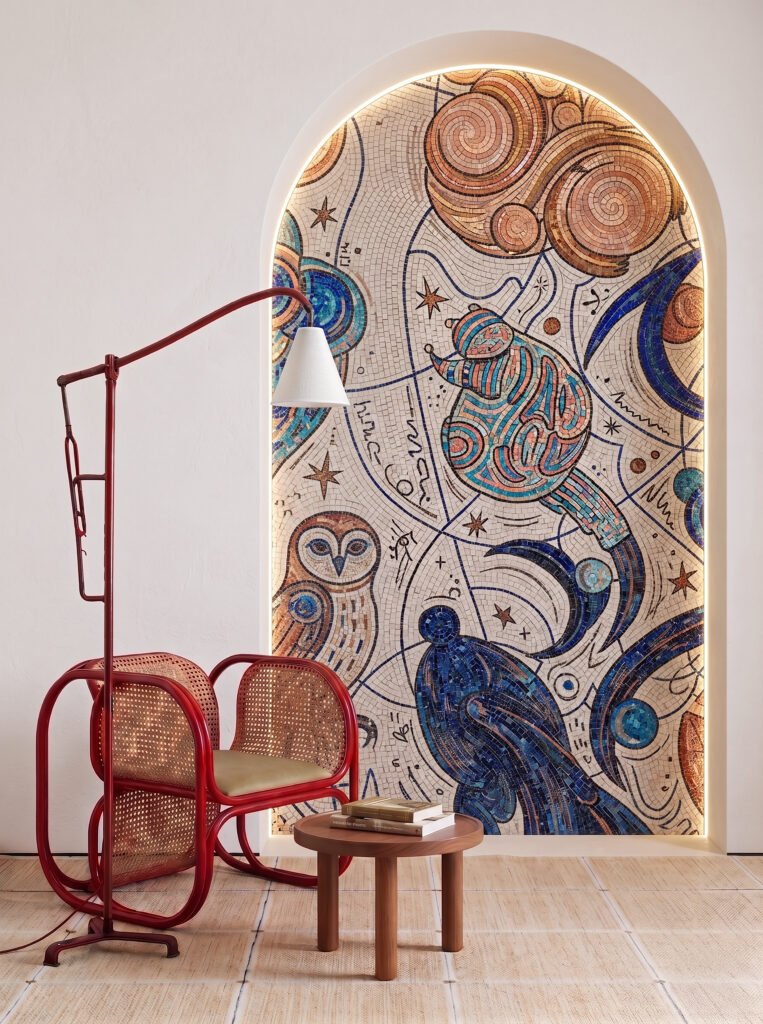
The best custom mosaic design studio in the UAE does more than create decorative finishes. It develops mosaics that become integrated architectural elements within the surrounding environment.
Automated fabrication systems are optimized for repeatability, modular production, and simplified installation. While effective for many commercial applications, this approach can limit artistic interpretation and architectural responsiveness. At MEC Artworks, mosaics are designed specifically for the space they inhabit. Our artisans carefully consider:
- Lighting direction and reflections
- Viewing angles and movement
- Curved geometry and transitions
- Material interaction and texture
- Spatial proportions and scale
This handcrafted process creates bespoke architectural surfaces for Abu Dhabi and Dubai luxury projects, where the mosaic becomes part of the architectural narrative itself.
Final Verdict: Why UAE Luxury Spaces Choose Handcrafted Alternatives Over Artaic Mosaics
Artaic represents the evolution of robotic mosaic fabrication through automation, speed, and digital precision. MEC Artworks represents the preservation and advancement of true handcrafted mosaic artistry.
The difference between robotic and handcrafted mosaics is ultimately the difference between production and interpretation. At MEC Artworks, mosaics are not assembled as pixel grids. They are composed as living architectural artworks through artisan craftsmanship, material intelligence, and centuries-old principles like andamento. For luxury UAE villas, pools, hospitality environments, and bespoke architectural spaces, the human touch continues to create a level of refinement and artistic depth that automation cannot fully replicate.
FAQ’s
What is the main difference between Artaic and MEC Artworks in UAE luxury projects?
Artaic primarily uses robotic fabrication systems driven by software automation and modular grid-based assembly. MEC Artworks uses traditional hand-cut mosaic craftsmanship where artisans shape and place each tessera individually for greater artistic flow, bespoke detailing, and architectural integration across luxury UAE villas, spas, hospitality spaces, and custom pools.
Does a robotic mosaic cost less than a handcrafted mosaic in the UAE?
In many cases, robotic mosaics can reduce production costs through automation and scalable fabrication. Handcrafted mosaics involve greater artisan labor, premium material selection, and custom detailing, making them a long-term luxury architectural investment for high-end UAE interiors and bespoke residences.
How does the lead time compare between robotic fabrication and handcrafted mosaic production?
Robotic fabrication systems generally offer faster production timelines because much of the assembly process is automated. Handcrafted mosaics require additional time for material preparation, artisan cutting, color blending, and manual tesserae placement to achieve the level of refinement expected in luxury UAE architectural projects.
Can MEC Artworks recreate complex digital patterns and gradients for UAE luxury interiors?
Yes. MEC Artworks can interpret highly detailed digital artwork, gradients, and photographic compositions through hand-cut tesserae and artisan placement techniques. This handcrafted approach creates smoother visual transitions, greater depth, and more refined architectural integration throughout luxury UAE interiors.
Which mosaic method performs better for luxury pools and wet areas in the UAE?
Handcrafted mosaics are often preferred for luxury swimming pools, spas, and wet environments across the UAE because they adapt more naturally to curves, overflow edges, and custom architectural forms. They also allow smoother underwater gradients, greater material flexibility, and more seamless visual blending across large aquatic surfaces exposed to UAE climate conditions.