 UAE & GCC

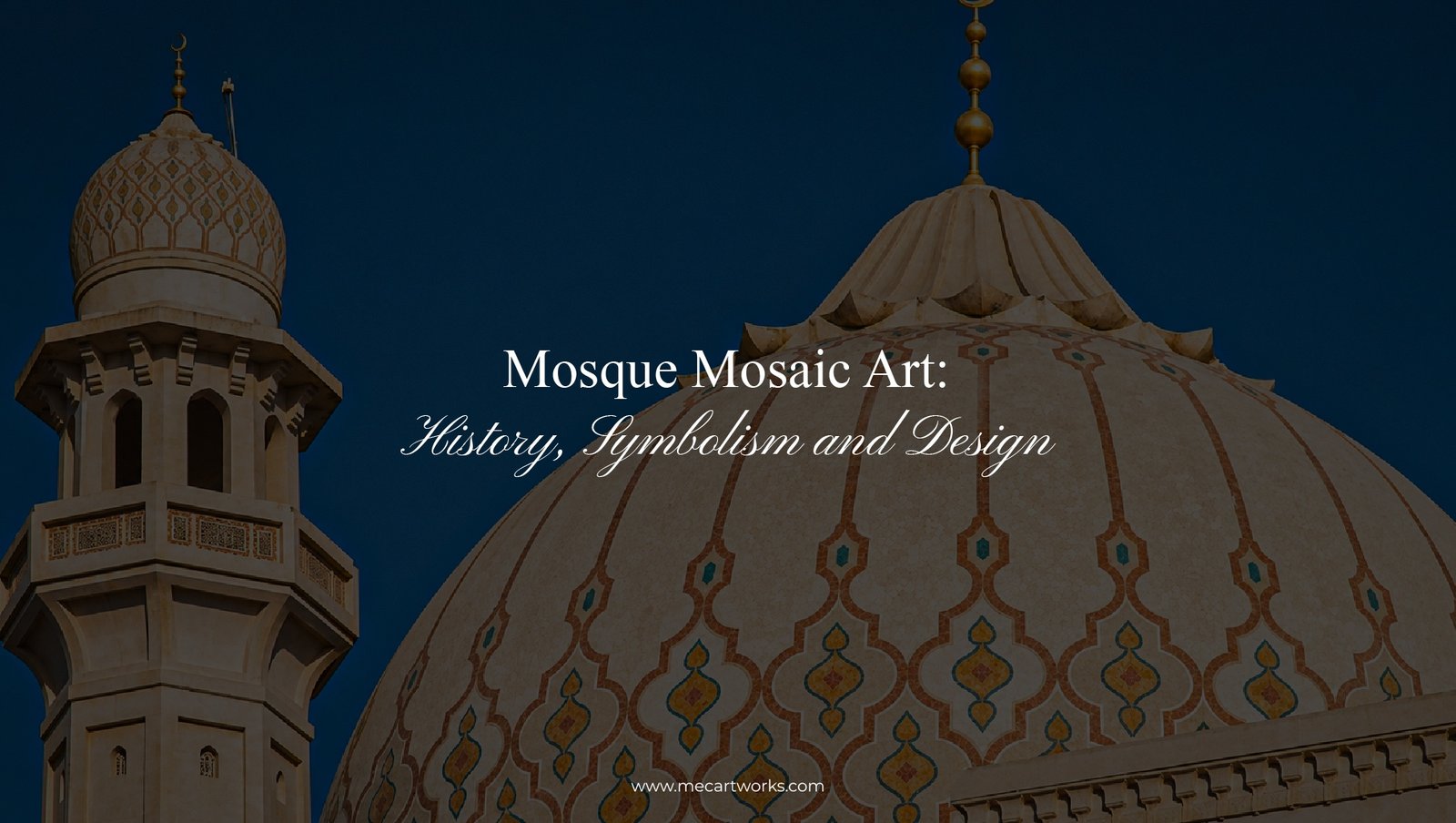
Upon entering a grand mosque in the UAE, you would even find yourself being drawn towards the striking mosaic artwork on the walls and domes. There is a very deep and rich history in there; it is very closely connected to the culture of the region. Mosque mosaic art is not just pretty decor; it encapsulates high level skill and careful planning. Attached to it is centuries of meaning.
If you go back a hundred years, enormous patterns were built by artisans, through tiny pieces of glass and stone. This entire process demands a lot of patience and dedication as it is time consuming. Today, people have immense respect for mosque mosaic art. It is still considered a timeless form of artwork, for it links the past with the present in a very stunning manner.
In this guide, we will go through everything that you need to know about this breathtaking craft. All the styles will be analyzed, and you will learn what the popular shapes actually mean. Let us have a closer look on how contemporary designers are displaying mosque mosaic art into high-end hotels and private residences across Dubai and Abu Dhabi. If you are someone who is interested in revamping your living space with this rich artwork, understanding the background of these patterns will allow you to make the best choices.
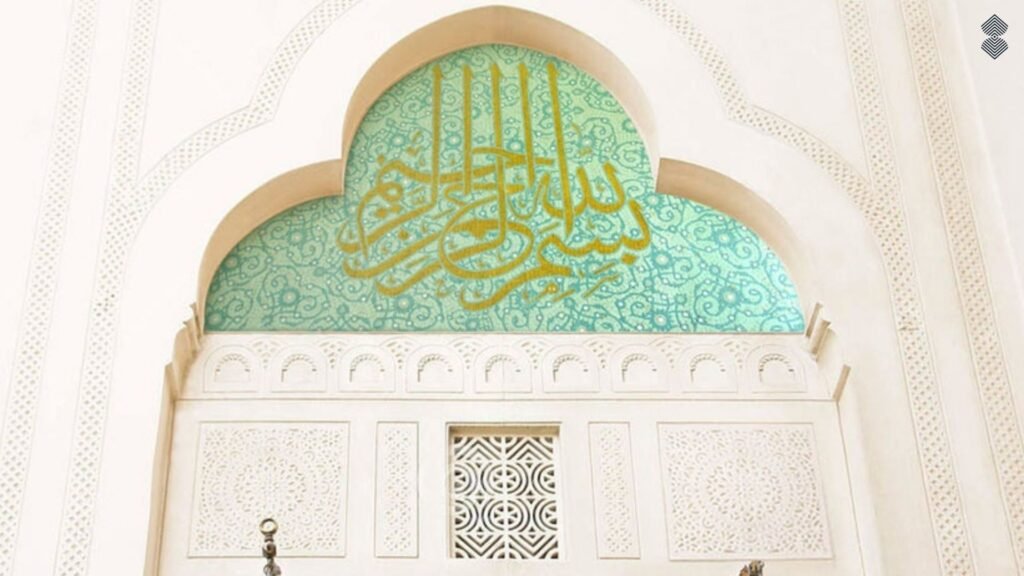
Table of Contents
What is Mosque Mosaic Art?
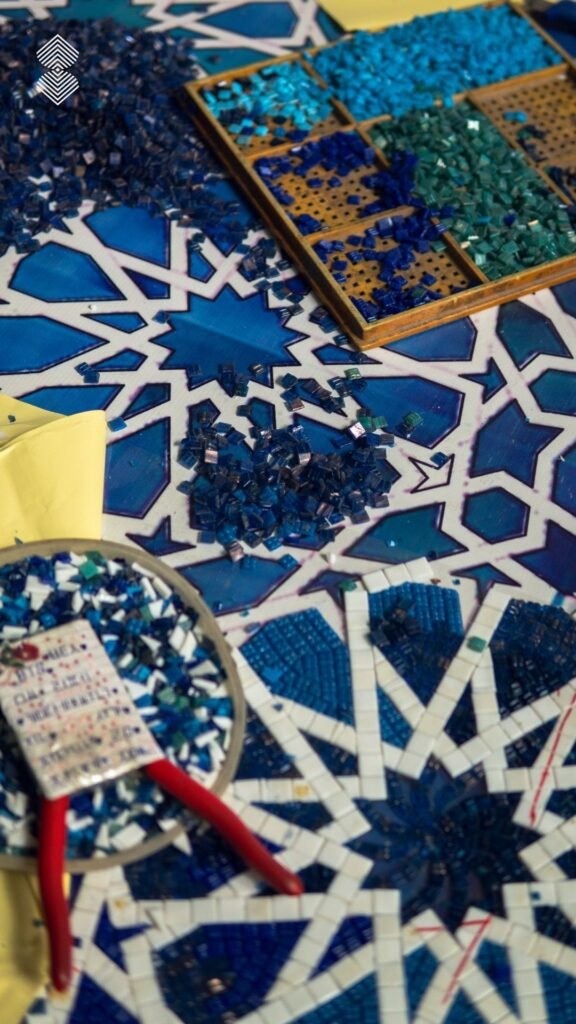
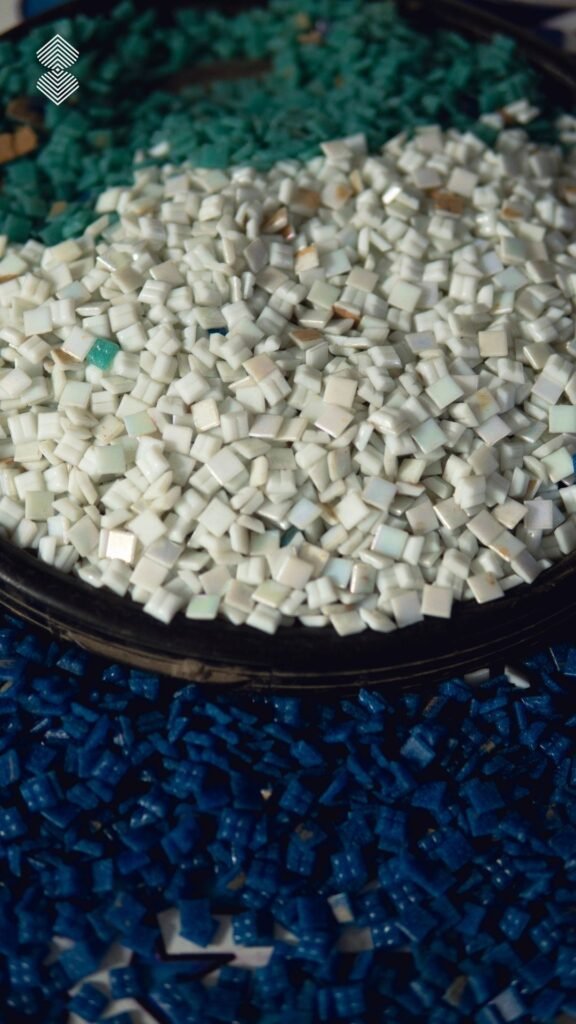
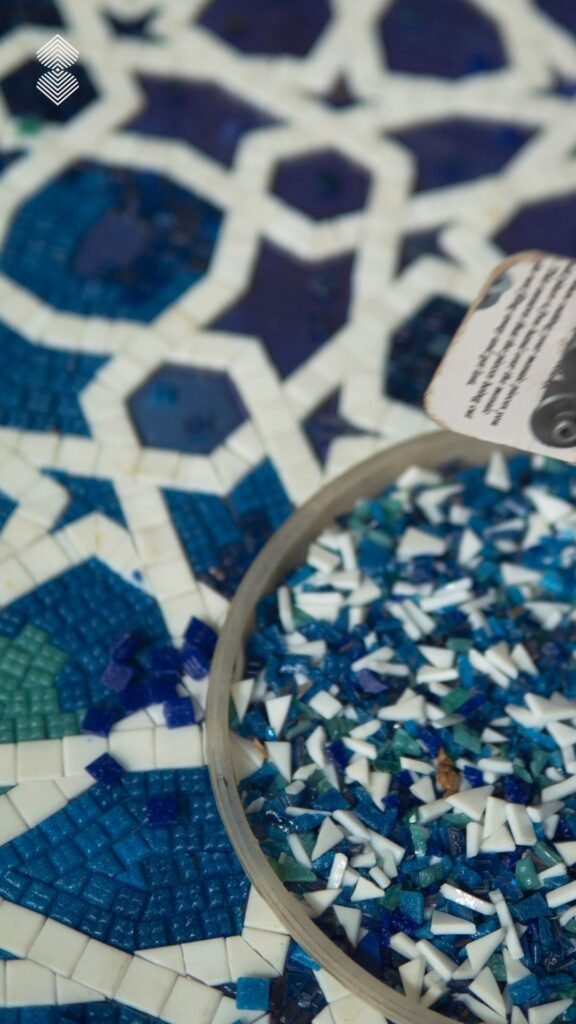
Mosque mosaic art essentially revolves around assembling small pieces of colored glass, stone or ceramic to craft bigger images or designs. These tiny pieces are referred to as tesserae. Once these are installed on a ceiling, floor or wall, they serve as highly captivating architectural features.
In terms of what sets them apart from other forms of decor, mosque mosaic art lasts for decades. It does not fade or peel away in a short period like regular paints. The materials are highly durable, and the artwork can easily withstand intense temperatures, which makes them ideal for huge public buildings.
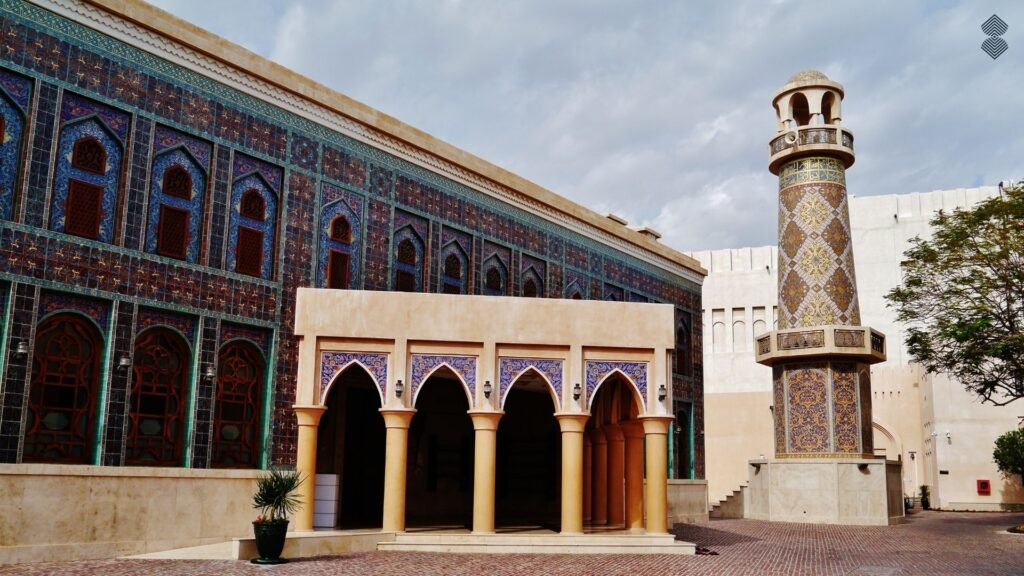
Within Islamic culture, this type of art became very popular in a short span because it allowed designers to decorate sacred areas without breaking any religious rules. After a while, the patterns became more intricate and mathematically perfect. When we discuss mosque mosaic art in the contemporary era, we are normally talking about beautiful geometric stars, elegant calligraphy and natural plant motifs that enhance the walls of prayer halls.
Why do Geometric Patterns Dominate Mosque Mosaic Art?
If you look closely at the walls of a traditional mosque, you will notice something interesting. You will rarely find pictures of animals or people. Instead, the walls are covered in precise lines, stars, and repeating shapes.
| Aspect of Mosque Art | Description | The Reason Behind It |
|---|---|---|
| What is Avoided | Pictures of animals or people | Prevents the eye from stopping at one specific focal point. |
| What is Used | Precise lines, stars, and repeating shapes | Pulls the eye continuously and seamlessly along the wall. |
| The Overall Goal | Flowing geometric mosaic patterns | Creates an environment that feels deeply peaceful and focused. |
Figural Restriction and the Rise of Abstract Pattern
Sketches or paintings of living beings are normally avoided in religious areas in Islamic culture. This rule was essentially meant to prevent individuals from worshipping idols or images of animals or humans. As artists could not paint normal pictures, they had to figure out some other way to decorate mosques and make them look striking.
In retrospect, this limitation actually resulted in an immense level of creativity. Designers started focusing more on math, nature, and geometry. They began to closely examine the way shapes could fit together, and the way curves worked. This is the context behind the increased focus on abstract concepts within Islamic mosaic patterns. Simple shapes such as squares and circles were taken and were layered over one another. This form of art was seen as quite revolutionary owing to its reliance on precision and logic instead of creating faces or bodies.
Infinite Repetition as a symbol of the Divine
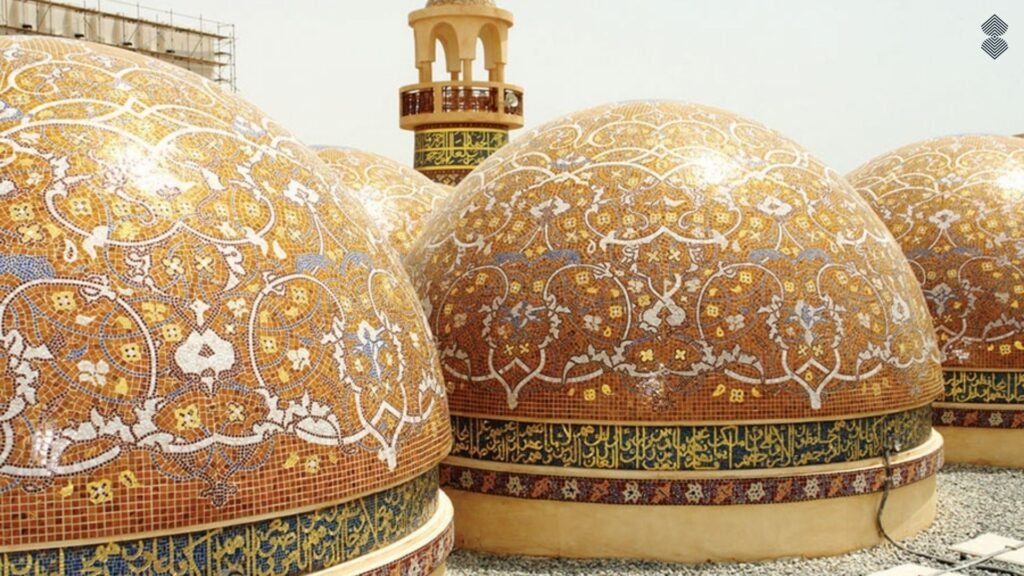
The notion of infinity has been a very central idea in religious mosaic designs. Geometric patterns that you see on the walls of religious spaces are so intriguing. It feels like they will never end. The delicate lines move in and out of one another and are evenly distributed across the entire surface.
This kind of infinite touch is very intentional. When you look at its deeper meaning, it captures the infinite nature of God. These designs have no prominent beginning and no obvious end. The goal is to make the person viewing these designs think about things that are bigger than themselves.
Moreover, the repetition of the same shapes develops a sense of order and uniformity. When you step into such spaces after being in your busy routine and wish for a break from the chaotic world outside, these delicate, perfectly symmetrical and meaningful words evoke a feeling of deep peace. It reminds you of harmony and balance.
Star and Polygon Geometry in Sacred Design
It would be safe to say that the star is one of the most popular shapes when it comes to mosque mosaic art. The stars have six, eight, ten, or up to twelve points. They are not crafted in a random manner. Creating these shapes requires very high precision and strict mathematical rules followed by tools like compass and ruler.
If you are someone who is interested in seeing how these shapes are created today, you can check out hand-cut geometric marble mosaic tiles. We still build them as accurately as they were built centuries ago. In these designs, the star normally resides at the center of a large pattern, serving as a sun with warm rays going outwards.
Around these stars are polygons which naturally fit just like a puzzle. Each shape has its designated place. Even if one piece is placed incorrectly, the entire pattern gets distorted. You can explore some of these examples in our geometric mosaic tile collection which showcase this perfect harmony. It is really fascinating how geometry is essentially a language of its own addressing and talking to the order of the universe.
Where Did Mosque Mosaic Traditions Begin?
Mosque mosaic art did not just appear overnight. It involves multiple countries with its rich history going back hundreds of years ago. This form of art evolved a lot as empires changed and expanded; different cultures showcased their skills. In the past, Islamic rulers used to hire artisans from different regions to work on their initial famous monuments. After a while, distinct regional patterns began to develop. In some places, bright and sleek glass became popular while others preferred carved stone or ceramics.
Umayyad Foundations in Damascus and Jerusalem
It all started during the Umayyad dynasty. When the Dome of Rock was made in Jerusalem and the Great Mosque of Damascus, they wanted buildings that looked striking. As a result, thousands of tiny glass cubes were utilized to cover the upper walls and domes. During this period, the patterns showcased many trees, rivers and green vines. These initial examples of arabesque mosaics were meant to look like paradise.
The Umayyad’s basically built the foundation for mosque mosaic art. Everything that came after this was rooted in the Umayyad dynasty. Given the huge scale of their projects, people began to strongly believe that mosaics were the ideal material for massive, important sacred public spaces.
Andalusian and Moorish Mosaic Craftsmanship
Once the Islamic empire grew further and reached Spain, a completely different style came forward. This design is known as Moorish or Andalusian. The artisans in Spain became very popular owing to a method they used which was known as zellij. In this technique, craftsmen used to cut soft glazed tiles into small, accurate shapes. These shapes were then fitted together tightly to create complex stars and borders.
Regarding the colors, deep blues, fresh greens and warm yellows were often used. The colors were mostly quite vibrant. The lower halves of walls in courtyards and palaces that you see are usually covered by this pattern. If you’re interested in seeing more of this, you can take a world tour of mosaic design traditions. A lot of attention has been paid to the details of these mosque mosaic patterns by the Andalusian artists.
Persian and Ottoman Tile Influences
Persian artists love incorporating blue in their designs. Mosque mosaic art took another creative turn in Persia and the Ottoman Empire. The huge domes and entrance gates over there are covered with striking turquoise and cobalt tiles. Here is how Persian and Ottoman artisans worked differently. Unlike Spanish craftsmen who used to cut small pieces, these artisans created the flowers and vines straight onto larger tiles before baking them in a kiln. This helped create smooth and curved designs that looked like climbing plants.
If you are interested in seeing the contemporary versions of these flowing patterns, you can check out our floral mosaic art collection. The Ottomans frequently incorporated bright red colors and tulip patterns. You can notice these designs in the famous Blue Mosque in Istanbul today.
What Materials Define Mosque Mosaic Art?
Mosque mosaic art is made up of materials that are not only stunning but also durable. When it comes to building monuments, one of the main goals is for them to last long; durability is very important.
Light is another factor that plays with different materials in different ways. For example, the way a wall reflects the sunlight during the day and lamp light at night sets the entire mood of the building and room. This is why materials require as much attention as the patterns and designs.
Gold Glass Tesserae and Reflected Light
Gold glass is the sleekest material used for the craft. The craftsmen use a special technique to build gold glass by keeping paper thin layers of gold leaf between two glass sheets.
When these gold glass tiles are placed in a curved dome, they capture light and shade quite dramatically. As you walk across the room, the walls seem to move and sparkle. Creating this heavenly effect inside a mosque building has been a highly valued craft in the past.
Gold glass is still popular especially for highlighting the Arabic text or geometric border designs. It adds warmth and splendor to ordinary spaces, turning them into extraordinary places.
Marble and Stone Inlay Techniques
Glass is usually considered a beautiful and elegant material for ceilings and walls , however it is not the best choice for flooring. Flooring requires durability and here natural stone or marble remain an excellent choice.
Marble has some amazing qualities. It feels cool under your feet, it is rock hard and tough, and also, it comes in a variety of natural colors and shapes like black, white, green, brown or red. Craftsmen use water jets and hand tools to cut them into custom shapes and then place them together.
Often, this craft is used for large central patterns on floors, like a medallion mosaic design. Marble is solid and practical and perfectly suited for floors where we expect heavy movement of people throughout the day.
Durable Glass Mosaic for the Gulf Climate
Mosaic art in UAE mosque buildings must take into account the harsh local weather. Soft hues and paints are not suitable for extreme heat, direct sunlight and salty coastal air that can damage exterior walls.
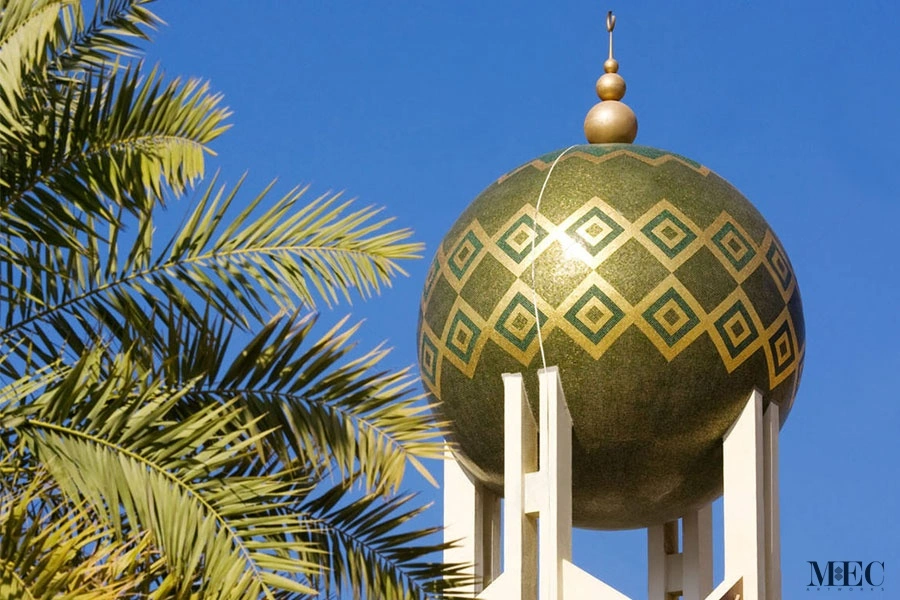
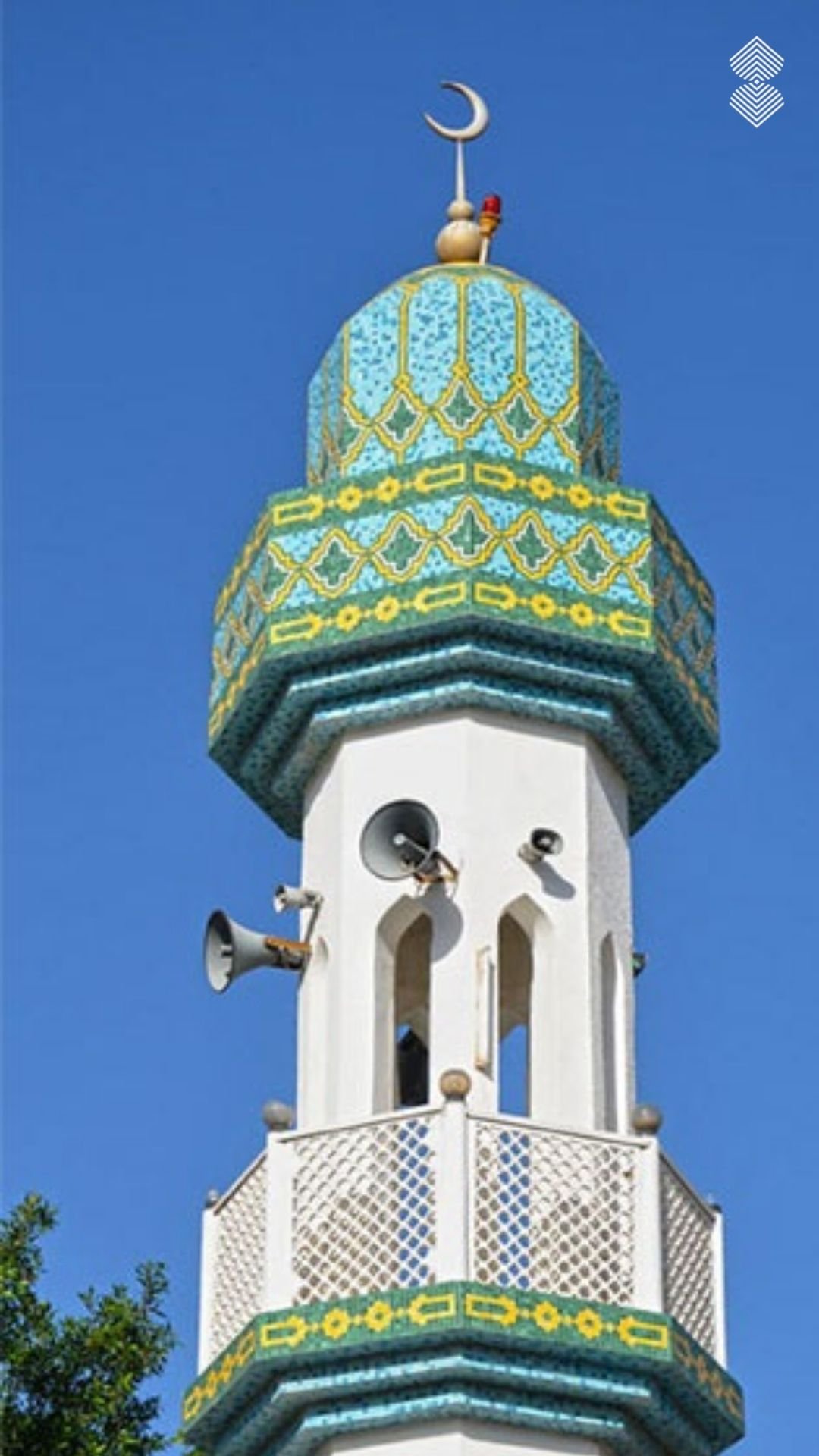
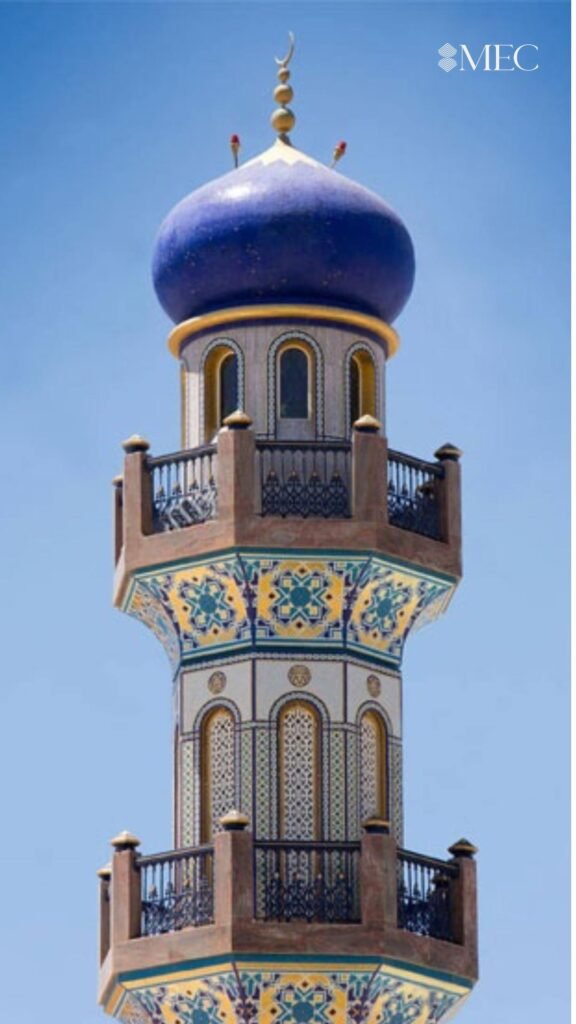
Hence, glass tiles are often preferred for building outdoor minarets and facades in UAE and Gulf. The sun cannot impact high-quality glass. Since glass blocks moisture, it does not crack at night when the temperatures drop.
Premium glass tiles are also well suited for shaded courtyards or ablution areas. The glass can withstand sunlight and maintains its color and brightness for a very long time.
Where is Mosque-Inspired Mosaic Art Used Today?
Today, there is no need to build a big public building to display this elegant form of art. People deeply appreciate the calming and unified feeling that these designs bring. Therefore, more people in Dubai are wanting custom mosque mosaic art. Now, new, creative ways of incorporating it are being found.
Private Prayer Rooms and Home Majlis Walls
Many large homes in the UAE have a dedicated prayer room or a formal majlis for receiving guests. These rooms need to look respectful, elegant, and welcoming. Homeowners are choosing to install beautiful mosaic panels on the main walls of these rooms. A popular choice is using a classical key-pattern mosaic as a border around the room or placing a large geometric star panel behind the seating area. These designs bring the quiet dignity of a mosque into the private home. As the art is totally customizable, the colors can be matched exactly to the carpets and furniture in the room.
Hospitality and Cultural Centre Interiors
Luxury hotels and cultural centres in the region want to give their guests an authentic local experience. To do this, they rely heavily on traditional design elements. You will often see huge geometric mosaic floors in hotel lobbies or delicate floral tile work in their high end spas. These designs remind visitors of the rich history of the region. They provide an instant sense of place and culture.By using traditional arabesque mosaic patterns in a modern hotel, the designers bridge the gap between the past and the present, offering luxury that feels grounded in local heritage.
Contemporary Mosques Across the UAE
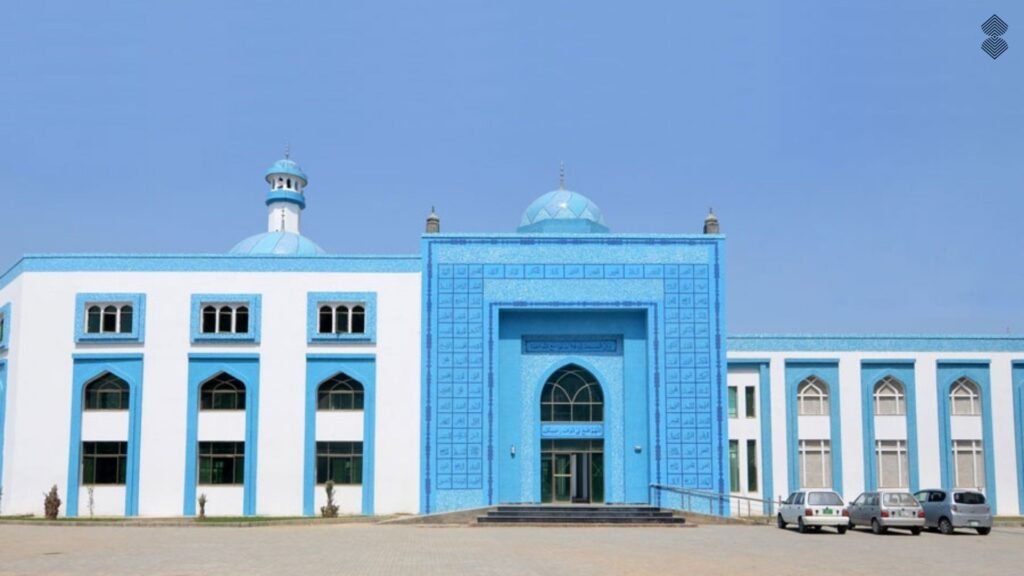
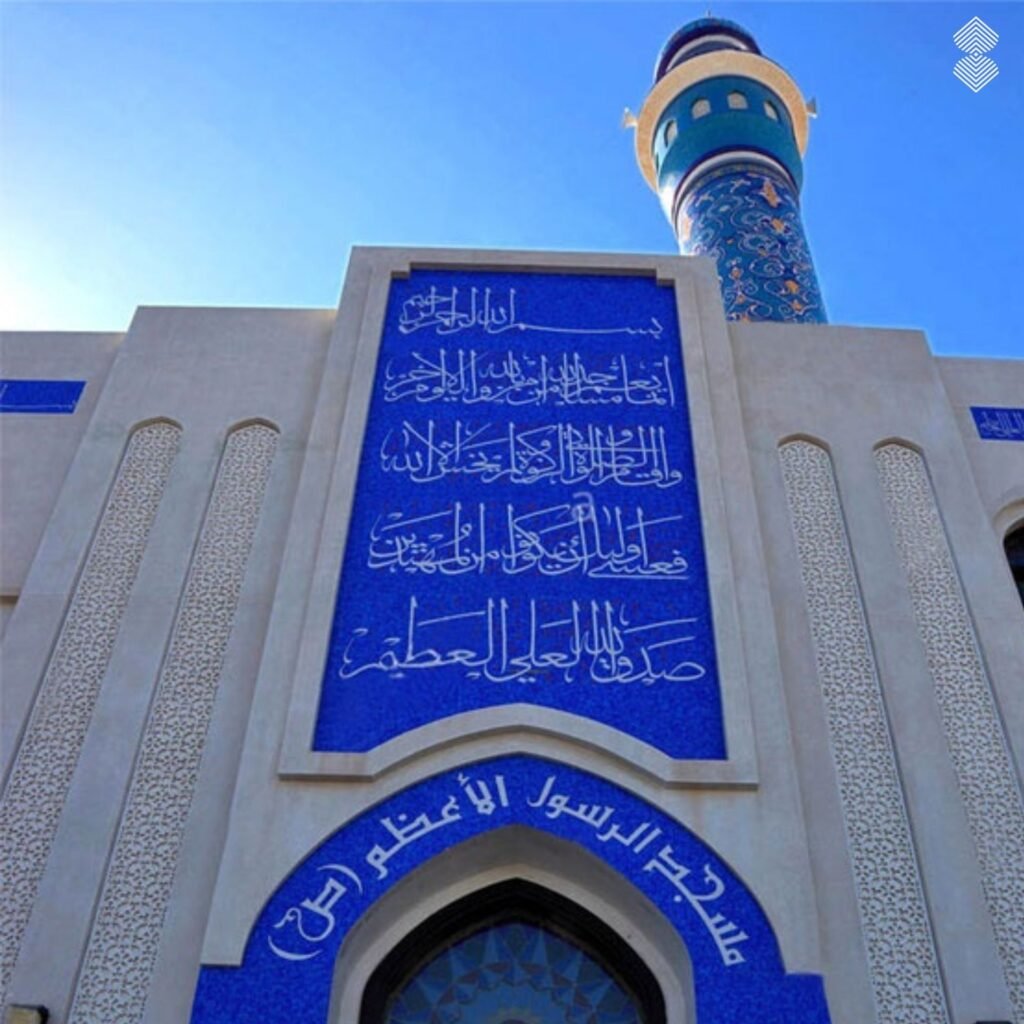
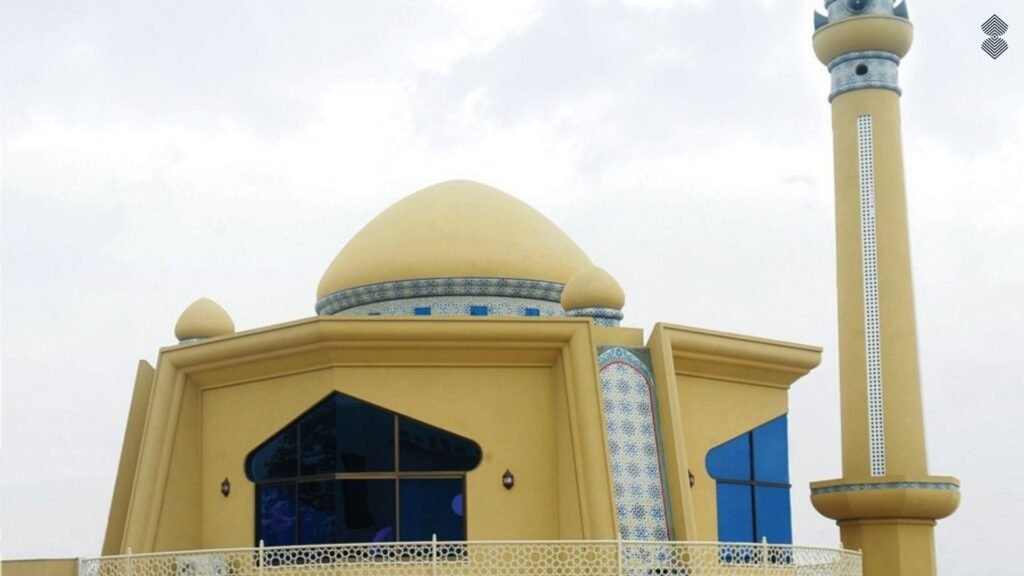
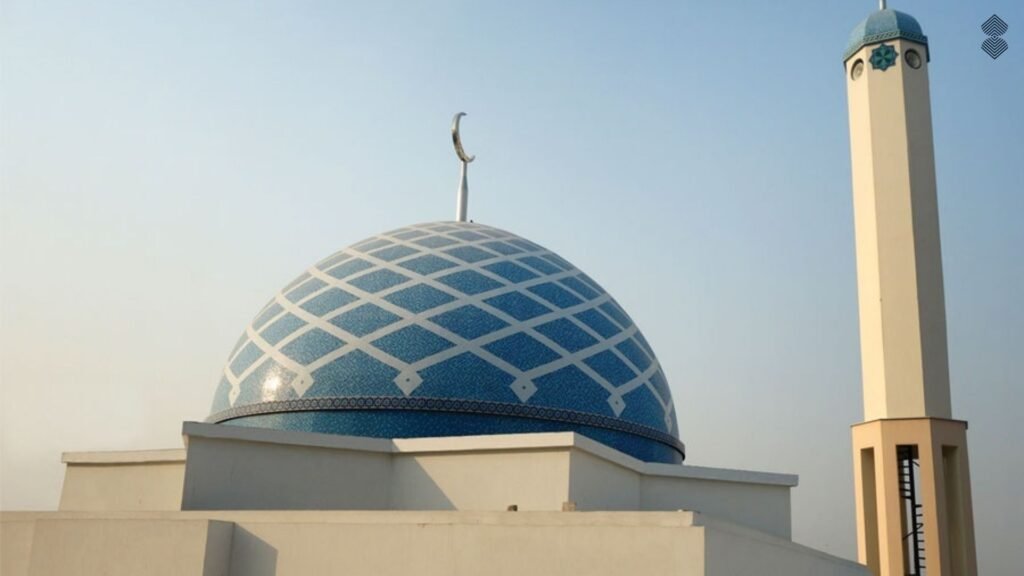
Of course, the tradition continues in the new mosques being built across the country today. Modern architects are finding ways to mix new building technology with ancient art forms. They might use clean, minimalist white concrete for the main building, but then cover the entrance in a massive, bright blue geometric mosaic. This contrast between plain modern surfaces and highly detailed traditional tile work is very popular. It proves that the symbolism of mosaic in Islamic architecture is still relevant and powerful today. The art form is not stuck in the past; it is evolving and adapting to modern tastes.
Commission a Custom Mosque Mosaic Design
If you are someone who deeply admires the rich history and elegance of these designs, you can definitely incorporate them into your upcoming project. Working on your custom mosaic art is always an exciting experience. The first step is sharing your vision with us, after which we finalize your color preferences and measure the exact dimensions of your space.
After the design is approved, our highly trained artisans start cutting your tiles manually. This careful and time-consuming process is followed by the installation of a timeless, permanent centerpiece in your space, that will last for decades. Be it wanting a small decorative panel for a hallway or a large dome for a new building, commissioning a custom mosque mosaic design anywhere in the UAE ensures you get exactly what you need.
Frequently Asked Questions
Why don’t mosque mosaics use human or animal figures?
In Islamic spaces, drawing or showing living figures is avoided to maintain a focus on spiritual worship and to prevent idol worship. Instead, artists developed incredibly complex geometric, floral, and text-based designs to make the spaces beautiful and engaging without breaking these rules. These infinitely repeating geometric patterns are intended to symbolize the boundless nature of God and the underlying order of the universe. Additionally, incorporating intricate Arabic calligraphy transforms the written verses of the Quran into a profound visual expression of faith.
What is the meaning behind geometric star patterns in mosques?
The stars and repeating shapes represent the infinite nature of God and the perfect order of the universe. Because the patterns repeat endlessly, they encourage quiet thought and meditation. They show that everything is connected and part of a larger, perfect plan.
Can mosque-style mosaic art be installed in a private home?
Yes, absolutely. Many people in the UAE use these designs for their private majlis, home prayer rooms, and outdoor courtyards. The patterns are very flexible and can be scaled down to fit nicely on a single feature wall or as a border around a doorway. You can easily customize the color palette to match your interior, whether you prefer traditional deep blues and golds or softer, neutral tones. Additionally, using durable glass or ceramic tiles ensures these elegant installations remain vibrant and easy to maintain for years to come.
How long does a custom mosaic mural take to complete?
It depends heavily on the size and complexity of the design. If it is a small, simple geometric border, it would normally take a few weeks to cut and arrange. A large, very intricate wall mural with thousands of small glass pieces could take several months of careful hand work to finish properly.