 UAE & GCC

Choosing a mosaic can feel exciting at first. Then you start looking at patterns, colors, materials, and design references. Suddenly, every option seems attractive. You may love the clean appearance of a modern mosaic design. At the same time, the rich colors of Moroccan mosaic tiles may catch your eye. Then an intricate Islamic geometric pattern makes you reconsider everything. Thus, how would one select?
The quiz below is an example of how to choose a particular mosaic style that corresponds with your taste, preferences, architectural style, and the place you want to decorate. There are five easy questions to be answered. This guide is especially useful for homeowners, architects, and interior designers working on villas, pools, courtyards, bathrooms, and hospitality spaces across the UAE. Before you begin, remember one thing. There is no wrong result.
Table of Contents
The Three Types of Mosaic Design at a Glance
Modern, Moroccan, and Islamic mosaics may have many common aspects. But each mosaic type has its specific visual identity.
Modern Mosaic Design: Clean Lines and Bold Simplicity
Modern mosaic design focuses on clarity. Instead of filling every inch with small details, it often uses open space, large shapes, and controlled color changes. The design may look simple from a distance, but careful planning sits behind that simplicity.
Common modern mosaic features include:
- Large geometric forms
- Abstract lines and curves
- Monochrome palettes
- Smooth color gradients
- Limited decorative borders
- Strong contrast
- Patterns aligned with architectural lines
- Clean transitions between surfaces
Modern mosaics work especially well in UAE villas with open floor plans, large glass windows, pale stone surfaces, and simple furniture. They also suit pools.
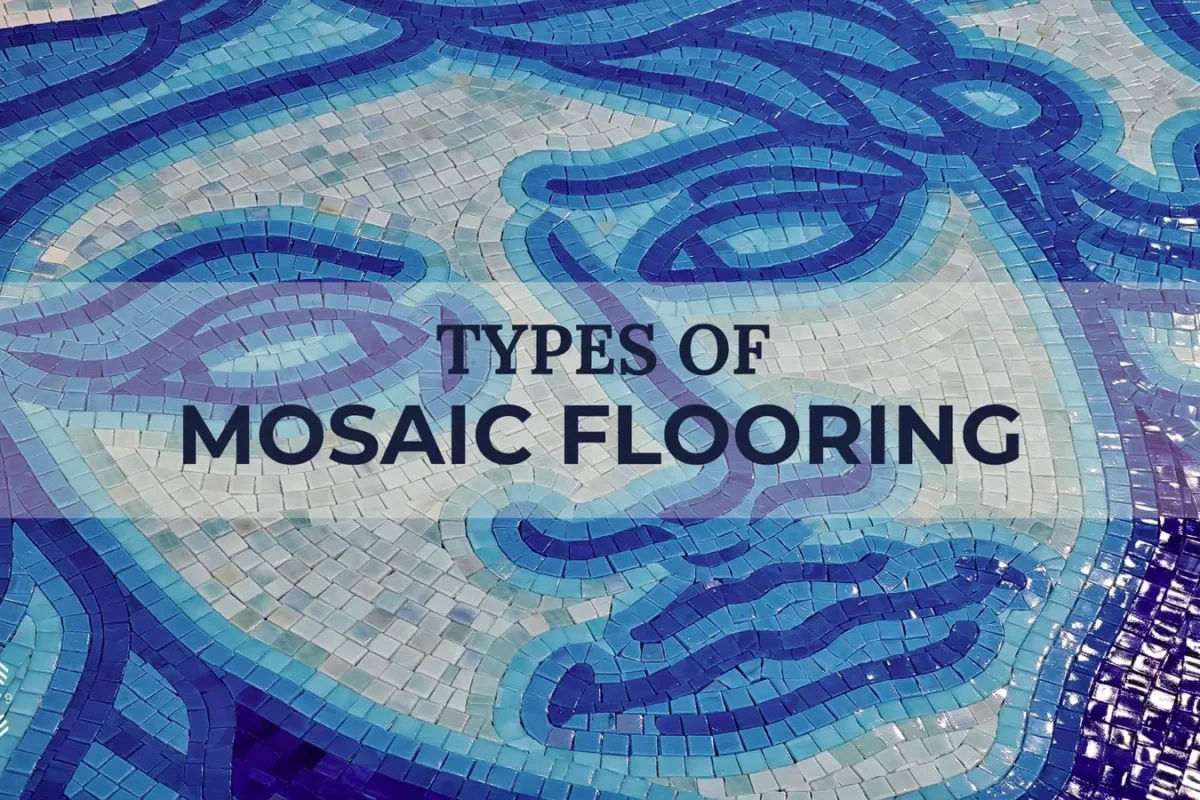
For example, a pool floor may move from pale aqua near the steps to deep blue at the far end. That gradient can create the impression of greater depth. A few sweeping lines may suggest waves without forming a literal picture.
This approach feels contemporary because it leaves room for the water, light, and surrounding architecture to take part in the design.
Moroccan Mosaic Tiles: Vibrant Color and Zellige Character
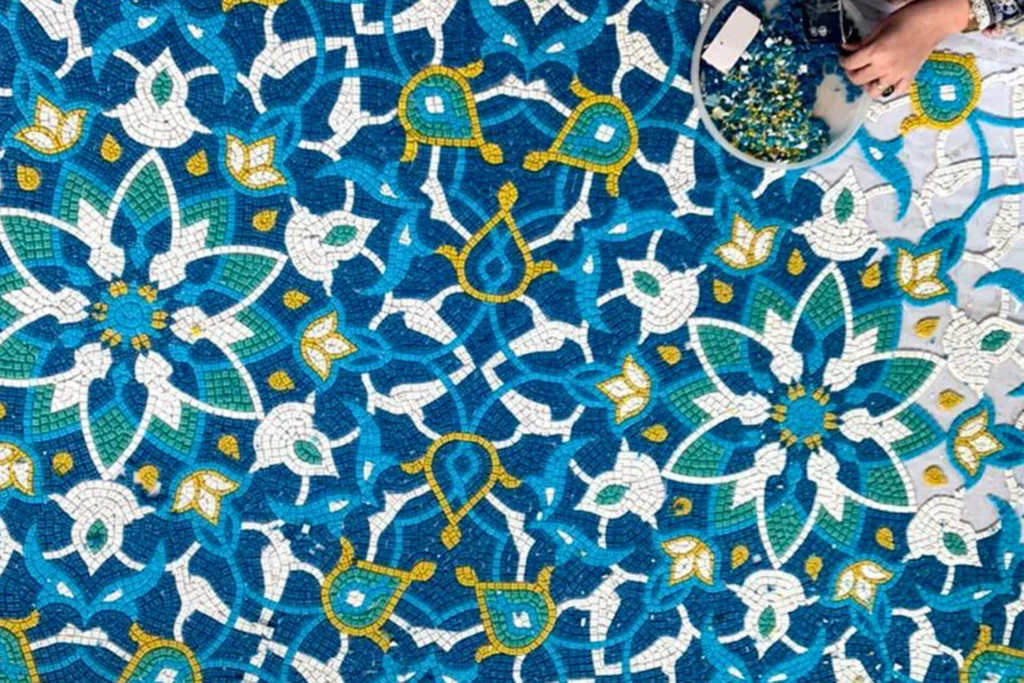
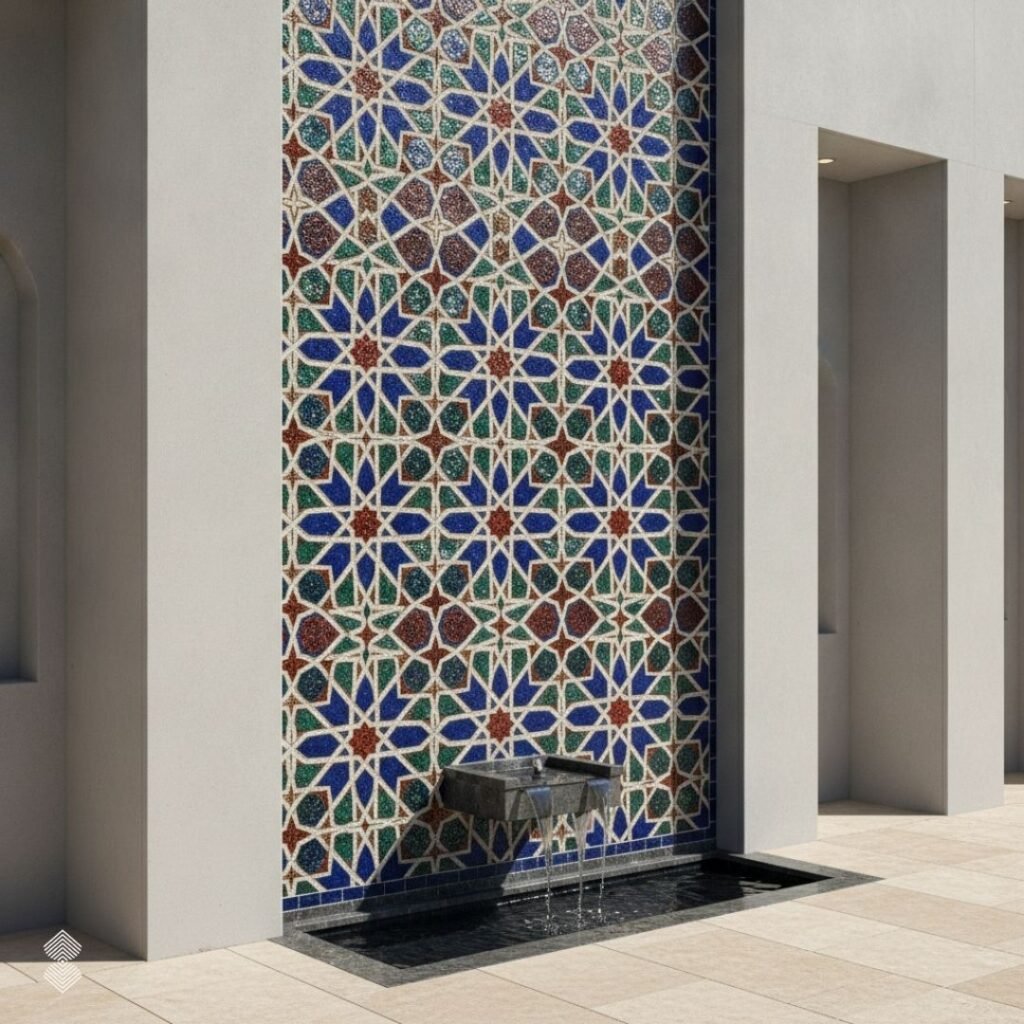
Moroccan mosaics are colorful and full of life. It is mainly related to zellige, which is one form of mosaic art in Morocco. The shapes used in zellige are tiny handmade and glazed pieces of clay. It is the minute variation in color, texture, and shape that makes the design unique.
Traditional Moroccan design often includes:
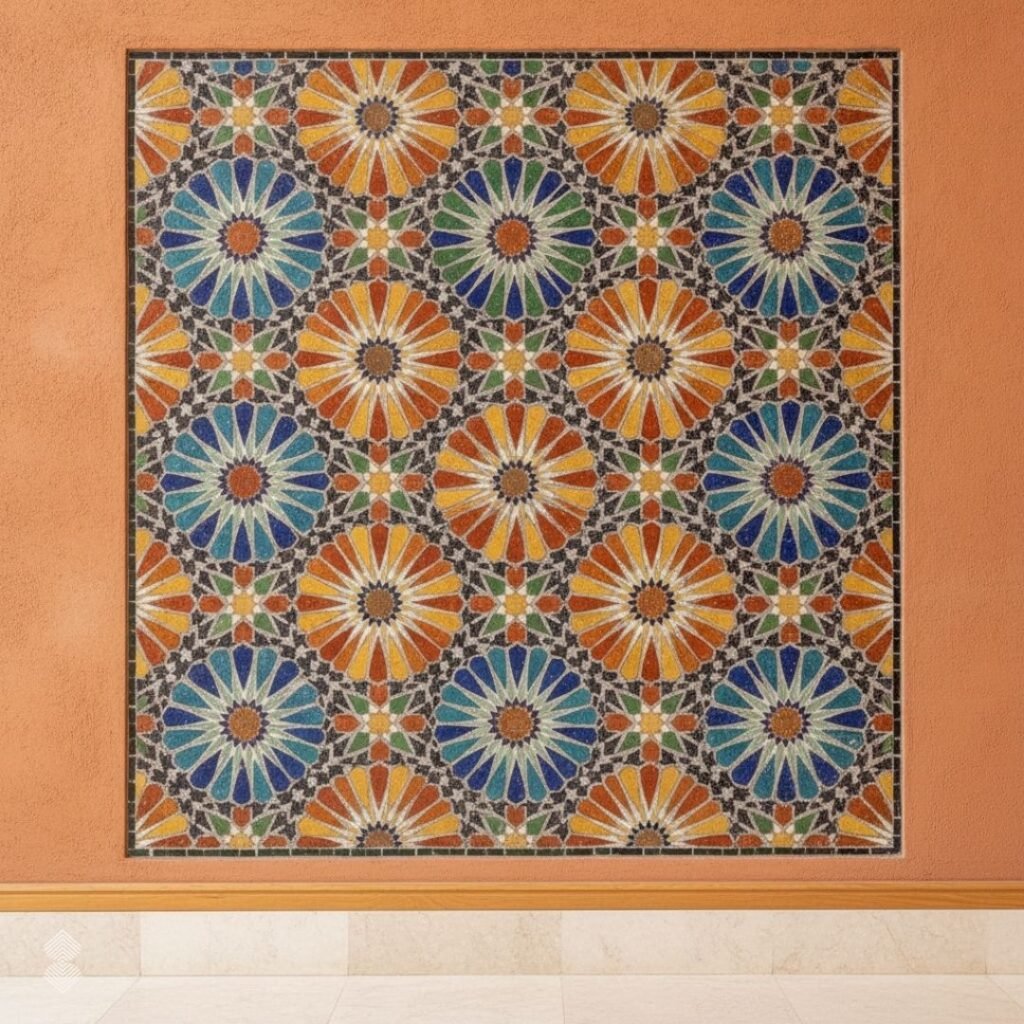
- Star and cross patterns
- Eight-pointed stars
- Rosettes
- Interlocking polygons
- Repeating borders
- Strong blue, green, and white combinations
- Earthy terracotta and cream palettes
- Visible handmade variation
However, Moroccan design isn’t always bright. A black and white design of Morocco can be impressive and formal. A combination of white and beige appears elegant and sophisticated.
A light green or light blue color would be appropriate for a contemporary style bathroom without making the interior space heavy. Moroccan tiles would fit perfectly into a courtyard, fountain, outdoor sitting area, and swimming pool in a UAE villa. They would complement arched windows, screens, and lantern lights well.
Islamic Mosaic Patterns: Geometric Precision and Balance
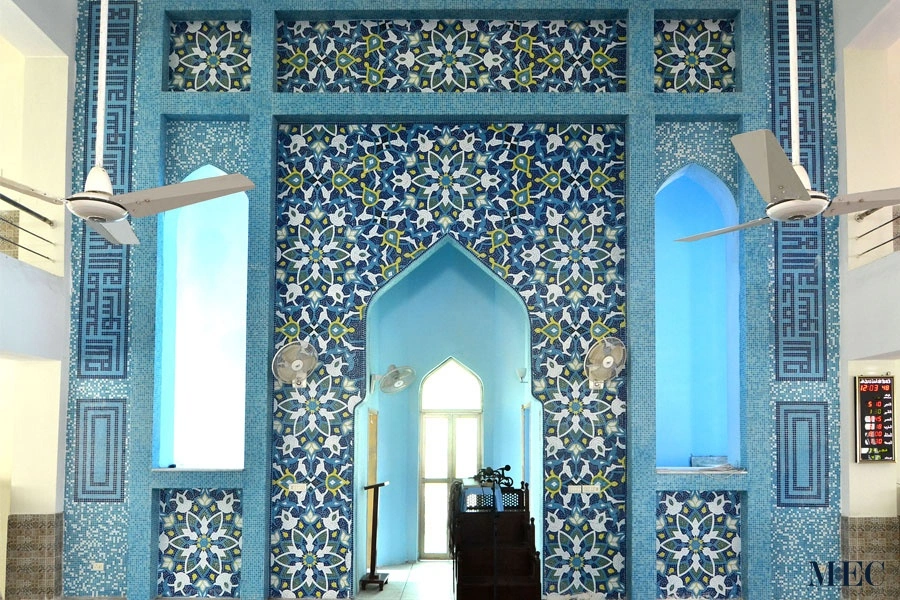
Islamic mosaic patterns often begin with simple shapes.
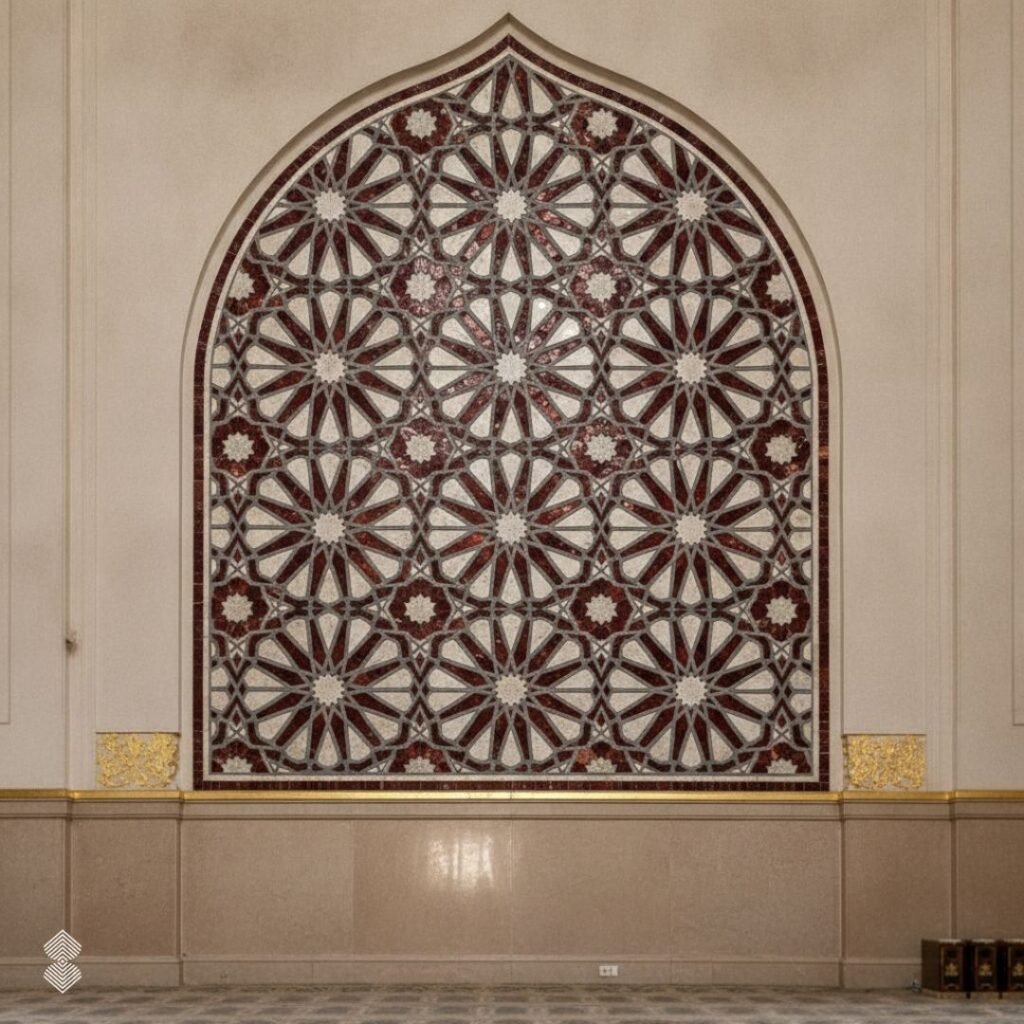
A circle, square, triangle, or polygon can serve as the basis for a much larger composition. The designer repeats, rotates, divides, and joins these shapes to create complex geometric networks.
As described by The Metropolitan Museum of Art, the geometric pattern is one of the main non-figurative decorative traditions of Islamic art, along with calligraphy and the vegetal pattern. Repetition and symmetry are key elements of the geometric patterns.
Common elements include:
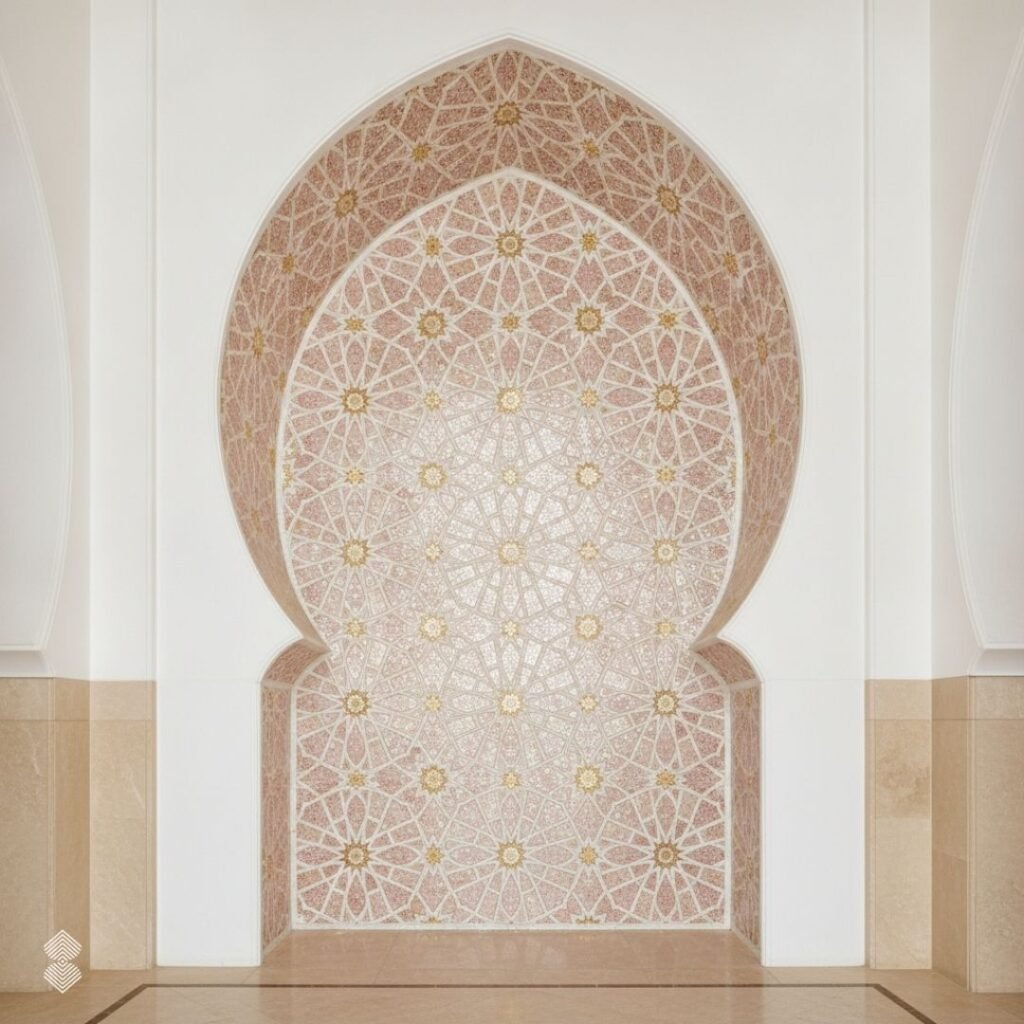
- Six, eight, ten, or twelve-pointed stars
- Interlocking polygons
- Repeated grids
- Symmetrical borders
- Arabesque-inspired forms
- Floral and vegetal details
- Arabic calligraphy
- Continuous patterns that appear to extend beyond the surface
These patterns can suggest order, balance, continuity, and unity. However, it’s important not to assign one fixed spiritual meaning to every geometric shape.
Islamic art developed across many cultures and periods. A pattern from Morocco may look very different from one found in Iran, Türkiye, Oman, or the Indian subcontinent.
In UAE design, Islamic mosaics work particularly well in:
- Villa entrances
- Majlis spaces
- Hotel lobbies
- Mosque interiors
- Arched wall niches
- Domes
- Courtyard fountains
- Formal dining areas
- Feature walls
Take the Quiz: 5 Questions to Discover Your Mosaic Style
Now it’s time to discover your match.
Choose one answer for each question. Don’t overthink it. Your first reaction often reveals your strongest preference. Use this simple scoring system:
- A answers = Modern
- B answers = Moroccan
- C answers = Islamic
At the end, count how many times you selected A, B, or C. Keep your answers nearby. A note on your phone works perfectly.
Question 1: What’s the Vibe of Your Space?
Imagine entering the completed room, courtyard, or pool area. What would you want to see first?
A. Calm, spacious, and modern
You like sleek lines, minimal decor, and a feeling of openness. You like designs that are bold yet unpretentious.
B. Cozy, warm, and artistic
You like spaces that have layers, textures, handmade details, and an inviting feel. Imperfection is beautiful rather than chaotic.
C. Balanced, ornate, and architecturally stunning
You love symmetry, intricate details, and designs that get even better the more you look at them.
Write down A, B, or C before moving forward.
Question 2: Pick a Color Palette
Which palette would you happily live with for years?
A. White, black, grey, beige, or one bold accent
You prefer controlled color. You may like pale aqua with deep navy or cream with a narrow black border.
B. Cobalt blue, emerald green, turquoise, terracotta, and warm white
Rich colors draw you in. You like palettes that feel energetic, sunlit, and connected to handcrafted surfaces.
C. Deep blue, green, white, gold, marble, and balanced jewel tones
You prefer color with a formal structure. Contrast matters, but every shade should feel carefully placed.
Color doesn’t lock you into one style.
A modern mosaic can use strong color. A Moroccan composition can remain neutral. Islamic geometry can appear in white marble alone.
Still, your first choice offers a useful clue.
Question 3: Choose a Pattern That Draws You In
Picture three design samples in front of you. Which one would you touch first?
A. An abstract composition with large curves or straight lines
You like patterns that feel fresh, minimal, and open to interpretation.
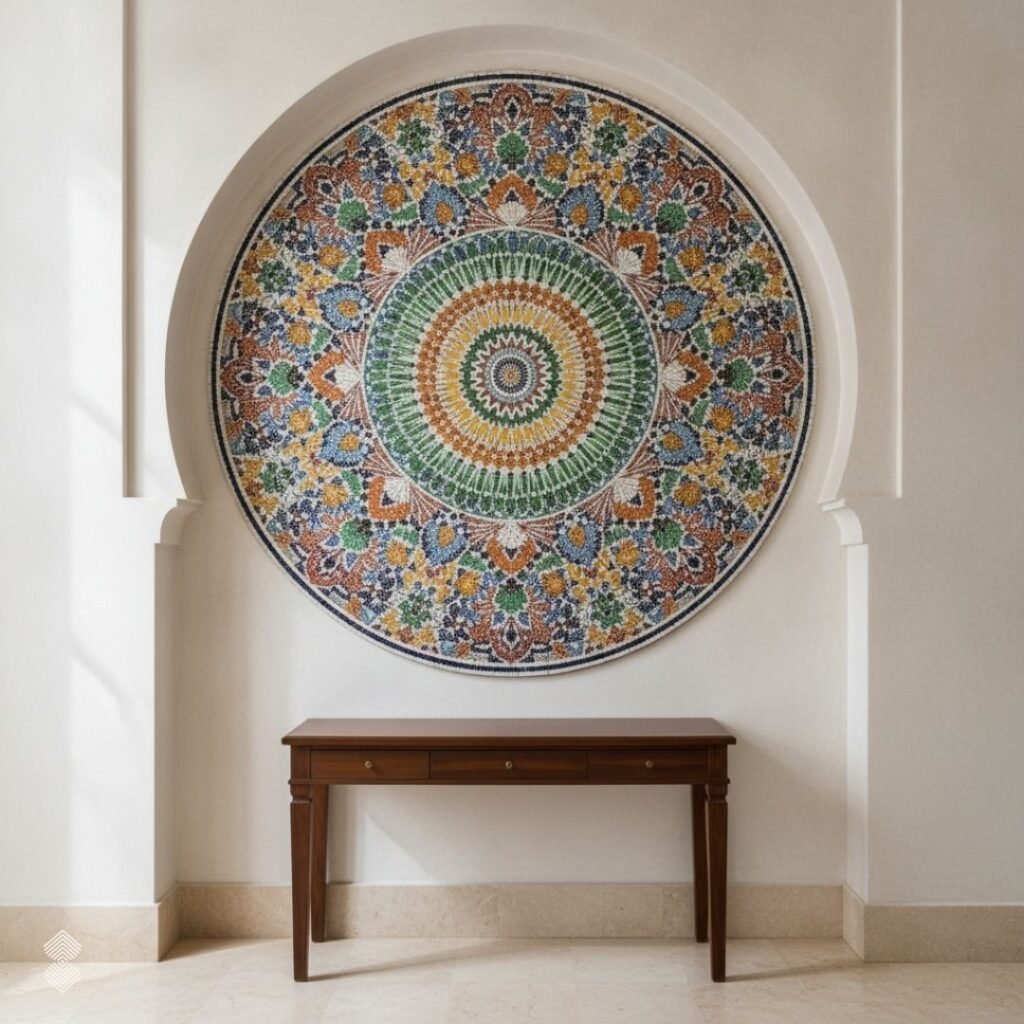
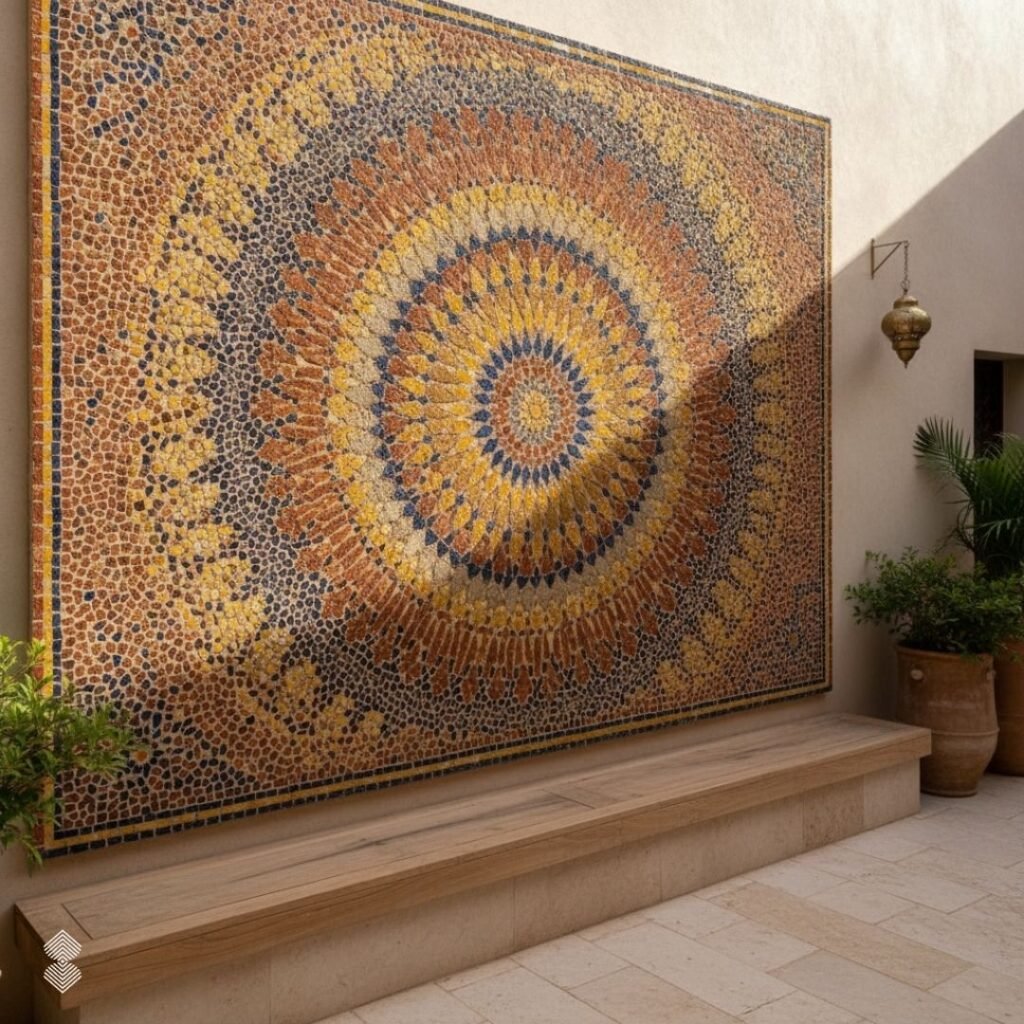
B. A repeating star-and-cross pattern with visible handmade variation
You enjoy decorative rhythm, rich detail, and surfaces that carry an artisan character.
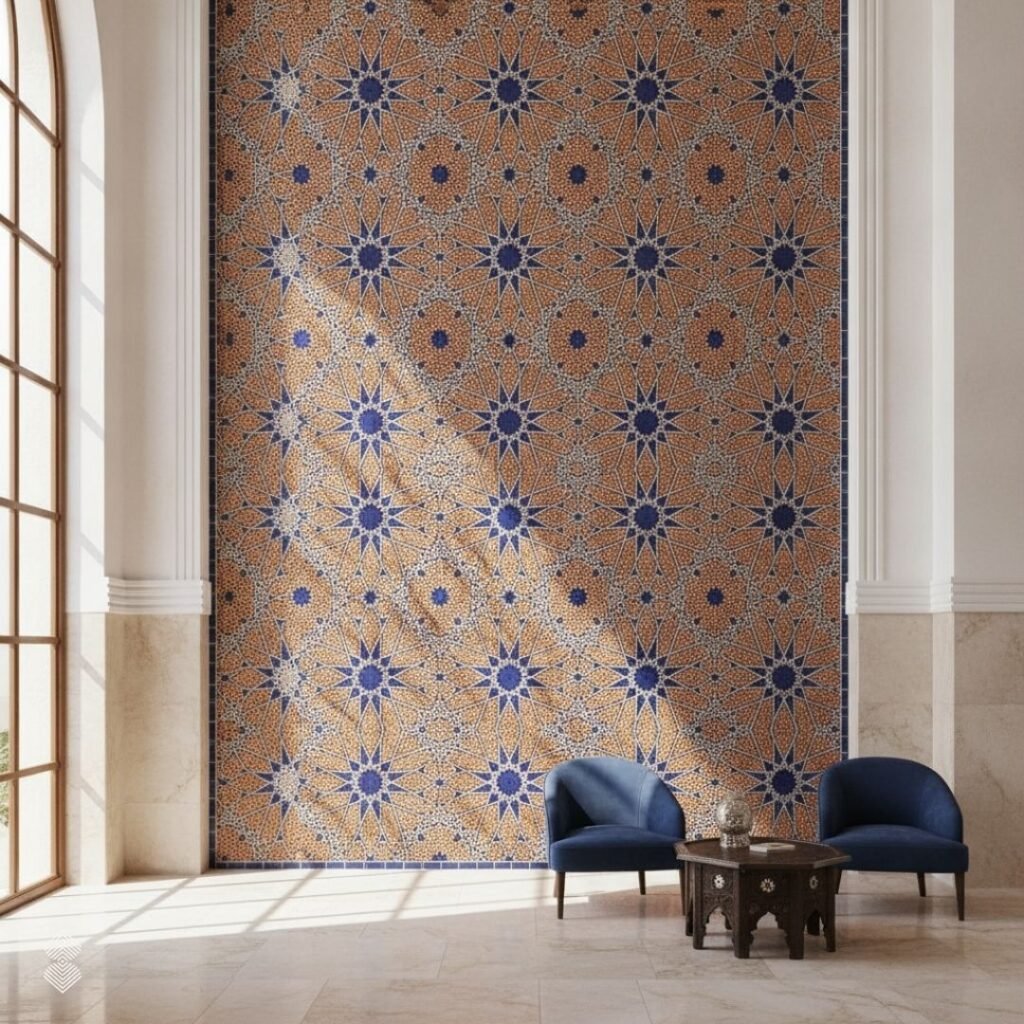
C. An interlocking geometric pattern built from stars and polygons
You appreciate precision, symmetry, and designs with a strong mathematical foundation.
This question often gives the clearest result.
Pattern shapes the personality of the mosaic. Color can change later, but the pattern usually controls whether the design feels modern, Moroccan, or broadly Islamic.
Question 4: Where Will the Mosaic Go?
Choose the setting that feels most natural for your dream design.
A. A modern pool, spa, living room, or hotel lobby
You want the mosaic to support the architecture without making the area feel crowded.
B. A courtyard, fountain, kitchen, hammam, or shaded outdoor wall
You picture a welcoming space filled with color, texture, and handcrafted detail.
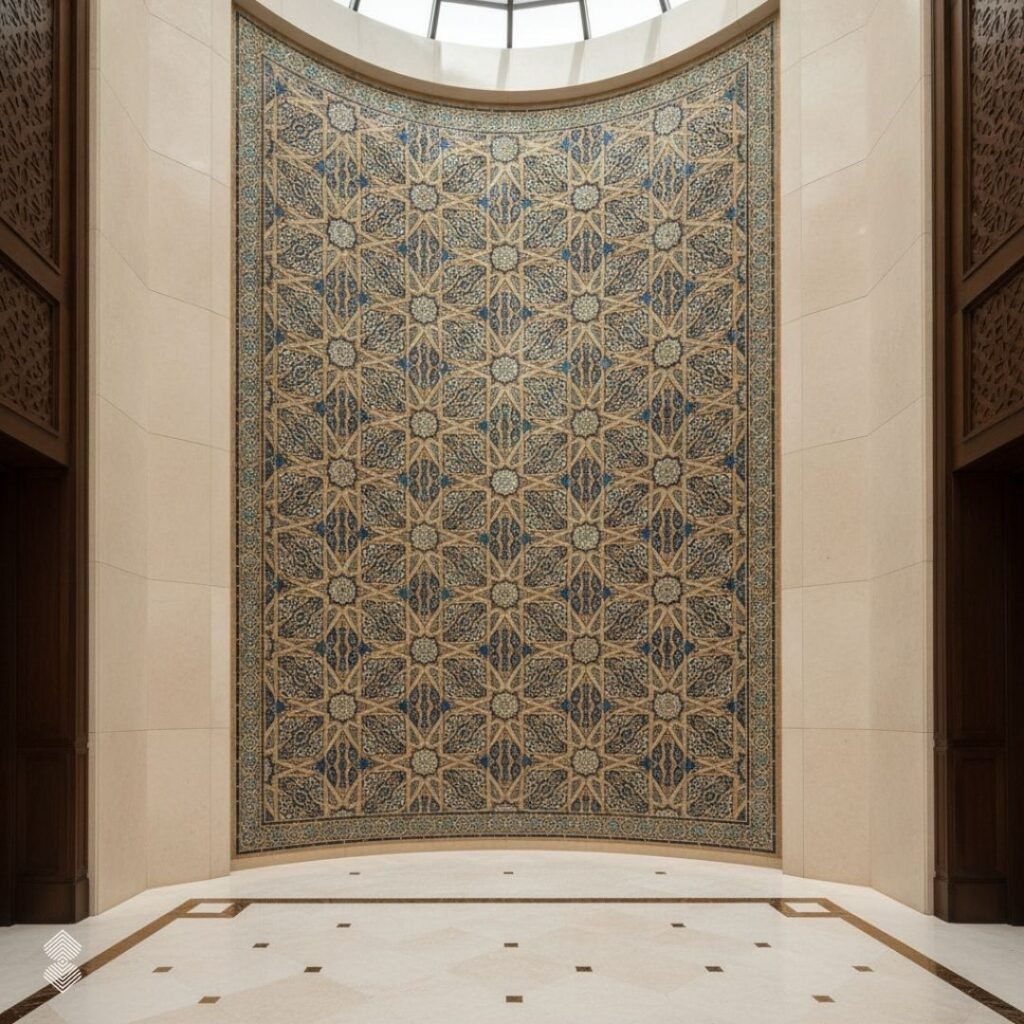
C. A villa entrance, majlis, dome, niche, or formal feature wall
You want the mosaic to feel connected to the building’s structure and cultural setting.
All three styles can work in almost any location.
A Moroccan pool can look stunning. So can a modern courtyard or an Islamic geometric bathroom. This question simply identifies the setting you naturally associate with mosaic art.
Question 5: What Feeling Do You Want People to Get?
Someone sees your finished mosaic for the first time. What do you hope they say?
A. “This feels calm, elegant, and beautifully designed.”
You value restraint, clean composition, and a polished modern appearance.
B. “This space feels warm, joyful, and full of personality.”
You want the mosaic to make people feel welcome and curious.
C. “The detail and balance are incredible.”
You want people to notice the craftsmanship, geometry, and architectural depth.
Now count your answers.
Did you choose mostly A, mostly B, or mostly C?
What Your Mosaic Style Quiz Result Means
Your result gives you a design direction. It doesn’t place you inside a rigid box.
Use it to identify the patterns, materials, and colors you should explore first.
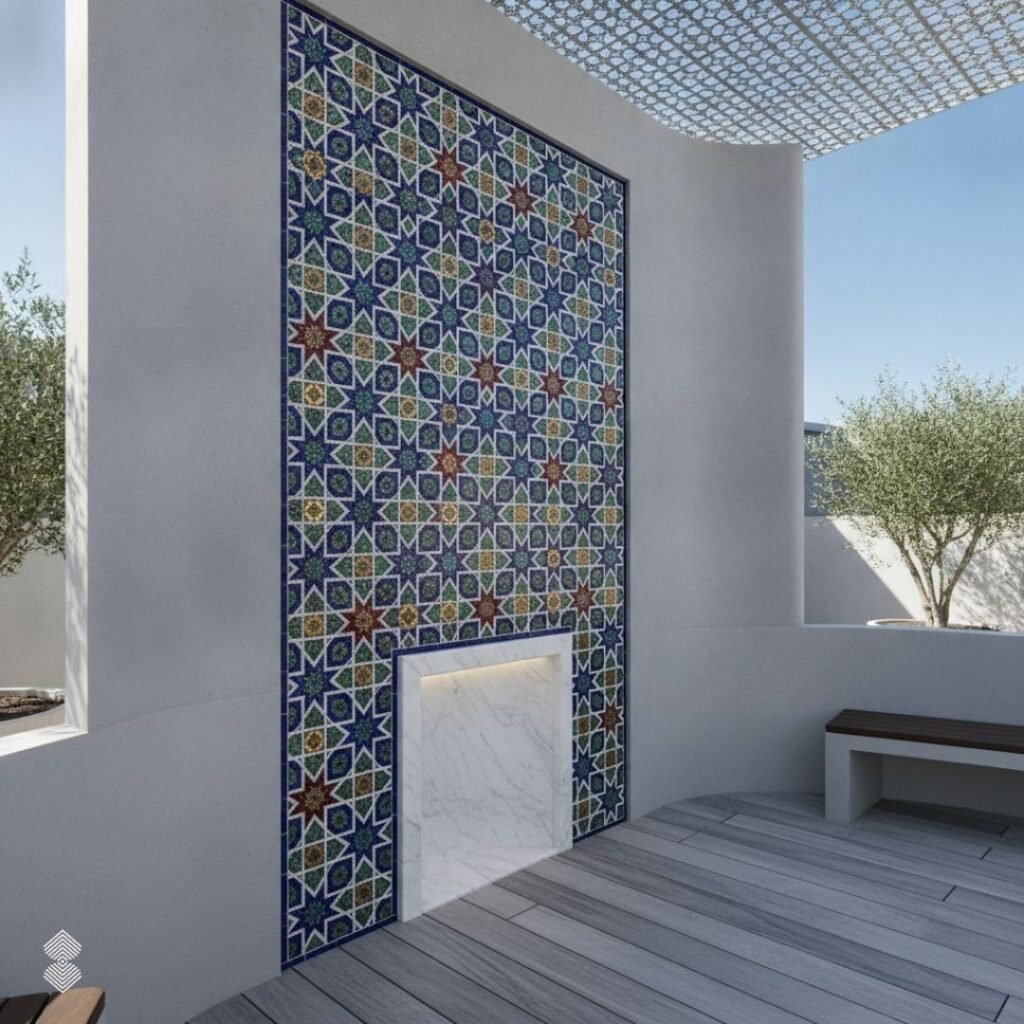
Mostly Modern: Your Modern Mosaic Design Match
You prefer clear composition and controlled detail.
Your ideal mosaic may include a simple geometric layout, an abstract mural, or a soft gradient that complements the architecture. You probably want the design to look impressive without dominating the entire room. Modern mosaic ideas that may suit you include:
- Black and white marble geometry
- Abstract glass mosaic murals
- Blue pool gradients
- Large-scale linear patterns
- Minimal mosaic borders
- Monochrome feature walls
- Oversized geometric forms
- Soft neutral stone inlays
For a Dubai villa, consider a pale marble entrance medallion with a simple dark outline. In a pool, try a flowing blue composition that becomes darker toward the deep end.
Mostly Moroccan: Your Moroccan Mosaic Style Match
You’re drawn to warmth, pattern, and visible craft.
Your ideal mosaic may include star shapes, zellige-inspired layouts, or rich color combinations. You probably enjoy surfaces that feel lively rather than perfectly uniform.
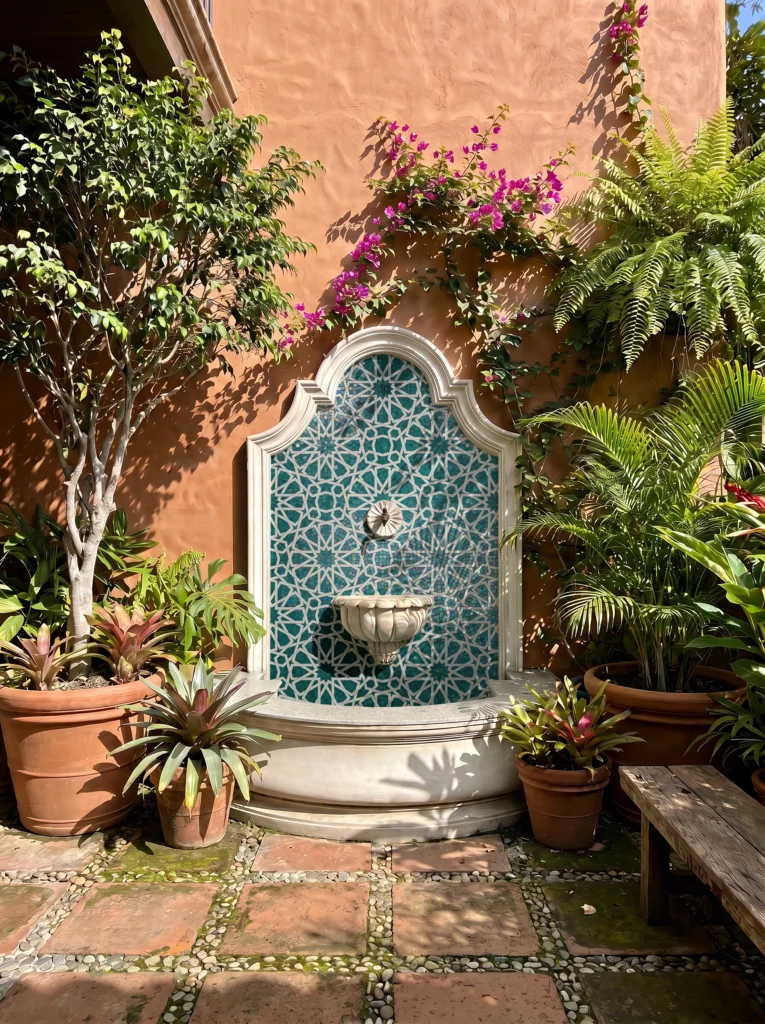
Moroccan mosaic ideas that may suit you include:
- Blue and white fountain designs
- Emerald and cream star patterns
- Terracotta and ivory borders
- Zellige-inspired pool details
- Decorative kitchen backsplashes
- Geometric courtyard floors
- Colorful wall niches
- Repeating rosette patterns
For a UAE courtyard, you might choose a cobalt, white, and turquoise fountain wall surrounded by warm stone. In a bathroom, a green and cream Moroccan-inspired shower niche can create character without covering every wall. For a larger pool, consider using the pattern along the waterline or on the steps. This keeps the design visible while allowing the main pool floor to remain calm.
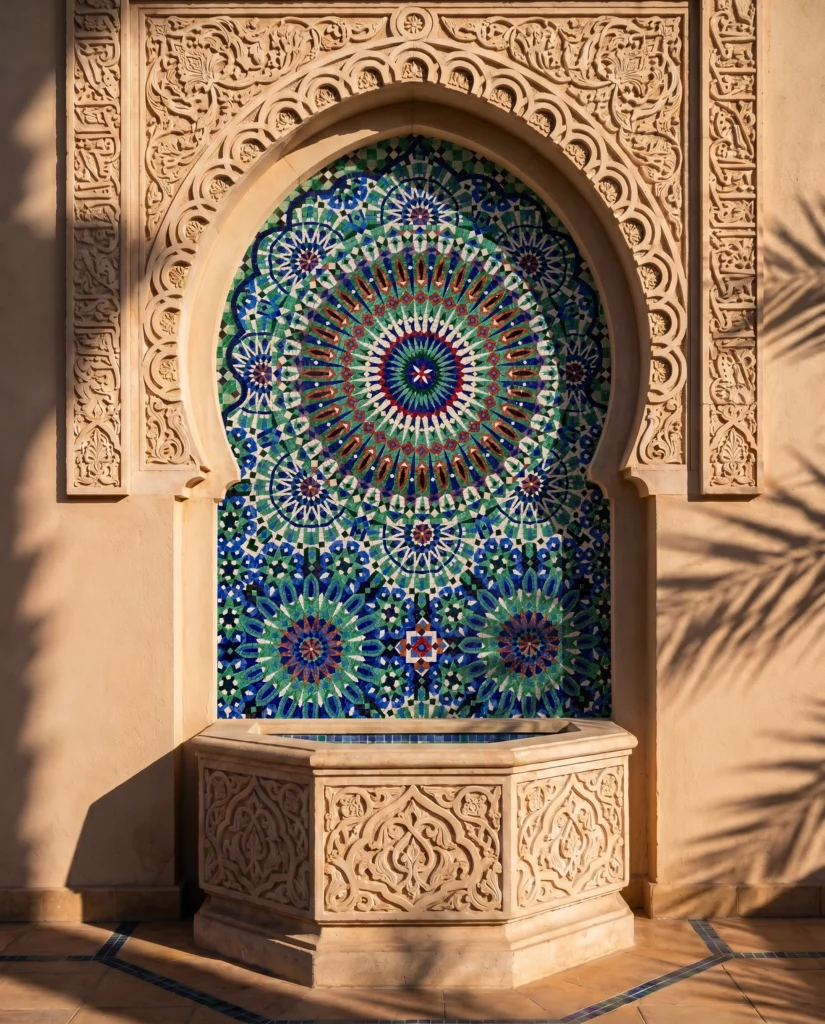
Mostly Islamic: Your Islamic Mosaic Pattern Match
You value order, detail, and lasting architectural beauty.
Your ideal mosaic may feature interlocking stars, repeated polygons, arabesques, or calligraphy. You’re likely to appreciate designs that feel balanced from a distance and become more detailed as you move closer.
Islamic mosaic ideas that may suit you include:
- Eight-pointed star compositions
- Interlocking polygon panels
- Geometric marble floors
- Calligraphy feature walls
- Arabesque borders
- Dome mosaics
- Decorative arches
- Symmetrical entrance panels
- Glass and marble combinations
For a villa entrance in Abu Dhabi, a large geometric floor medallion can guide the eye toward the main doorway. Inside a majlis, a custom wall panel may use repeating geometry in soft stone colors. This creates depth without making the room feel too busy. In a mosque or prayer area, any calligraphy should receive careful review. The wording, placement, orientation, and surrounding use all matter.
Can You Mix Modern and Traditional Mosaic Styles?
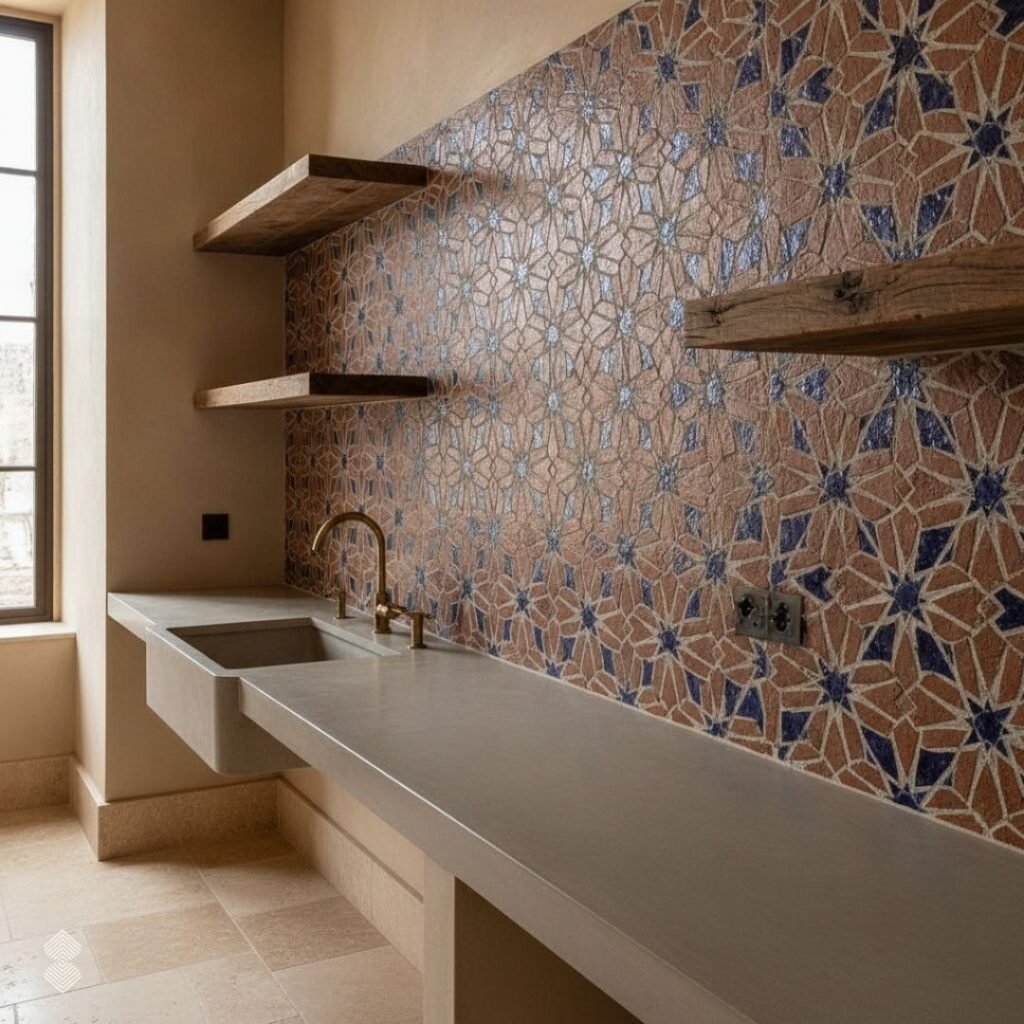
Yes. Some of the most successful mosaics combine old and new ideas.
A traditional pattern doesn’t have to look historical. You can change its scale, material, color, or placement. For example, take a detailed Islamic star pattern. Instead of using six colors, produce it in white marble with fine grey lines. The geometry remains recognizable, but the result feels modern.
The same idea works with Moroccan mosaic tiles. A classic star-and-cross layout can become contemporary when enlarged across a pool wall. Soft aqua and white may replace stronger cobalt and green tones.
How MEC Artworks Brings Your Chosen Mosaic Style to Life
Your quiz result provides a useful beginning. Then the next stage involves translating your preferences into a design plan that can be applied to your particular surface. MEC Artworks designs bespoke mosaic artworks for villas, swimming pools, courtyards, hospitality venues, religious buildings, and commercial projects throughout the UAE and the GCC.
You can also use the MEC AI Studio to explore mosaic ideas before beginning the custom design process. Upload an image of your room, pool, courtyard, or feature wall and test different mosaic directions directly in your space. Modern designs, Moroccan designs, colors, Islamic mosaics, and focal points can all be compared to see which one is to your taste.
Final Thought: Find the Mosaic Style That Feels Like You
Modern, Moroccan, and Islamic mosaics each create a different mood board. Use your quiz result as a guide, not a strict rule, since your ideal mosaic design may blend two styles. Just consider the space, viewing angle, light, and water before making a final choice for your mosaic project. Alternatively, you can use our MEC AI Studio to preview mosaic ideas in your own setting. A right mosaic design should feel natural, personal, and lasting within your UAE property.
FAQ’s
What’s the real difference between Moroccan and Islamic mosaic?
Moroccan mosaic is a type of traditional decoration found in Morocco and North Africa. This includes a variety of crafts such as zellige; hand-formed glazed tiles, star-cross motifs, rosettes, and vivid color schemes. Islamic mosaics refer to the broader term used to describe a range of geometrical, vegetal, and calligraphic mosaic techniques from multiple regions of the Islamic world. Moroccan mosaics can be regarded as part of a larger category of Islamic decorative arts. Not all Islamic mosaics, however, are Moroccan.
Which mosaic design works best for a pool or outdoor space?
Modern, Moroccan, and Islamic mosaics can be successfully used in outdoor spaces if using appropriate materials and installation systems. Modern mosaics look good for gradient designs, abstract pool floors, and clear architectural compositions. Moroccan mosaic designs are perfect for fountains, courtyards, pool borders, and colored feature spaces. Islamic geometric mosaic designs can be used for large medallions, repeating borders, formal courtyards, and symmetric pool designs.
Can I combine two styles in one design?
Yes. A traditional mosaic design can look modern when you simplify its color palette or enlarge its scale. Whereas a Moroccan color palette can also work with a broader Islamic geometric pattern. For the best result, choose one leading style. Use the second style as a supporting influence. This creates a design that feels layered rather than confused.
Do you offer custom mosaic designs based on quiz results?
Yes. MEC Artworks can use your quiz results as an initial design direction. You can also provide: photos of the space, surface measurements, and architectural plans. Or just use our MEC AI Studio.