 UAE & GCC

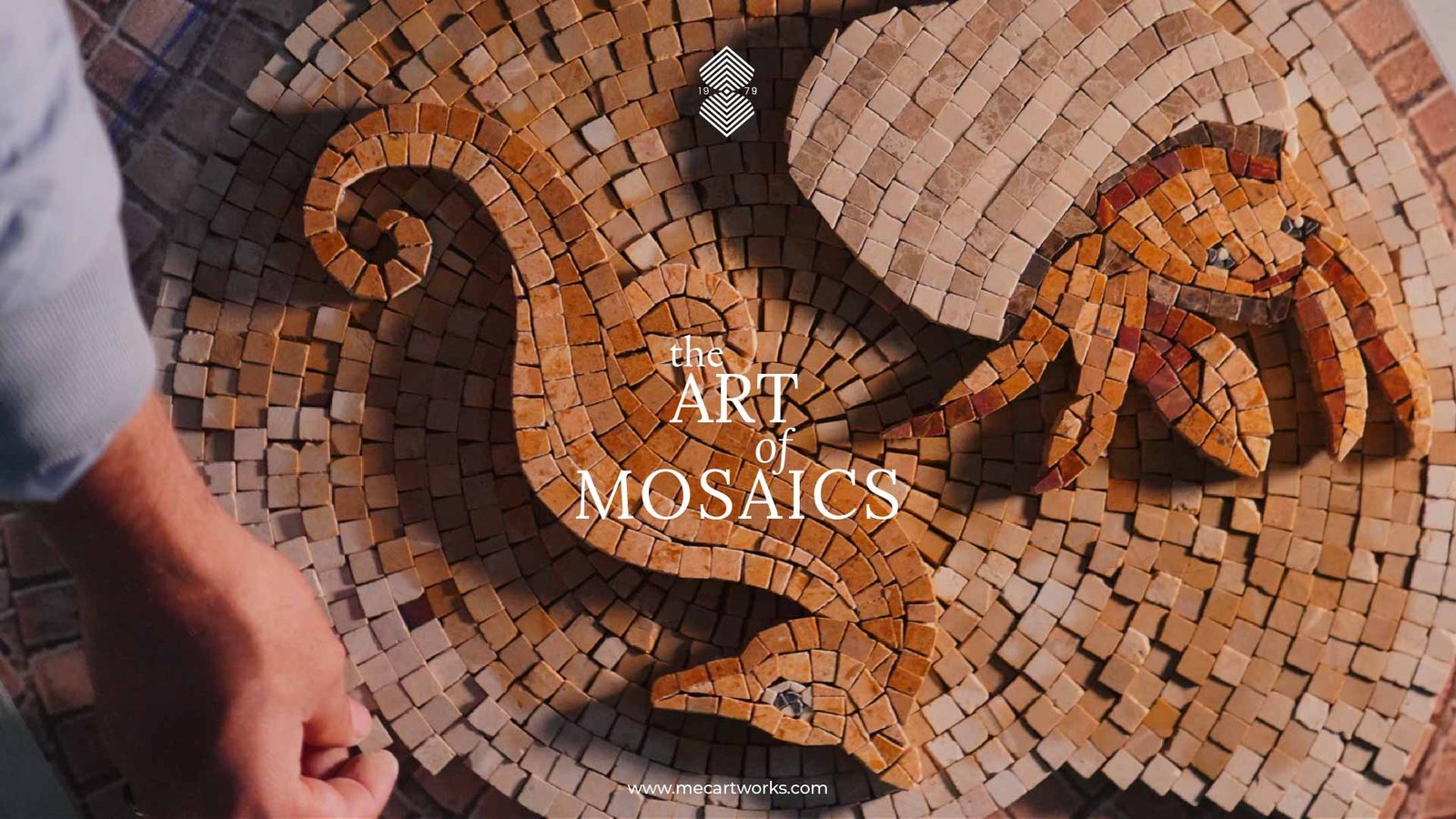
In the Gulf, design rarely whispers. It shimmers, reflects, and makes a lasting first impression. Yet the most memorable spaces in the UAE don’t rely on size alone. They rely on material intelligence. They use surfaces that reward a second look. That is where The Art of Mosaics still stands apart.
Table of Contents
The Art of Mosaics in Architectural Tile Design
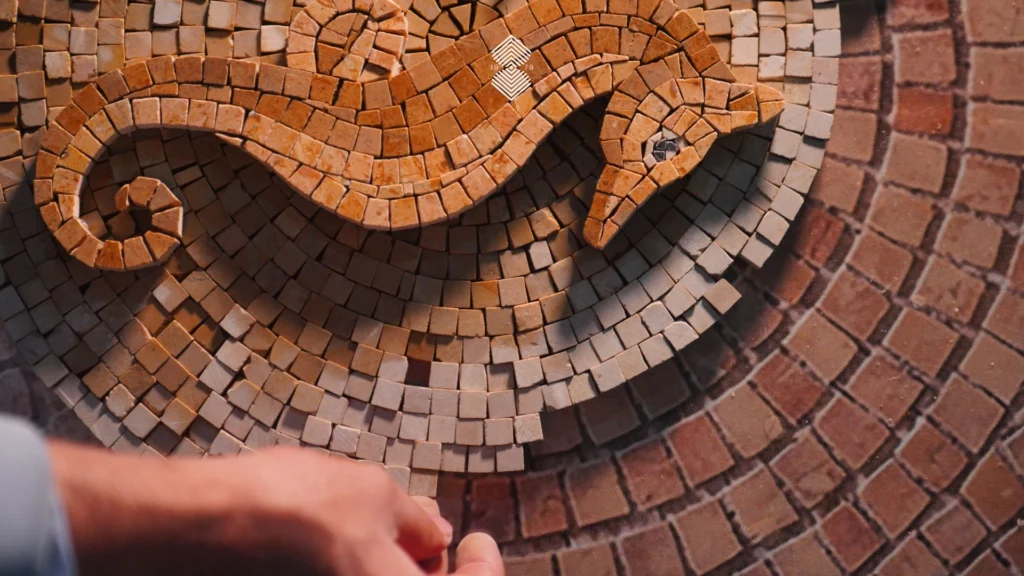
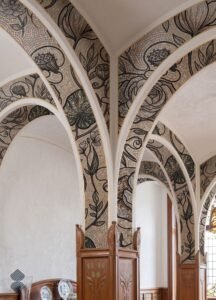
A well-made mosaic does something flat finishes can’t. It catches light from different angles. It creates rhythm through joints, texture, and tonal shifts. It can feel ancient and strikingly modern at the same time. In a Dubai villa, an Abu Dhabi spa, or a hospitality lobby that wants a genuine presence, mosaic art doesn’t sit on the architecture like makeup. It becomes part of the architecture itself.
That idea matters now more than ever. Across luxury interiors, designers are moving away from generic stock finishes and toward surfaces with depth, permanence, and authorship. A hand-cut mosaic tile floor, a bespoke pool composition, or a custom mural brings something many premium materials still miss: human touch with architectural discipline.
Historically, mosaics evolved from pebble floors into refined compositions made from tesserae, which are small pieces of stone, glass, ceramic, or similar hard materials cut and arranged into a unified surface. Greek and Roman makers elevated the medium, and later Byzantine artisans pushed color and luminosity even further with glass tesserae and gold-backed surfaces.
For the UAE, that legacy feels especially relevant. The region values craftsmanship, visual richness, and enduring materials. Moreover, the UAE local design culture often asks one surface to do many jobs at once. It must look luxurious, perform in heat, stand up to moisture, and still feel timeless a decade later. Custom mosaic artistry meets that brief beautifully.
“A mosaic isn’t just a picture made of pieces. It’s a surface designed to live with light.”
That is why architectural mosaic design keeps returning to serious projects. It works on walls, floors, pools, hammams, courtyards, spas, and statement entry sequences. It works in contemporary and modern spaces because it can be controlled with precision. And it works in heritage-inspired spaces because it already carries centuries of artistic memory.
The Soul of the Craft: Why Hand-Cut Tesserae Define Luxury
Luxury isn’t always about polish. Sometimes it’s about controlled variation.
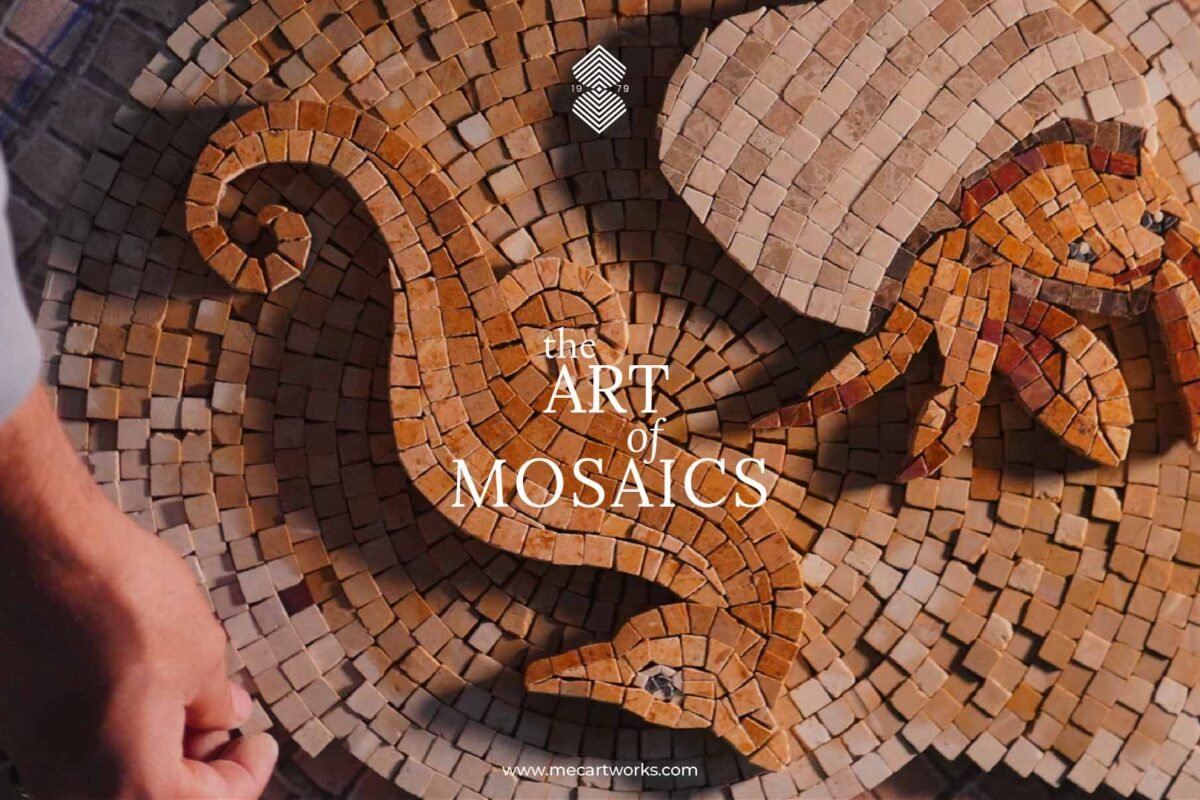
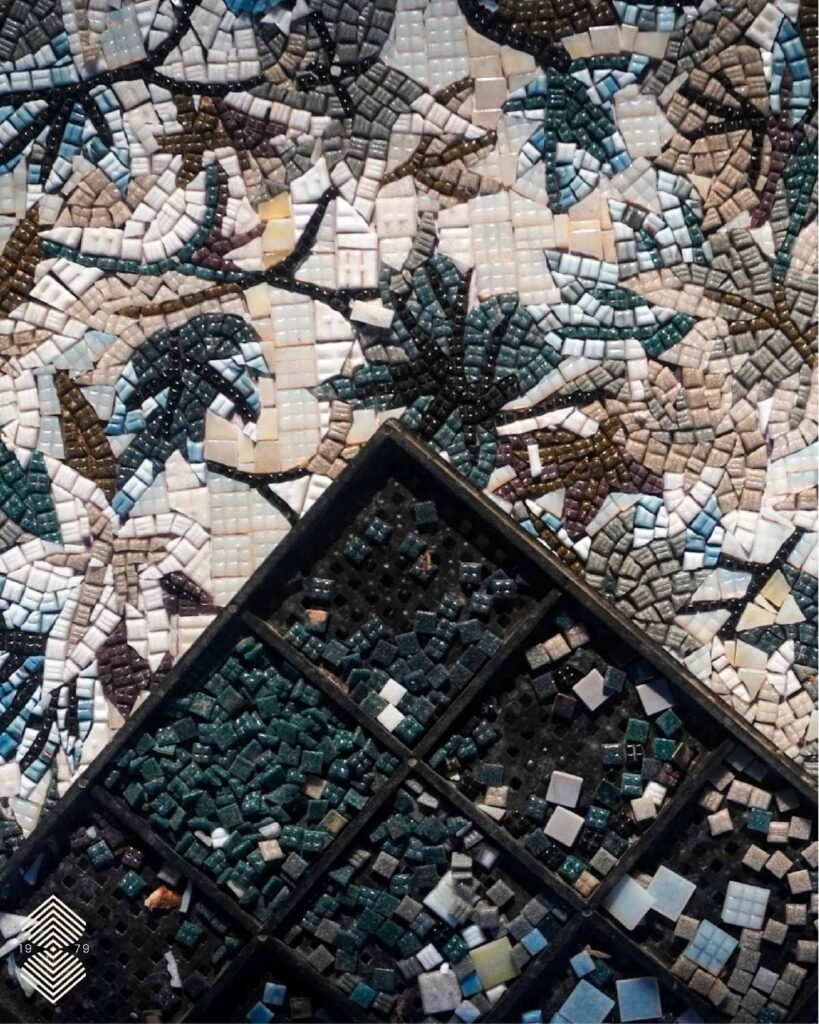
That is the hidden power behind the art of hand-cut mosaic tile installation. When a mosaic is cut and placed by hand, each tessera carries a slightly different edge, angle, and surface response. Those tiny shifts change how light moves across the finished work. The result feels alive. Machine-made sheets, by contrast, often feel too uniform. They may be neat, but they can also feel flat.
This is one of the oldest truths in the art of mosaics. The medium has always depended on tesserae, and those pieces were historically cut from marble, limestone, glass, and other durable materials. Over time, artisans learned that the arrangement of those pieces mattered just as much as the material itself.
In luxury environments, that difference becomes obvious fast.
Why Hand-cut Work Feels more Refined
- Edges catch light differently from factory-perfect tiles
- Irregularity adds movement without making the work look messy
- Mosaic tile material transitions look softer and more natural
- Curves and contours read better in figurative or organic designs
- Custom scaling becomes easier because the pattern is not trapped in a rigid module
Think of it like handwriting versus a default computer font. Both communicate. Only one feels personal.
Hand-Cut vs. Machine-Made At a Glance
| Feature | Hand-Cut Mosaic Tile | Machine-Made Mosaic Sheets |
| Visual character | Rich, nuanced, lively | Uniform, often repetitive |
| Adaptability | Excellent for curves and bespoke layouts | Best for repetitive modules |
| Light interaction | Varied and dimensional | More flat and even |
| Artistic control | High | Limited by template and sheet grid |
| Best use | Luxury murals, pools, medallions, custom surfaces | Standard backsplashes, basic repetitive patterns |
For high-end mosaic tile UAE projects, that distinction matters. Harsh sunlight reveals every shortcut. Water reflections amplify visual rhythm. Large walls and expansive floors make repetition more obvious. A surface that looked acceptable in a showroom can feel generic once installed across a ten-meter wall or a long pool basin.
Beyond the Grid: The Importance of Hand-Applied Andamento
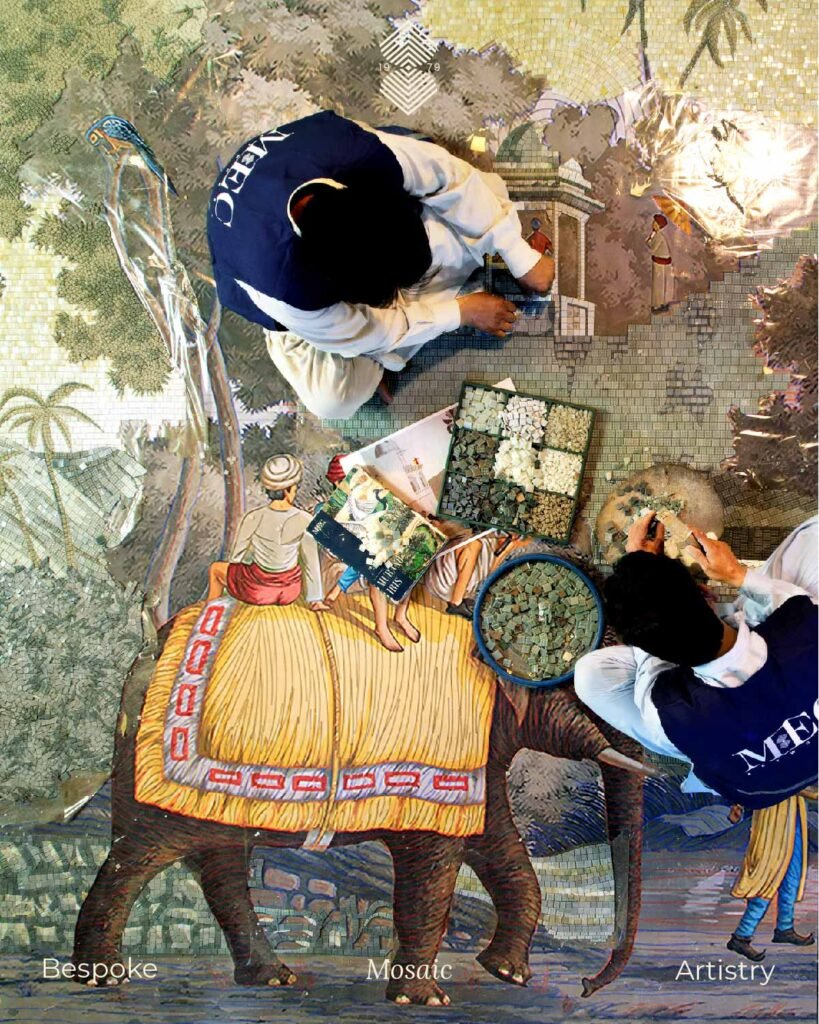
If tesserae are the vocabulary of mosaics, andamento is the sentence structure.
Andamento refers to the directional flow of the pieces. It is what guides the eye through the composition. In historical mosaic traditions, rows of tesserae often followed outlines, contours, and motion. In Roman opus vermiculatum, for example, closely set tesserae followed forms in undulating lines to achieve fine gradation and precision.
That principle still matters today. Our skilled professional mosaic artist team doesn’t just fill an area with pieces. They direct those pieces to support the image.
Here is what andamento can do:
- Make water appear to ripple
- Give leaves and petals a natural directional flow
- Build softer facial contours in portrait mosaics
- Help abstract patterns feel dynamic instead of static
- Strengthen transitions between colors and materials
Without proper andamento, a mosaic can feel visually restricted, almost locked into a grid. The design is still visible, but the sense of movement and depth is lost.
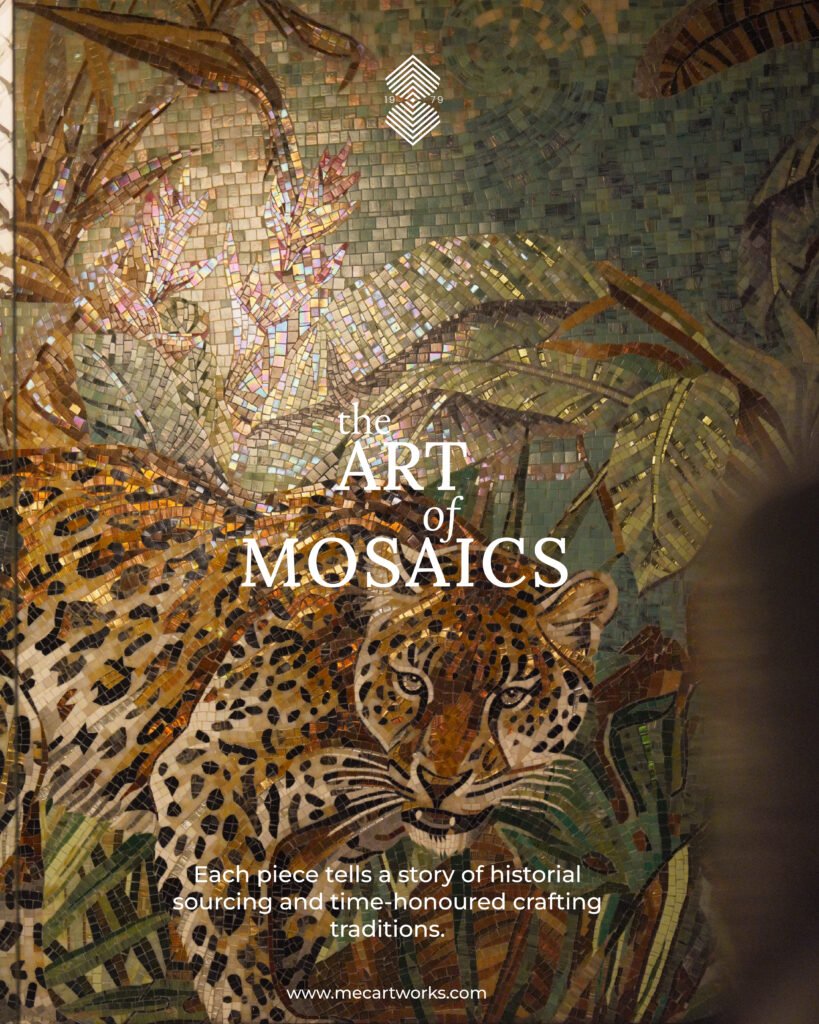
At MEC Artworks, every mosaic is developed with directional flow in mind. Hand-cut placement allows each piece to follow the natural contours of the design. Whether it’s the curve of a leopard’s shoulder, the rhythm of water in a pool, or the precision of a geometric composition, each element is guided intentionally.
This level of control cannot be achieved with pre-mounted stock sheets. It requires true craftsmanship, where every tessera is positioned to enhance both the design and its interaction with the space.
From Raw Material to Masterpiece: Our Custom Artistry Process
A strong mosaic starts long before the first piece is cut. It begins with interpretation.
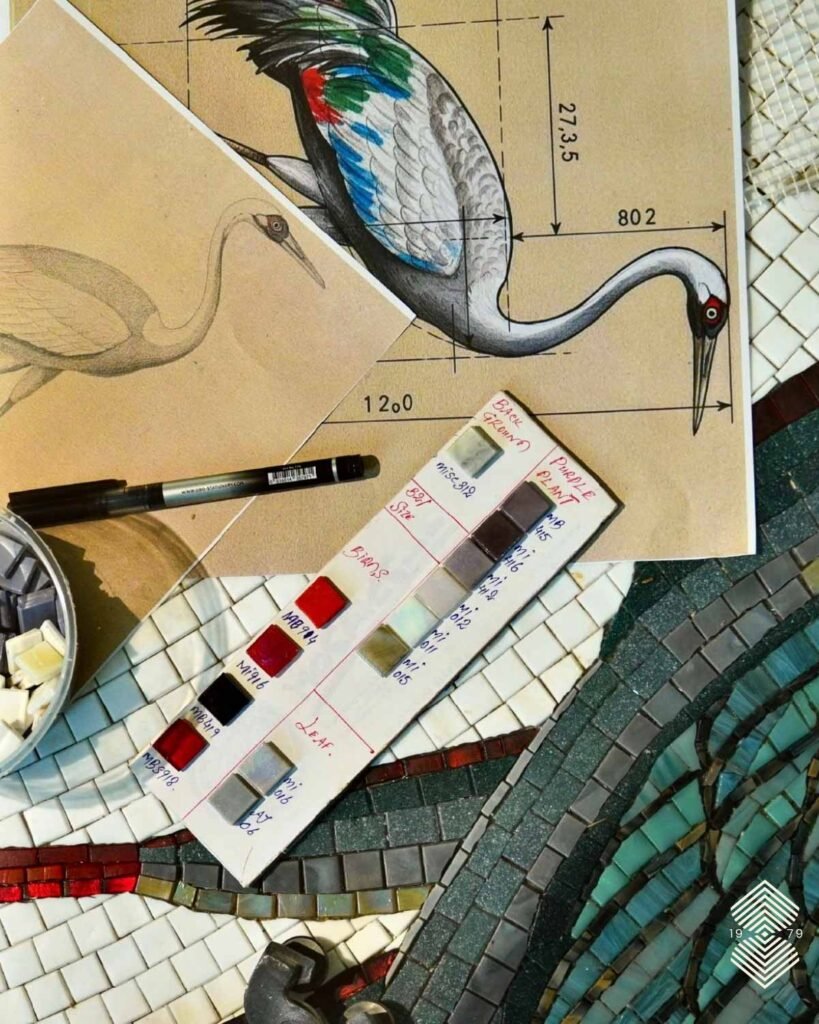
That matters because most clients don’t think in tesserae. They think in sketches, inspiration photos, architectural plans, and emotional cues. They may say they want a space to feel calmer, richer, more rooted in nature, or more connected to Arabic geometry and calligraphy. The job of custom mosaic artistry is to translate that vision into material form.
Our thoughtful mosaic tile process usually includes:
- Design briefing
- Scale and proportion study
- Material selection
- Color testing
- Layout development
- Fabrication
- Section mapping for installation
This isn’t only an art exercise. It’s also a construction exercise. A successful mosaic must fit the actual site. It must respond to corners, drains, curvature, lighting, moisture exposure, and foot traffic. Good design without fabrication discipline is just a pretty concept board.
Historical Sourcing and Mosaic Tile Material Selection
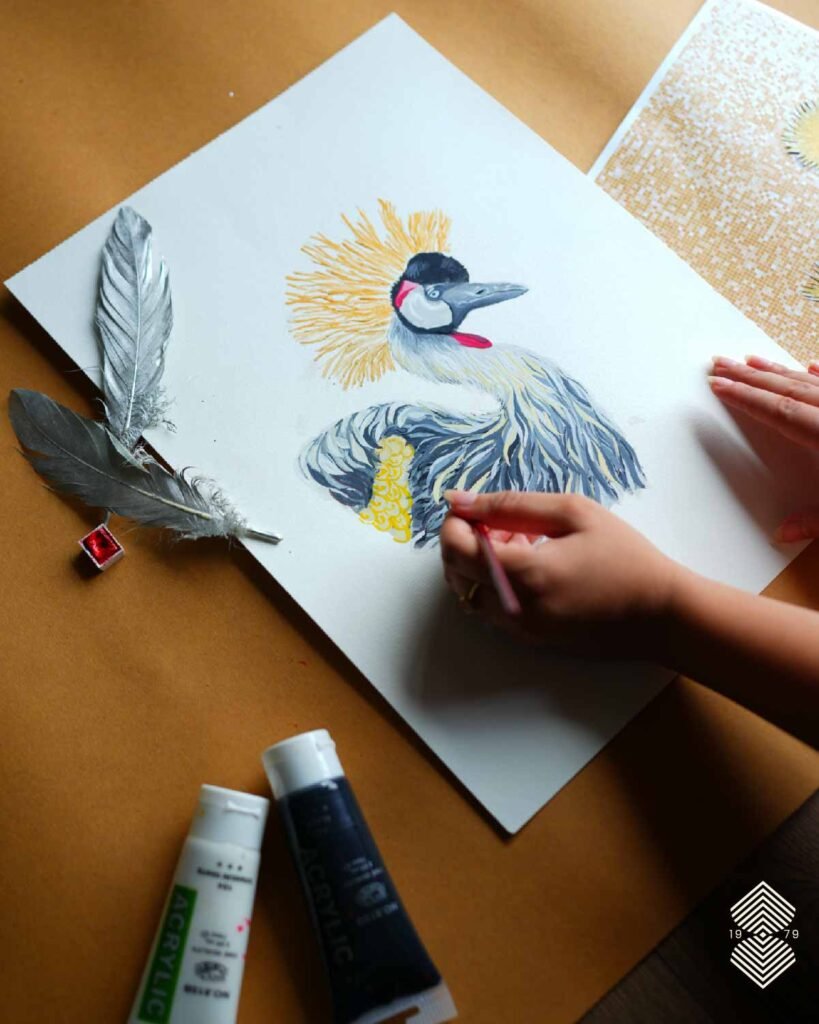
A mosaic may be visually stunning on paper, yet fail if the wrong material is used in the wrong environment. That is why historical sourcing and time-honored crafting traditions still matter. Traditional mosaic practice developed around materials that could hold color, survive wear, and age with dignity.
The most common materials in high-end mosaics that we use for our clients include:
- Marble and stone for softness of tone, elegance, and classical depth
- Glass mosaic for brilliance, reflection, and pool or spa use
- Smalti-style glass for intense color and painterly richness
Byzantine and later mosaic traditions made extensive use of glass tesserae, including metallic and gold-backed surfaces, because glass could amplify light in ways stone could not. For mosaic tile projects, material selection also has to take performance into account.
How Mosaic Tile Material is Typically Selected
| Application | Preferred Materials | Why It Works |
| Swimming pool and spa interiors | Glass mosaic, premium vitreous materials | Strong color retention, water compatibility, and visual depth |
| Bathroom walls and wet zones | Glass, smalti, selected stone accents | Moisture resistance and luminous finish |
| kitchen feature walls | Hand-cut marble, glass, mixed media | Rich texture and custom detailing |
| Luxury floors and medallions | Marble, dense natural stone, engineered cuts | Strength, elegance, and tactile quality |
| Outdoor spaces | UV-stable glass, weather-appropriate stone | Better long-term exposure performance |
A hand-assembled marble and glass mosaics approach often delivers the best of both worlds. Stone gives body and softness. Glass adds highlight and energy. When combined with care, the result reads less like tile and more like fine surface art.
Collaborative Design: Translating Vision into Mosaic Geometry
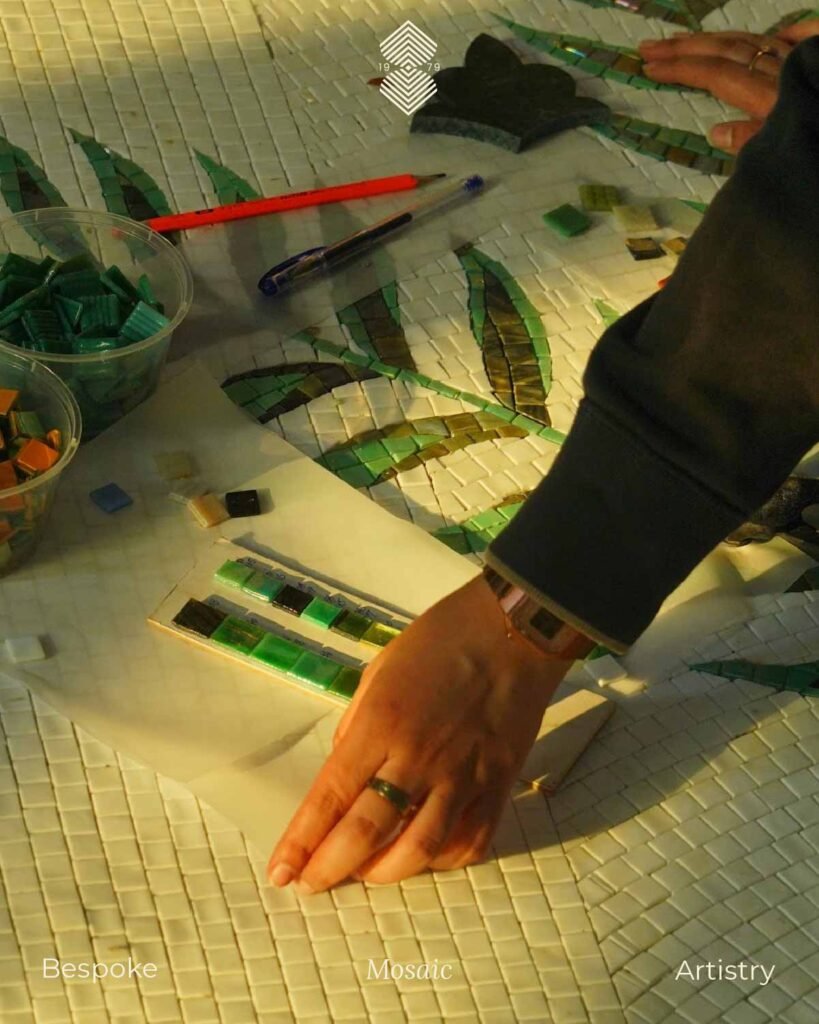
This is where many people underestimate the craft.
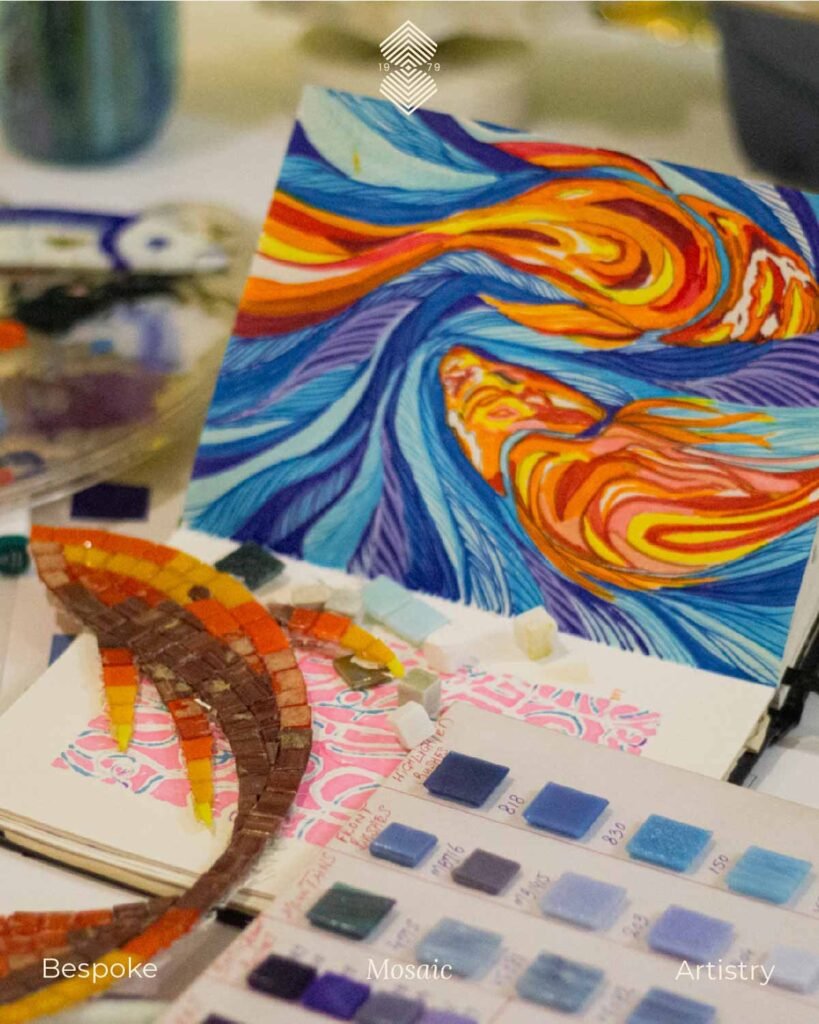
A concept image is not yet a mosaic. An original painting is not yet a mosaic. Even a beautiful digital rendering is not yet a mosaic. Someone has to convert that image into a geometry that can actually be cut, assembled, and installed.
That means making decisions such as:
- Which details should remain sharp
- Which tonal areas need simplification
- Where directional flow should change
- How color values will translate from paint or pixels into stone and glass
- How the artwork will scale across the actual architecture
This step is critical in commissioning a bespoke mosaic artist. You’re not buying a print. You’re commissioning a translation from one medium into another.
Simple Diagram: How a Custom Mosaic Develops
Concept / Sketch
↓
Scale Study and Layout
↓
Material and Color Selection
↓
Tessera Size and Direction Planning
↓
Fabrication in Mapped Sections
↓
Installation on Site
In our premium mosaic tile projects, these mapped sections are especially important. They reduce installation errors, keep the image aligned, and make large-scale work far more manageable for contractors on site.
Bespoke Mosaics as Architectural Fine Art
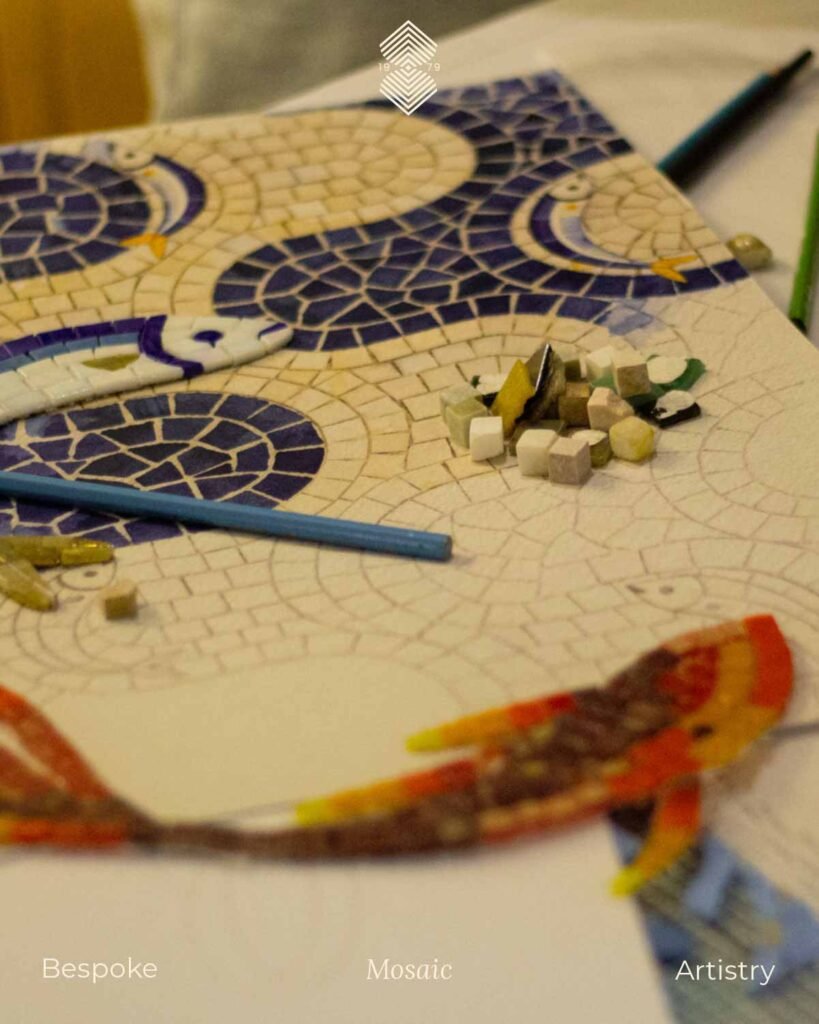
Some finishes are decorative. Others are authorial.
That is the territory of bespoke mosaic murals in architecture. They are not generic cladding. They act like architectural fine art with structural discipline. They shape how a room is read. They carry iconography, texture, and atmosphere. Most importantly, they remain part of the building rather than a removable accessory.
That distinction matters in luxury design. A framed artwork can certainly elevate a room, but a custom mosaic can do something deeper. It can merge image and surface into one experience.
Enhancing Luxury Residences with Custom Murals
In high-end luxury homes, mosaics often work best where the architecture needs a focal point with permanence.
That might be:
- A double-height entry wall
- A pool interior with a gradient or figural motif
- A spa shower with layered stone and glass
- A medallion floor in a circular foyer
- A garden wall that reflects local landscape tones
For UAE residents, mosaics can move in several design directions:
| Residential Style | Mosaic Direction |
| Minimal modern villa | Soft gradients, abstract linework, tonal stone fields |
| Heritage-inspired home | Arabesque patterns, geometric order, marble medallions |
| Nature-driven interior | Palm forms, water lines, foliage motifs, birds |
| Art-led penthouse | Large-scale mural, mixed media, custom color palette |
Nature-led compositions fit especially well with contemporary interiors. Biophilic mosaic tile design has remained influential because it helps interiors feel more emotionally grounded and connected to nature. ArchDaily notes that biophilic approaches support well-being, emotional comfort, and stronger sensory engagement in built spaces.
So when a residence uses foliage, water movement, or desert-inspired tonal layering in mosaic form, the result can feel immersive without becoming theatrical.
Precision Integration for Commercial and Boutique Spaces
Commercial spaces raise the stakes.
A boutique hotel lobby, spa, branded retail interior, or luxury resort pool courtyard doesn’t need only visual impact. It needs performance. The material has to withstand maintenance cycles, humidity, guest traffic, and exposure to cleaning products. It also has to photograph well. In today’s hospitality world, that isn’t a side benefit. It’s part of the brief.
That is why architectural mosaic design performs so well in commercial settings. It can be engineered for scale and still hold artistic integrity.
Typical commercial uses include:
- Reception feature walls
- Spa thermal zones
- Pool basins and waterlines
- Restaurant entry moments
- Custom signage and logos
- Prayer rooms and contemplative courtyards
- Luxury washrooms and hammams
A stock tile pattern can cover a surface. A custom mosaic can tell a story about the place.
Nature-Inspired Compositions: Capturing Motion in Stone and Glass
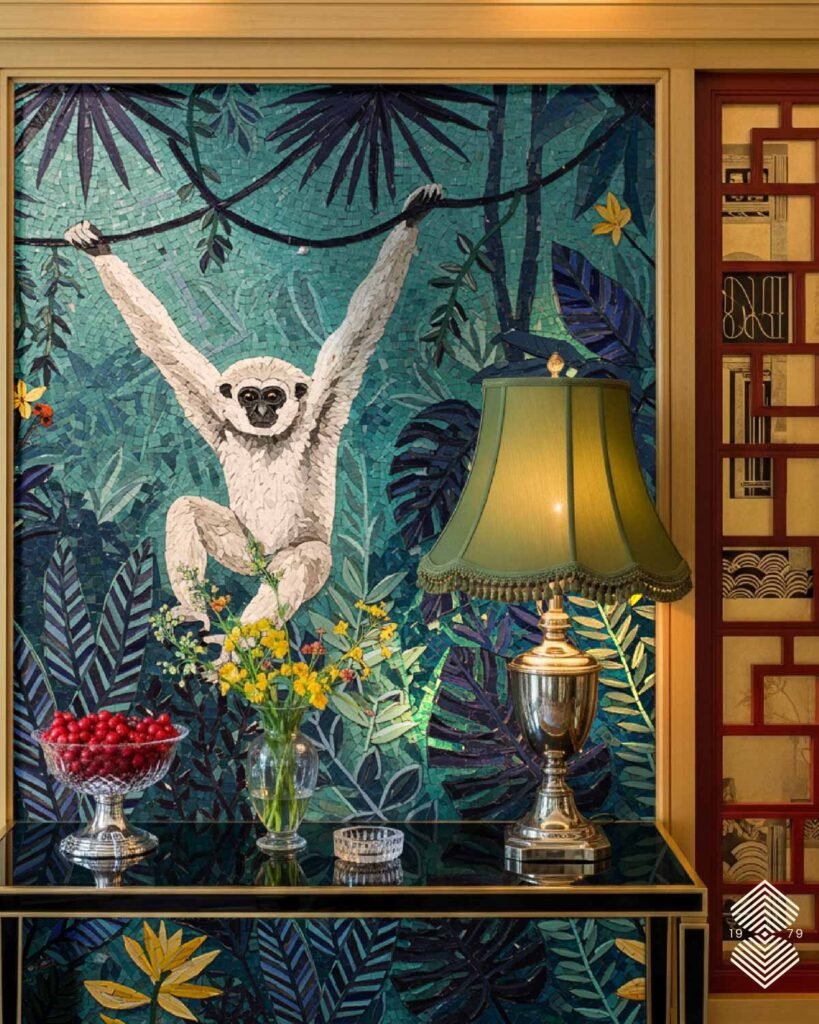
Nature and wildlife give mosaic tile design, giving artists one of their best subjects, because a mosaic is already built from fragments. Leaves, feathers, currents, dunes, petals, and cloud-like gradients all work beautifully in tessellated form.
For modern UAE architecture, nature- inspired mosaic and earthly colour tone themes can also solve a design tension. Many contemporary interiors lean clean, polished, and restrained. They look sophisticated. Yet they can sometimes feel emotionally cool. A mosaic introduces warmth and rhythm without adding clutter.
That is why custom-made mosaic art for luxury interiors often draws from:
- Water ripples
- Desert strata
- Palm and botanical forms
- Birds and feather
- Abstract sky gradients
- Islamic geometry softened with organic flow
Why Motion Matters in a Mosaic Tile Design
A good mosaic doesn’t freeze the subject. It implies movement.
That may happen through:
- Andamento
- Tonal shifts
- Mixed tessera sizes
- Highlight placement
- Curved contouring
In an ultimate mosaic pool tile design, this effect becomes even stronger. Water reflections animate the surface all day long. Glass tesserae can intensify this effect because they interact with light in a way that matte materials do not.
Investing in Permanence: The Long-Term Value of Custom Mosaic Art
Trends move fast. Good mosaics don’t have to.
One reason mosaics have survived across centuries is simple: they are built from durable pieces rather than a printed surface layer. Stone and glass don’t depend on superficial patterning alone. Their color and character are inherent to the material.
That gives mosaics a different value profile from many contemporary finishes.
Why Mosaic Tiles Age Well
- They are composed of small, repairable units
- Natural materials often develop patina rather than visual fatigue
- Glass holds color extremely well when properly specified
- The work remains architecturally integrated
- The visual richness doesn’t rely on fashion alone
A painted mural can peel. Wallpaper can date quickly. Printed tile can lose authenticity on close inspection. A custom mosaic tends to deepen in value because it feels rooted, not disposable.
Why MEC Artworks for Custom Mosaics in the UAE
For a UAE audience, expertise matters because expectations are high. Clients are not just looking for pretty patterns. They need a partner who understands design, scale, fabrication, and material performance.
And what MEC Artworks offer to our clients:
- Bespoke design capability
- Hand-cut craftsmanship
- Material fluency across marble and glass
- Installation-ready planning
- Experience with luxury architectural environments
Final Thoughts: The Art of Mosaic Tile
The Art of Mosaics has lasted because it solves a rare design problem. It offers image, texture, durability, and permanence in a single surface. Few materials can do that with equal grace.
For the UAE, that makes mosaic more than a historic craft. It makes it a modern design instrument. It can soften minimal architecture. It can intensify a pool. It can transform a wall into architectural fine art. And because it is built piece by piece, it carries something machine-perfect materials rarely achieve: presence.
FAQs
What is the difference between stock tile and handcrafted mosaic art?
Stock tile is manufactured for repeat use. It is usually modular, fast to install, and limited to preset dimensions, colors, and patterns. Handcrafted mosaic art is designed around the project itself. A professional mosaic artist adjusts tessera size, direction, color transitions, and layout according to the architecture. That leads to better movement, stronger visual depth, and a much more original finish.
How are custom mosaic materials selected for durability?
Materials are chosen by matching the mosaic to the environment. Pool interiors usually need high-quality glass or vitreous materials. Floors often require dense stone or carefully specified marble. Wet walls demand moisture-compatible materials and sound installation planning. Outdoor settings also call for UV-stable components and appropriate adhesives and grouts. In short, durability begins with correct specification, not guesswork.
Can an original painting or sketch be converted into a mosaic?
Yes. In fact, this is one of the most exciting parts of commissioning a bespoke mosaic artist. A sketch, painting, mood board, or even a digital illustration can be translated into a custom mosaic design. The key is thoughtful adaptation. Fine details may need simplification. Color values may need reinterpretation when working with stone or glass. Directional flow also has to be planned, so the final work feels natural, not pixelated.
What is the difference between hand-cut mosaic art and machine-made tiles?
Hand-cut mosaic art allows for irregular tesserae, subtle edge variation, and custom directional placement. That makes it ideal for murals, gradients, curves, and expressive surfaces. Machine-made tiles are more standardized. They work well for repetitive installations, but they rarely offer the same level of artistry, softness, or spatial integration. In luxury settings, the visual difference is usually obvious.
How do you maintain the color and integrity of glass mosaics in outdoor settings?
Choose high-quality, UV-stable glass mosaics and pair them with installation systems suited to outdoor exposure. Regular rinsing, non-abrasive cleaning, and proper water chemistry in pool environments also help preserve the finish. Good design matters too. When glass mosaic is correctly specified for sun, moisture, and temperature shifts, it holds color extremely well over time.